

Abbas Dhami
Specialist Diagnostic Radiographer
Think about the last time your back hurt. Were you lying down? Probably not. Pain usually shows up when you are standing at work, walking to the market, or going about your day. So here is a fair question: if your pain happens while standing, why is your scan done while you lie flat on a table? Standard X-rays, MRI scans and CT scans are often taken lying down. This removes gravity, changes your spinal curves, and shifts your joints into a different arrangement than in real life.
Weight-bearing imaging changes this entirely. It scans your body exactly as it works upright, under load, the way you actually live. For conditions linked to posture, spinal balance and joint alignment, this difference is not small. It can completely change what a clinician sees and what they decide to do next.
What Is Weight-Bearing Imaging?
Weight-bearing imaging means the body is scanned while standing upright and carrying its full natural weight. This lets doctors see how bones, joints and posture work in real-life conditions, not in a resting position.
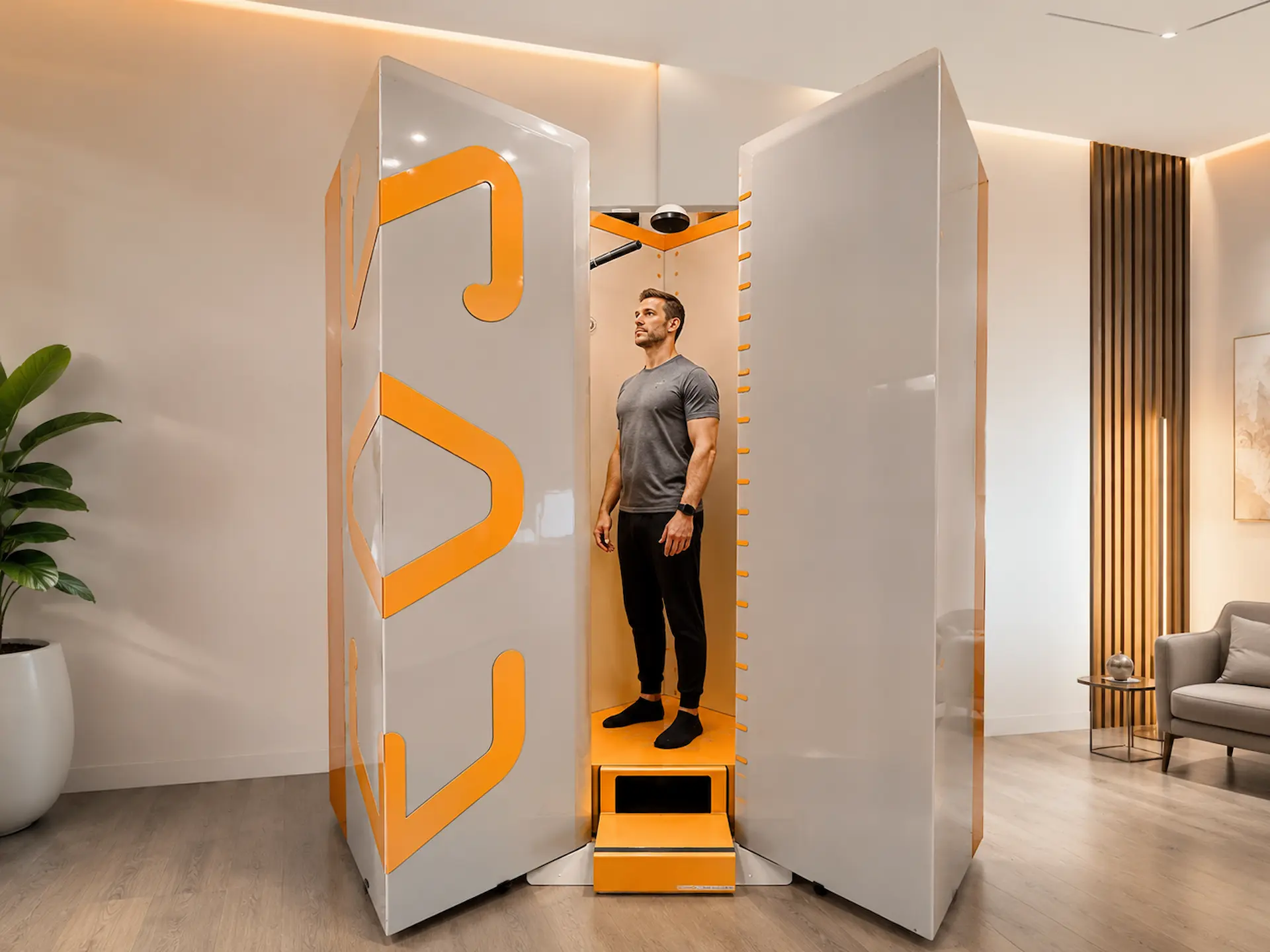
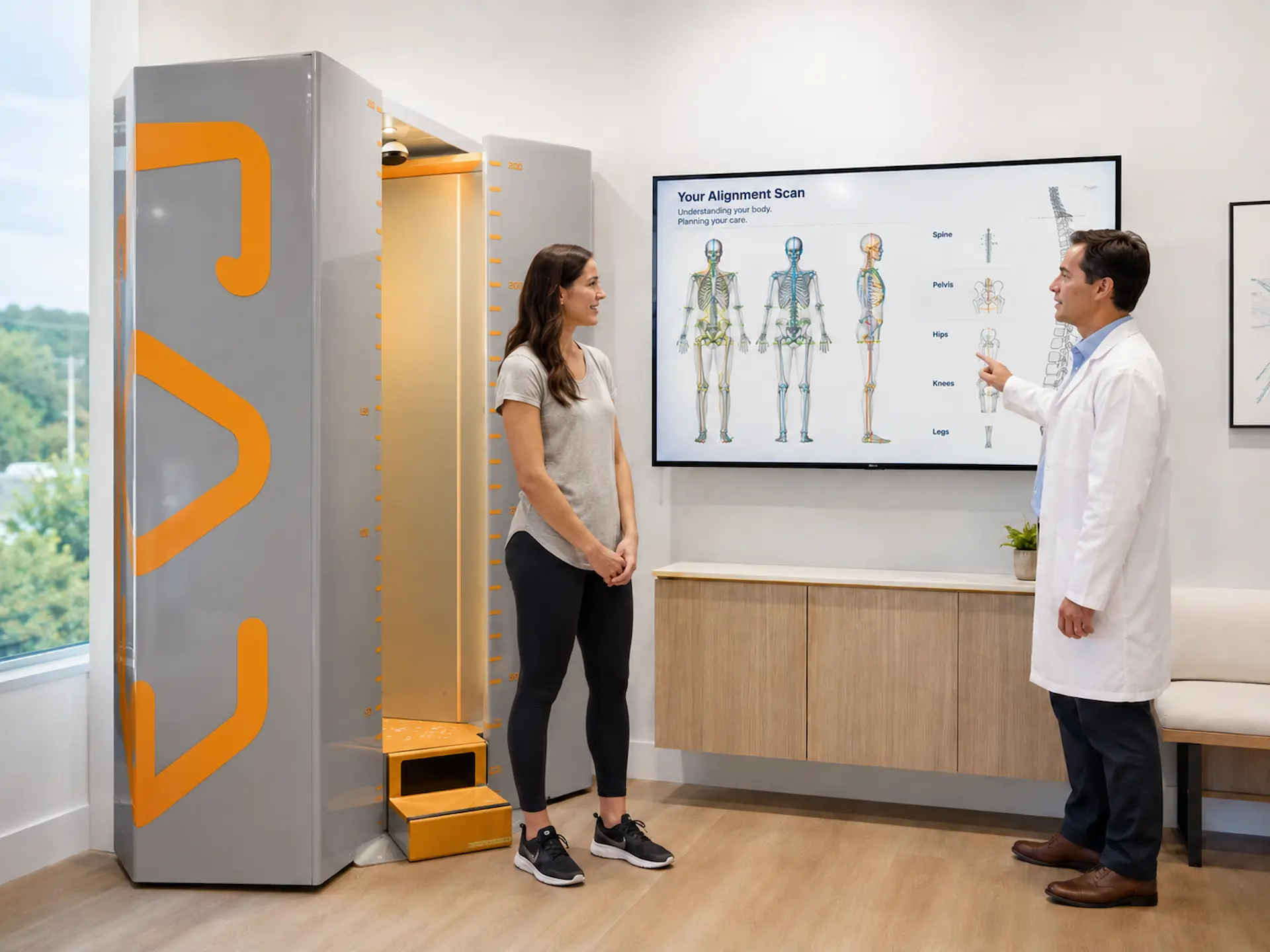
The most advanced example of this is the EOS scan. It is a full-body standing imaging system. It captures the skeleton from head to toe in one scan, using low-dose X-ray technology.
Key features of weight-bearing imaging include:
- Shows how bones sit under gravity
- Reveals how joints carry body weight
- Captures true posture and balance
- Produces both 2D and 3D views
- Shows the spine, pelvis, hips and knees together
- Reduces image distortion from stitched X-rays
This makes it much easier to find alignment problems that may stay hidden in lying-down scans.
What Is Traditional Imaging?
Traditional imaging includes standard X-rays, MRI scans and CT scans. These are common in hospitals and are useful for many health conditions.
However, most of them are done while lying down. This creates one major limitation. The body is no longer under natural load.
Here is how each compares:
- Standard X-ray: Quick and useful for fractures and basic bone checks
- MRI scan: Best for soft tissues like discs, nerves, muscles and ligaments
- CT scan: Detailed cross-sectional images with strong internal detail
These scans are important. But when posture, balance and alignment are the concern, lying-down imaging may miss the real problem.
Weight-Bearing vs Traditional Imaging: The Real Difference
The biggest difference is simple: standing shows how the body works, while lying down shows how the body rests.
When you lie flat, the spine relaxes, the discs decompress, the pelvis rotates, and the joints stop carrying normal body weight. This can hide important alignment problems.
| Feature | Weight-Bearing Imaging | Traditional Imaging |
|---|---|---|
| Body Position | Standing upright | Lying flat |
| Gravity Effect | Fully present | Mostly removed |
| Joint Loading | Visible under load | Hidden |
| Spine Position | Natural daily posture | Relaxed posture |
| Pelvic Tilt | Clearly visible | May be hidden |
| Leg Length Difference | Easier to detect | Less accurate |
| Best For | Alignment and posture | Internal anatomy and soft tissue |
| Real-Life Accuracy | High | Limited |
This is why many posture and joint problems become clearer in a standing scan.
EOS Scan vs Traditional X-Ray: Which One Shows More?
Both use X-ray technology, but EOS gives a much wider and more useful view for alignment problems. Traditional X-rays usually focus on one body part at a time. EOS captures several areas together while you stand naturally.
| Feature | EOS Scan | Traditional X-Ray |
|---|---|---|
| Scan Position | Standing upright | Often lying or limited standing |
| Coverage | Full-body view | One body part only |
| Alignment View | Spine, pelvis, hips, knees together | Limited local view |
| 3D Support | Yes | Mostly 2D only |
| Radiation Level | Low-dose imaging | Standard radiation dose |
| Image Distortion | Very low | Can occur with multiple stitched images |
| Best Use | Posture and alignment | Fractures and basic checks |
EOS is especially helpful for scoliosis, pelvic tilt, posture imbalance and repeated monitoring.
Why Standing Scans Give More Accurate Results
Most alignment problems show themselves under load, not while resting. When you stand, gravity pushes through the spine, pelvis, hips, knees and ankles. This is when imbalance becomes visible.
A standing scan can reveal:
- Real spinal curves under gravity
- Pelvic tilt and rotation problems
- Uneven leg length affecting posture
- Full-body balance from spine to knees
- Hidden causes of chronic pain
For many patients, this finally explains pain that normal scans could not fully identify.
Full-Body Standing Scan for Better Alignment Analysis
The body works as one connected system, not as separate sections.
A lower back problem may begin in the pelvis. Knee pain may come from hip imbalance. A full-body standing scan helps doctors see these connections.
It can detect:
- Whether back pain starts from pelvic imbalance
- Whether knee pain is linked to a leg length difference
- Full spinal posture and balance
- Hip angles and femoral alignment
- The connection between back, hip and knee pain
This leads to better diagnosis and more effective treatment planning.
Standing Scan for Spine Alignment and Posture Problems
Spinal conditions are strongly affected by gravity. When someone with scoliosis lies down, the curve may partly reduce. A standing scan shows the curve exactly as it appears in daily life.
Better assessed while standing:
- Scoliosis
- Kyphosis
- Lordosis
- Forward head posture
- Flat back syndrome
- Full spinal balance problems
This helps improve decisions about bracing, physiotherapy and surgery.
Standing Scan for Hip Alignment and Pelvic Balance
Hip pain is not always caused by the hip itself. Sometimes the real problem is pelvic tilt or uneven body balance. A lying-down scan may miss this, because the pelvis shifts when body weight is removed.
A standing scan helps show:
- Pelvic tilt
- Uneven hip loading
- Rotational imbalance
- Leg length differences
- Spinopelvic alignment
- Better planning before hip surgery
This helps explain pain that standard scans may fail to show.
Standing Scan for Knee Alignment and Joint Load
The knee carries heavy pressure every day. Small alignment problems can cause pain and long-term damage.
Weight-bearing imaging shows how force travels from the hip, through the knee, to the ankle.
It helps detect:
- Bow legs
- Knock knees
- Full lower limb alignment
- Weight-bearing axis problems
- Joint wear patterns
- Better knee replacement planning
This gives specialists stronger information before treatment begins.
EOS Scan vs MRI for Alignment Problems
EOS and MRI are both valuable, but they answer different questions. MRI is best for soft tissues. EOS is best for skeletal alignment and posture.
| Aspect | EOS Scan | MRI |
|---|---|---|
| Shows Standing Posture | Yes | No |
| Full-Body Alignment | Yes | Usually no |
| Shows Discs and Nerves | Limited | Yes |
| Shows Muscles and Ligaments | Limited | Yes |
| Best For | Alignment and posture | Soft tissue and nerves |
| Position During Scan | Standing | Lying down |
| Radiation | Low-dose X-ray | No radiation |
They are not competitors. They work together, depending on what needs to be diagnosed.
Standing Scan vs Lying-Down Scan: Why Position Changes Everything
Position changes the result of a scan more than many people realise. When you lie down, the body behaves differently. This can hide the real cause of pain.
| Aspect | Standing Scan | Lying-Down Scan |
|---|---|---|
| Spine | Natural curve under gravity | Curve may flatten |
| Pelvis | Real tilt and balance visible | Tilt may disappear |
| Hips | Loaded under body weight | Fully unloaded |
| Knees | True joint pressure visible | Pressure removed |
| Posture | Daily-life position shown | Resting position only |
| Diagnosis Accuracy | Higher for alignment | Limited for posture |
This is why standing imaging is often more useful for posture and alignment problems.
Benefits of EOS Standing Imaging for Long-Term Treatment
EOS is helpful not only for diagnosis but also for long-term care.
Benefits include:
- Low radiation for repeat scans
- Better surgical planning
- Improved scoliosis monitoring
- More accurate bracing decisions
- Stronger posture correction planning
- Full-body assessment in one visit
- Safer long-term follow-up for children and adults
This makes EOS valuable for both one-time diagnosis and ongoing treatment.
Who Should Consider a Standing EOS Scan?
EOS standing imaging is ideal for patients whose symptoms are affected by posture, load and body alignment.
| Patient Profile | Why EOS Helps |
|---|---|
| Scoliosis / Kyphosis / Lordosis | Accurate spinal curve measurement |
| Posture Imbalance | Shows uneven stance clearly |
| Hip or Knee Pain | Finds hidden alignment causes |
| Leg Length Difference | Detects imbalance accurately |
| Chronic Back Pain | Helps when MRI is unclear |
| Athletes | Shows alignment under load |
| Pre or Post Surgery | Better planning and recovery tracking |
Find out more about when doctors recommend EOS scans and whether you may be a suitable candidate.
Why ScanAlign Uses EOS Standing Imaging
ScanAlign focuses on EOS standing imaging because posture and alignment problems need a real functional assessment, not just resting images.
Every scan helps patients understand how their body works under natural body weight.
Patients receive:
- Full EOS standing scan
- Clinical radiology report
- Video consultation
- Referral summary for your own doctor
- Low-radiation imaging
- Clear treatment guidance
This makes EOS valuable for both diagnosis and long-term management.
Before you start treatment, or change the one you are on, it is worth getting a detailed diagnosis. Knowing whether the cause sits in the pelvis, the legs or the spine changes what will actually help.
Conclusion
The position of your body during a scan matters more than most people realise. Traditional imaging done lying down is still important, especially for soft tissue injuries and internal medical checks. But when the concern is posture, spinal balance, pelvic tilt, hip pain or knee loading, standing scans give a much clearer answer.
Weight-bearing EOS imaging shows how your body actually works in daily life, not just how it looks at rest. That difference can change diagnosis, treatment decisions and long-term recovery. Your body lives upright. Your scan should show it that way.
Get a Clearer View of Your Body Alignment
If your pain is linked to standing, walking or moving under your own weight, your scan should reflect that. Book your EOS standing scan with ScanAlign at 19 Harley Street, London, and get a clearer understanding of your spine, posture, hips, knees and full-body alignment.
FAQs
- 1. What is weight-bearing imaging? Weight-bearing imaging is a scan done while standing upright. It captures how the spine, pelvis, hips and knees line up under real daily pressures. The most advanced form is the EOS scan, which captures the full skeleton in 3D in a single standing pass.
- 2. Is an EOS scan better than a traditional X-ray? For alignment, posture and skeletal balance, yes. EOS captures the full body upright, produces 3D models, uses low-dose imaging, and avoids image distortion from stitching. For detecting specific fractures, a standard X-ray may still be appropriate.
- 3. Why are standing scans better for alignment problems? Alignment problems are caused and influenced by gravity and body weight. Lying down removes both, so the spine decompresses, the pelvis shifts and the joints relax. A standing scan captures how your body actually works.
- 4. Can EOS imaging help with posture correction? EOS diagnoses posture problems. It does not treat them. By giving an accurate full-body picture of skeletal alignment, it gives your clinician or physiotherapist the precise information needed to design an effective correction programme.
- 5. What is the difference between a standing scan and a lying-down scan? Position decides what is visible. Lying down removes gravity, relaxes spinal curves and unloads joints, which can hide real alignment problems. A standing scan captures the body under natural load. This makes posture, spinal balance, pelvic tilt and joint alignment far more visible and measurable.
- 6. Is EOS standing imaging safe for repeated use? Yes. EOS uses low-dose X-ray technology and is commonly used when repeat skeletal monitoring is needed. It is often helpful for patients being followed for posture, scoliosis, spine, hip, knee or full-body alignment concerns.
Continue reading
More articles
Reducing Patient Anxiety With a More Comfortable EOS Appointment
Nervous about a scan? See how EOS imaging in London offers a quick standing scan, lower radiation and a calmer, more comfortable appointment.
What Does an EOS Scan Report Show? Your Results Explained Simply
Understand your EOS scan results: posture, spine curves, pelvic tilt, hip and knee alignment and leg length difference, explained in simple words.

Sciatica or Spinal Alignment Problem? How to Understand the Difference
Sciatica or a spinal alignment problem? Learn how to tell them apart, what is behind your pain, and when a standing spine scan in London can help.