

Abbas Dhami
Specialist Diagnostic Radiographer
How EOS Imaging Works
EOS imaging is an advanced scanning technology. It takes full-body images while you stand upright. It uses very low radiation and creates both 2D and 3D images of your skeleton.
An EOS 3D imaging system takes two images at the same time: one from the front and one from the side. These images are combined to create a detailed 3D model of your bones.
Unlike MRI or CT scans:
- MRI focuses on soft tissues.
- CT scans use higher radiation.
- Traditional X-rays often focus on one area at a time.
EOS Full Body Scan Explained
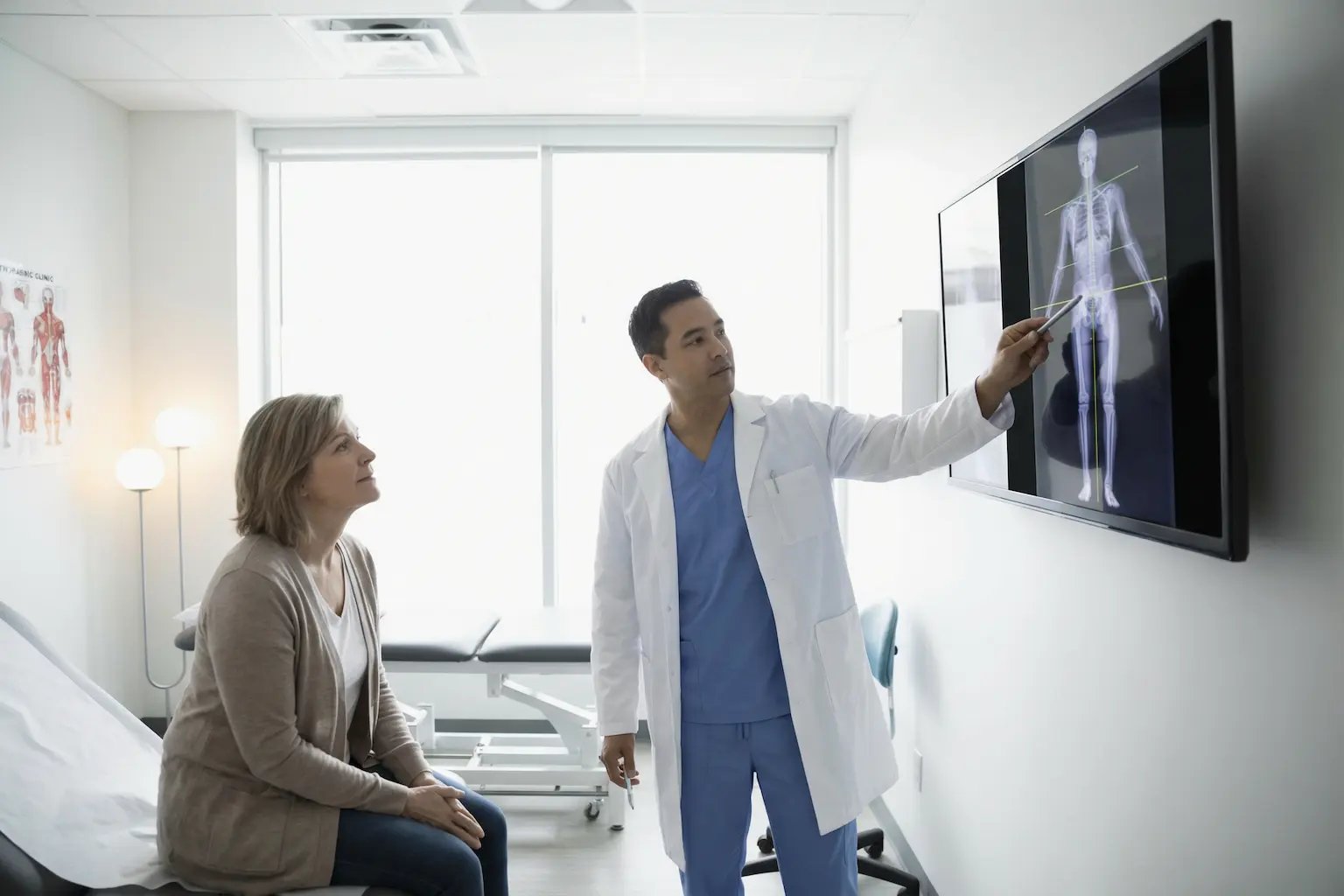
An EOS full body scan captures your whole skeleton in one session. It shows your spine alignment, pelvis position, hip joints, knee alignment, leg length and overall posture.
Because the scan is done while standing, it shows how your body naturally carries weight. This is very important for diagnosing scoliosis, posture imbalance and joint problems. The scan produces clear 2D images and an advanced 3D reconstruction of your skeleton. This helps doctors create better treatment plans.
Benefits of an EOS Scan
An EOS scan has many advantages, especially for people with spine, posture and joint concerns. It gives detailed, weight-bearing information that helps doctors make more accurate diagnoses and treatment plans.
- Accurate Posture Analysis: EOS imaging shows your body in a natural standing position, which reflects how you carry weight in everyday life. This gives a true picture of spinal balance and overall alignment. Scans done lying down cannot provide this.
- Detects Alignment Problems: It clearly identifies spinal curvature, pelvic tilt, knee imbalance and uneven leg length. Early detection of these issues can help prevent long-term complications and chronic pain.
- Low Radiation Exposure: A low-dose EOS scan uses significantly less radiation than traditional X-rays and CT scans. This makes it safer for children, teenagers with scoliosis and patients who need repeated monitoring over time.
- Better Surgical Planning: The advanced 3D reconstruction allows surgeons to measure angles and alignment precisely. This improves surgical accuracy, reduces risks and supports better outcomes after surgery.
- Useful for Many Conditions: EOS imaging helps diagnose and monitor scoliosis, spine pain and imbalance, knee alignment problems, hip imbalance and leg length differences, all in a single scan.
Low Radiation and Safety of EOS Imaging
Safety is one of the biggest concerns people have. A low-radiation EOS scan system uses significantly less radiation than conventional X-rays and CT scans. This makes it safer, especially for:
- Children
- Teenagers with scoliosis
- Patients who need repeated scans
EOS Scan for Children
Children with scoliosis often need regular monitoring. Because EOS uses low radiation, it is considered a safer option for long-term follow-up.
EOS Scan Safety in Pregnancy
If you are pregnant or think you might be pregnant, always tell the clinic. In most cases, scans during pregnancy are avoided unless medically necessary. Overall, EOS imaging is designed with patient safety in mind.
EOS Scan Procedure (Step by Step)
Many people feel nervous before their first scan. Here is what usually happens during an EOS scan:
- Before the Scan: You may be asked about your medical history. Comfortable clothing is recommended. Sometimes you may need to remove metal items.
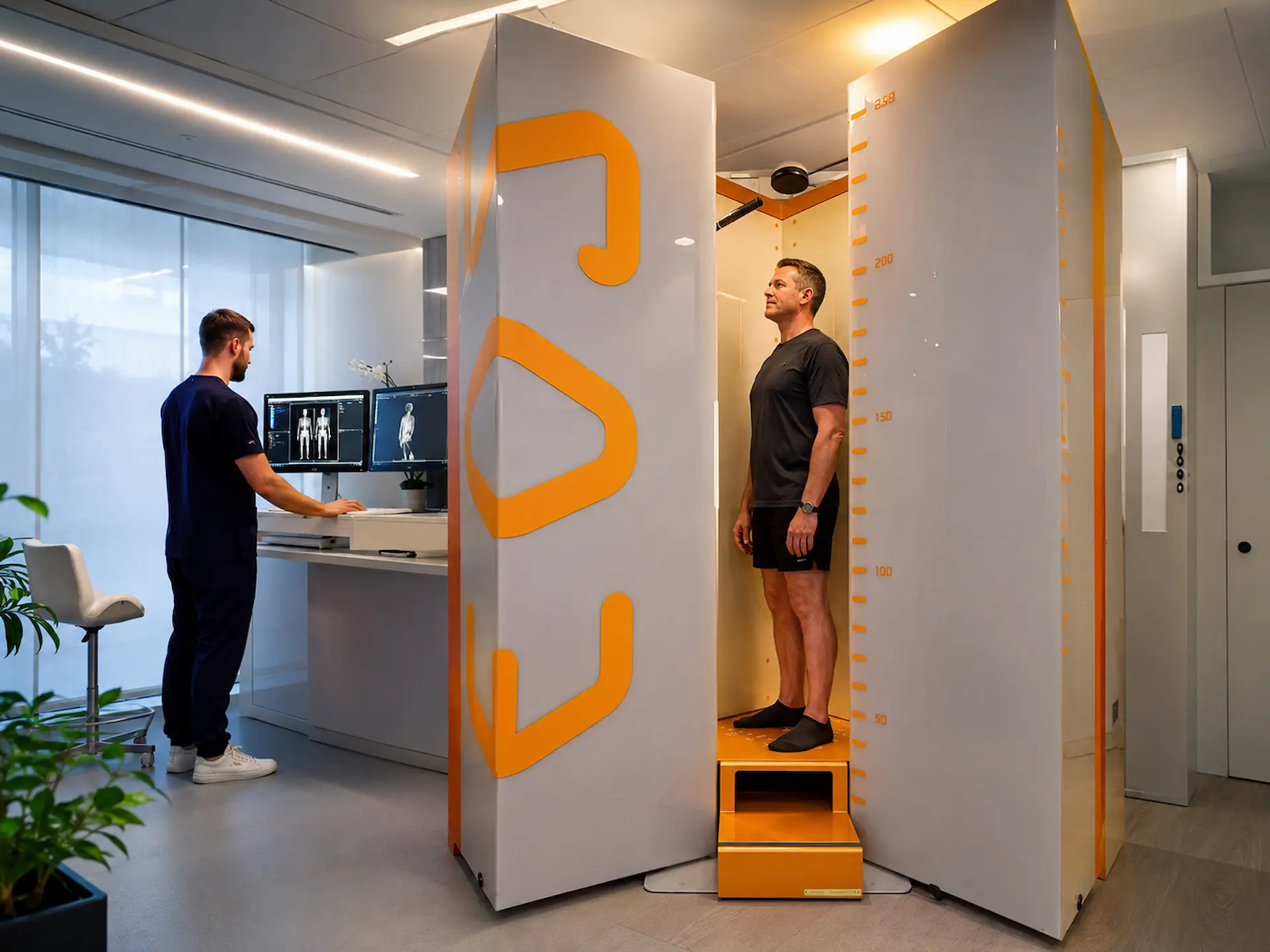
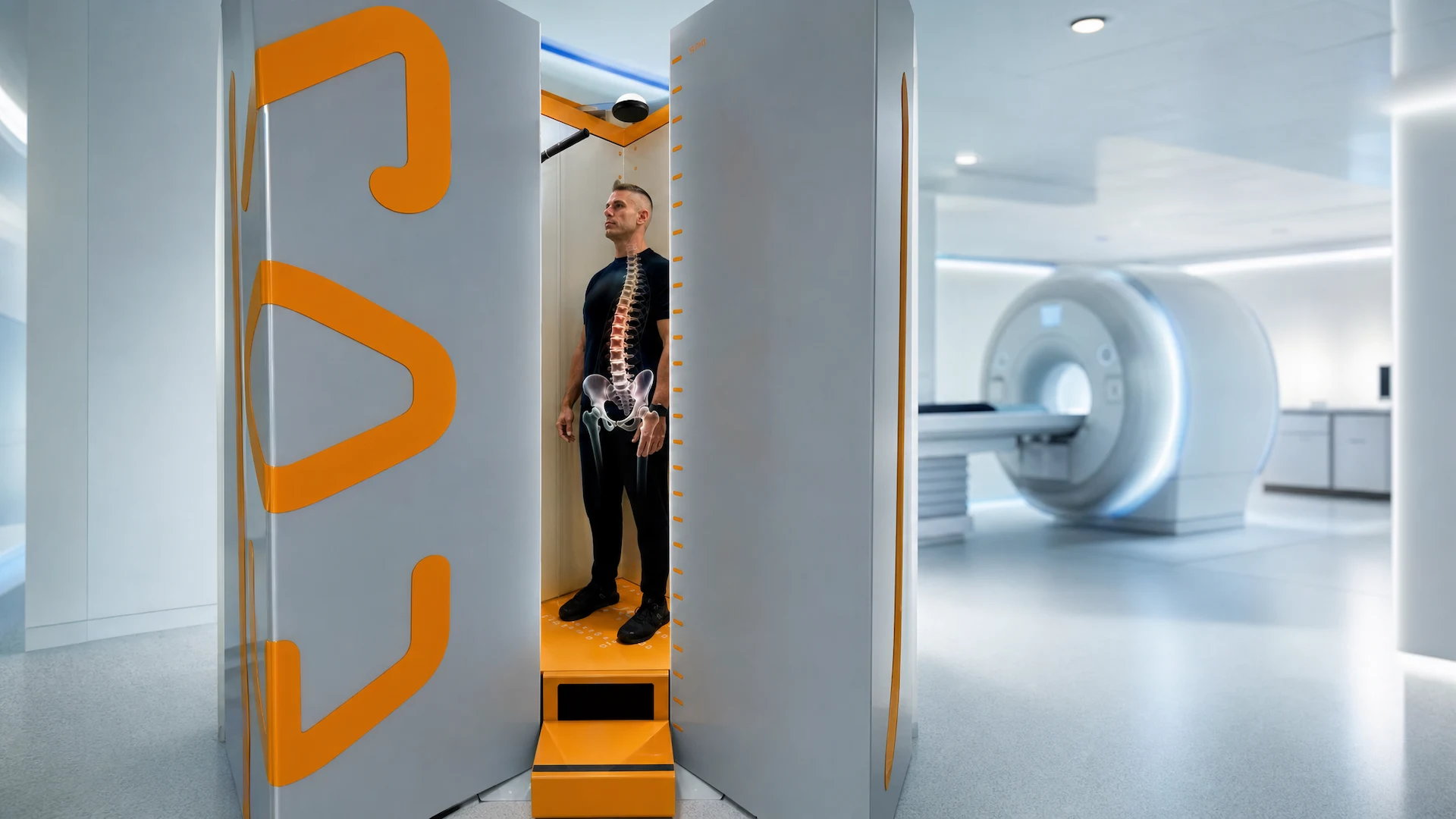
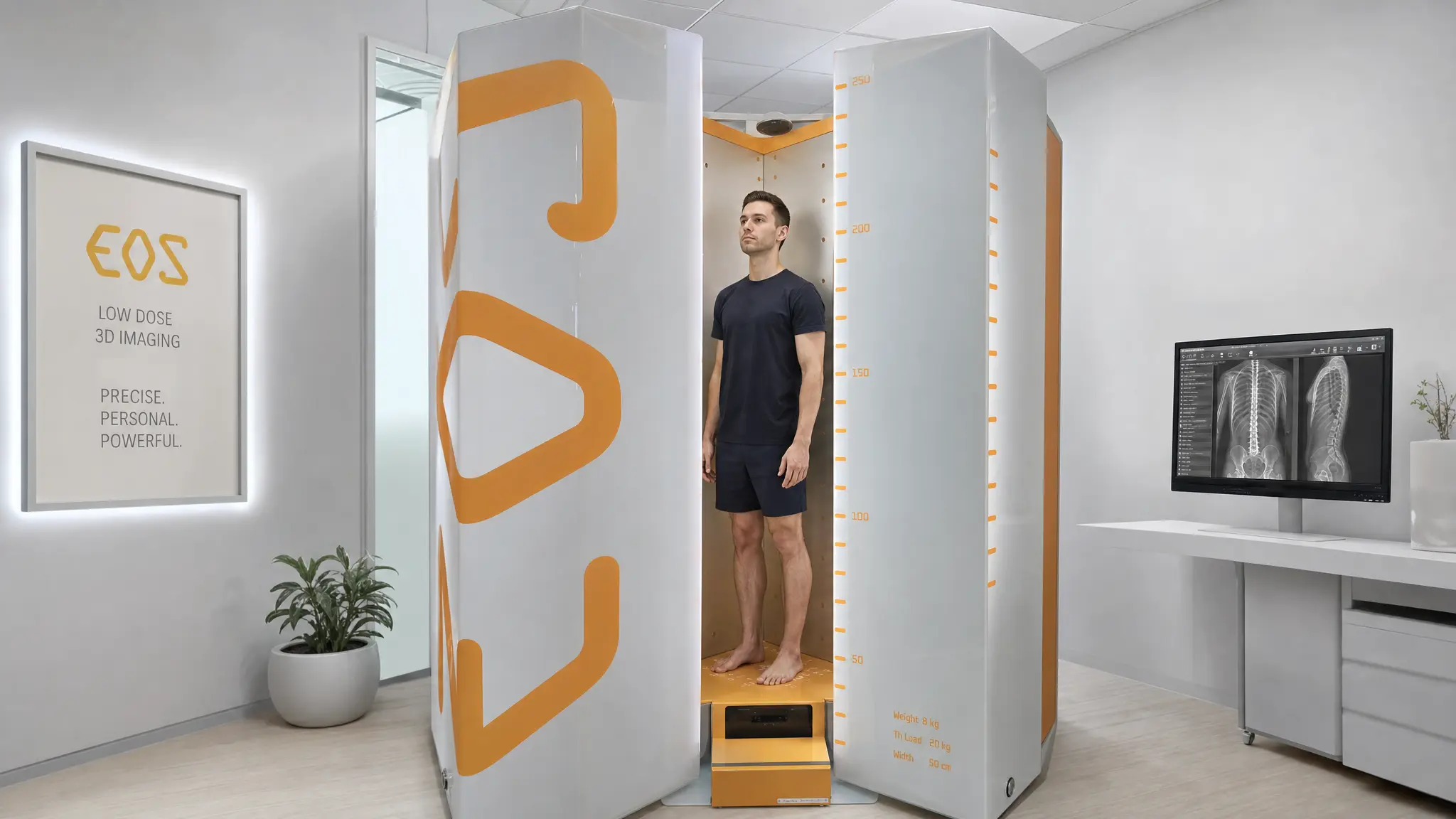
- During the Scan: You stand inside an open cabin. The scanner moves up and down around you. You stay still for a short time. The scan is painless and quick.
- EOS Scan Time: The actual scan usually takes about 2 to 3 minutes. The full appointment may take around 20 to 30 minutes.
- After the Scan: Specialists review the images. A detailed report is prepared for your doctor. The process is simple, fast and comfortable.
How Does an EOS Scan Work?
The system uses two X-ray beams that take images from two angles at the same time: front and side. This is called biplanar imaging. Advanced software then:
- Combines the images
- Builds a 3D model of your skeleton
- Measures angles and alignment
Because you are standing, the scan shows how your weight is really spread. This helps doctors understand posture imbalance better than scans done lying down.
EOS Scan Compared with Other Scans
It helps to compare EOS imaging with other common scans.
| Method | What It Shows | Radiation | Key Strength |
|---|---|---|---|
| EOS Scan ★ | Full-body front and side skeletal images (standing); 2D and 3D models | Low-dose X-ray | Best for posture and full-body alignment |
| Traditional X-Ray | 2D images of bones and body structures | Ionising radiation | Fast and widely available |
| MRI | Detailed soft tissues, organs, discs, ligaments | No radiation | Best for soft tissue evaluation |
| CT Scan | Cross-sectional images of bones and tissues | Higher-dose X-ray | High-detail imaging in several planes |
Conditions an EOS Scan Can Help Diagnose
An EOS scan is helpful for many musculoskeletal conditions:
- Scoliosis: Clearly shows spinal curvature. Children with scoliosis often need regular monitoring.
- Spine Problems: Evaluates spinal balance and posture issues.
- Knee Alignment: Checks how the knees line up under body weight.
- Hip Imbalance: Detects uneven hip position.
- Leg Length Difference: Measures leg length differences precisely.
- Pelvis Position: Identifies pelvic tilt and rotation.
When Do Doctors Recommend an EOS Scan?
Doctors recommend an EOS scan to see how your skeleton lines up while standing. This can reveal issues that may not show on standard scans done lying down. An EOS scan may be suggested if you:
- Have ongoing back, hip or knee pain
- Have suspected or diagnosed scoliosis
- Notice posture imbalance or uneven shoulders
- Have a leg length difference or pelvic tilt
- Need assessment before orthopaedic surgery
- Need monitoring of a spinal condition
How EOS Imaging Supports Personalised Treatment Planning
An EOS scan does more than diagnose. It helps doctors create a personalised treatment plan using accurate full-body alignment measurements. With detailed 2D images and 3D reconstruction, specialists can:
- Measure spinal curves precisely
- Assess pelvic and hip alignment
- Evaluate knee position under weight
- Identify leg length differences accurately
These measurements help guide physiotherapy, brace design, orthotic support and surgical planning when needed. EOS imaging can also be safely repeated to monitor progress and adjust treatment over time. This makes EOS a valuable tool in modern orthopaedic and long-term musculoskeletal care.
Why Choose ScanAlign for an EOS Scan?
At ScanAlign, advanced low-radiation EOS standing imaging is used to assess full-body skeletal alignment in a natural weight-bearing position. This allows accurate evaluation of posture, spinal balance and joint alignment, with detailed 2D imaging and clinically guided 3D reconstruction when required.
If you have ongoing back pain, scoliosis or posture concerns, an EOS full body scan can give the clarity needed for an accurate diagnosis and a personalised treatment plan.
Before you start treatment, or change the one you are on, it is worth getting a detailed diagnosis. Knowing whether the cause sits in the pelvis, the legs or the spine changes what will actually help.
Conclusion
An EOS scan is a modern way to evaluate your skeleton while standing. It gives detailed 2D and 3D images with low radiation. This makes it safer and more effective for diagnosing posture problems, scoliosis, joint misalignment and leg length differences.
Compared with traditional imaging, EOS shows how your body works under its natural weight. It is quick, painless and accurate. It helps doctors find the real cause of back pain, posture issues or joint problems and plan better treatment.
Book Your EOS Full Body Scan Today →FAQs
- What is an EOS full body scan? An EOS full body scan is an advanced, weight-bearing 3D X-ray. It captures your whole skeleton in a natural standing position using ultra-low radiation.
- How long does an EOS scan take? The actual standing scan takes about 2 to 3 minutes from start to finish. You stay upright in an open scanner with no discomfort.
- Why would a doctor order a full body scan? A doctor may order it to find hidden skeletal misalignments, explain posture pain, or help plan treatment for spine, hip, knee or leg issues.
- What are the side effects of the EOS scan? There are no direct side effects, as the scan is painless and uses very low radiation. However, pregnant patients are usually advised to wait.
- What conditions can an EOS scan detect? An EOS scan can detect scoliosis, pelvic tilt or rotation, leg length differences, hip and knee misalignment, and other skeletal imbalances.
Continue reading
More articles
Posture Assessment in London: When Should You Consider an EOS Scan?
Living with back pain or posture problems in Pakistan? Learn when a posture assessment and EOS scan in London can help find the real cause of your pain.
MRI Shows Nothing But Back Pain Remains: Could Alignment Be the Cause?
Your MRI was normal but the back pain has not gone. Alignment problems rarely show on standard scans.
EOS Scan for Leg Length Discrepancy: Why Accurate Measurement Matters
Hip or back pain with no clear answer? Leg length may be the cause. EOS checks both legs while you stand and may show what lying-down scans miss.