

Abbas Dhami
Specialist Diagnostic Radiographer
Many people live with ongoing lower back and hip pain, uneven hips or posture imbalance without knowing the real cause. Often, the problem is not just muscle strain or daily activity. It is often linked to how the pelvis sits in the body. Two common alignment problems are pelvic tilt and pelvic rotation. Both can affect how your spine, hips and legs work together.
The main difficulty is that these problems are not always easy to find. Most traditional scans are done while you lie down. That does not show how your body behaves when you stand or walk. So many alignment problems stay hidden. This is where EOS imaging matters. An EOS scan captures your body in a natural standing position. This lets doctors see your real alignment. It makes it easier to find pelvic tilt and pelvic rotation accurately and to understand how they affect your body.
What Pelvic Tilt Means in Simple Terms
Pelvic tilt means the angle or position of your pelvis. The pelvis is a central structure that links your upper body to your lower body. When it sits in the right position, it supports good posture and balanced movement. But when it tilts in any direction, it can upset the alignment of the whole body.
- Anterior pelvic tilt, where the pelvis tilts forward
- Posterior pelvic tilt, where the pelvis tilts backward
- Lateral pelvic tilt, where one side of the pelvis is higher than the other
Each type of tilt changes how weight is spread across the spine and hips. Over time, this can lead to discomfort, stiffness and posture imbalance. Even a small tilt can cause clear changes in movement and stability.
What Pelvic Rotation Means in Simple Terms
Pelvic rotation is not the same as pelvic tilt. Instead of moving up or down, the pelvis turns. This means one side of the pelvis moves forward or backward compared with the other side. It puts the body in a twisted position.
Pelvic rotation is often harder to notice, because it may not be visible from the outside. Even so, it can still affect how your body moves. It may cause an uneven walk, imbalance, or a feeling that one side of your body is different from the other.
This kind of alignment problem can also put uneven pressure on the hips and spine. Over time, it can affect posture, coordination and overall comfort.
Why Pelvic Tilt and Pelvic Rotation Are Easy to Miss
Pelvic alignment problems are often missed, for several reasons.
First, the symptoms are often general. People may feel pain or discomfort but not know the exact cause. The pain may not be severe at first, so it is easy to ignore.
Second, the body naturally adjusts to imbalance. If your pelvis is tilted or rotated, your muscles and spine adjust to keep you balanced. This compensation can hide the real problem and make it harder to find.
Third, standard scans may not show the problem clearly. Most scans are taken while you lie down, which removes the effect of gravity and body weight. This means the scan does not show how your pelvis behaves in real life. As a result, many people are told their scans look normal, even though their symptoms carry on.
Why Standing EOS Imaging Matters for Pelvic Assessment
EOS imaging is different from traditional scans because it captures the body while you stand. This matters because your posture and alignment are most relevant when you are upright. The way your body carries weight plays a major role in how alignment problems develop.
Key advantages of EOS imaging include:
- It captures the whole body in one scan
- It shows your natural posture in real conditions
- It gives front and side views together
- It uses low radiation compared to many traditional methods
Because of these benefits, EOS imaging is especially useful for checking pelvic alignment. It lets doctors see how the pelvis works with the spine and hips in a functional position.
How an EOS Scan Reveals Pelvic Tilt
An EOS scan gives a clear view of the pelvis and its position in relation to the spine. It helps doctors measure the angle of the pelvis and find any tilt.
With EOS imaging, doctors can:
- Detect anterior or posterior pelvic tilt
- Measure how much the pelvis is tilted
- Understand how the tilt affects the alignment of the spine
- Find imbalances that may lead to discomfort
This detailed information helps explain the root cause of posture problems. It also supports better treatment planning, by focusing on alignment rather than just symptoms.
How an EOS Scan Reveals Pelvic Rotation
Pelvic rotation is often hard to confirm without advanced imaging. An EOS scan makes this easier by showing both sides of the body clearly in a standing position.
Through EOS imaging, clinicians can:
- Compare the left and right sides of the pelvis
- Find differences in rotation
- Detect asymmetry in the hips and spine
- Understand how rotation affects movement and balance
This makes EOS imaging a valuable tool for finding hidden alignment problems that may not show up on standard scans.
Understanding the Link Between Pelvic Tilt, Pelvic Rotation and Spinopelvic Alignment
| Aspect | Pelvic Tilt | Pelvic Rotation | Spinopelvic Alignment |
|---|---|---|---|
| Definition | Forward, backward or sideways tilt of the pelvis | Twisting of the pelvis from left to right | Overall alignment between the pelvis and the spine |
| Movement Type | Sagittal or side-to-side movement | Rotational (horizontal plane movement) | Combined multi-directional alignment |
| How It Appears | May be visible in posture | Often not visible from the outside | Not visible without advanced imaging |
| Effect on Spine | Changes the natural curve of the spine | Causes uneven load on the spine | Determines overall spinal balance |
| Effect on Hips | Changes hip angle and mobility | Creates uneven hip position | Controls how the hips and spine work together |
| Common Symptoms | Lower back pain, posture imbalance | Uneven hips, uneven walking | Combined pain, instability and posture problems |
| Detection Method | EOS scan, posture analysis | EOS scan (more accurate for rotation) | EOS full-body standing imaging |
| Clinical Importance | Affects posture and daily movement | Affects symmetry and body balance | Critical for diagnosing full-body alignment problems |
What Symptoms Can Be Linked to These Pelvic Alignment Changes
Pelvic tilt and pelvic rotation can cause a range of symptoms. These symptoms may seem unrelated at first, but they often share a common cause.
Common symptoms include:
- Lower back and hip pain
- Uneven hips
- Misaligned hips
- Posture imbalance
- One leg feeling shorter
- Difficulty standing for long periods
Symptoms and Possible Alignment Links
| Symptom | Possible Alignment Problem |
|---|---|
| Lower back pain | Pelvic tilt |
| Uneven hips | Lateral pelvic tilt |
| Uneven walking | Pelvic rotation |
| Hip discomfort | Misaligned pelvis |
| Posture imbalance | Combined alignment problems |
This table shows how symptoms can be linked to specific alignment problems.
Why EOS Can Be More Helpful Than Traditional Imaging
Traditional scans have limits when it comes to alignment. They often focus on one area and do not show the body in a natural position.
EOS imaging offers several advantages:
- It captures the body while you stand
- It gives a full-body view
- It shows real alignment patterns
- It helps find both tilt and rotation
These features make EOS imaging more effective for diagnosing pelvic alignment problems.
What Clinicians Look For on an EOS Pelvic Alignment Scan
When reviewing an EOS scan, clinicians focus on several key points. These help them understand the body's alignment and find any problems.
They look at:
- The position of the pelvis
- How much tilt or rotation there is
- Symmetry between the two sides
- How the pelvis and spine relate to each other
- Overall posture and balance
This information allows a more accurate diagnosis and better treatment planning.
Who May Benefit From an EOS Scan for Pelvic Tilt or Pelvic Rotation
An EOS scan can help many people, especially those with ongoing alignment concerns.
You may benefit if you:
- Have persistent lower back and hip pain
- Notice uneven hips or posture imbalance
- Feel your body is not properly aligned
- Have symptoms that do not match your standard scans
- Want a detailed understanding of your posture
Early detection can help prevent long-term complications and improve overall health.
Conclusion
Pelvic tilt and pelvic rotation are common alignment problems that can affect posture, balance and comfort. Because these problems are not always visible, traditional scans often miss them.
EOS imaging gives a better way to understand these problems. By capturing the body in a standing position, it shows how the pelvis, spine and hips work together. This allows a more accurate diagnosis and effective treatment planning.
Understanding your alignment is the first step towards better health. With EOS imaging, it becomes easier to find problems and take the right steps to correct them.
Before you start a treatment, or change the one you are on, it is worth getting a detailed diagnosis first. Knowing whether the cause lies in your pelvis, your legs or your spine changes what will really help you.
Understand Your Alignment with Confidence
If pain, imbalance or uneven hips keep coming back, it may be time to look at your body more completely. An EOS scan helps show pelvic alignment problems in a natural standing position, so you can understand what is really going on.
Book your EOS scan today and take a confident step towards better posture and lasting comfort.
FAQs
- Pelvic tilt is the position of the pelvis when it moves forward, backward or sideways. It can affect posture, balance and how the spine and hips work together.
- 2- What is pelvic rotation? Pelvic rotation happens when one side of the pelvis moves differently from the other side. This can create imbalance and affect movement and overall body alignment.
- 3- Can an EOS scan detect pelvic tilt? Yes. An EOS scan clearly shows the position of the pelvis while you stand. This makes it easier to measure tilt accurately and understand how it affects the body.
- 4- Can pelvic rotation cause discomfort? Yes. Pelvic rotation can put uneven pressure on the hips and spine. Over time, this may cause discomfort, imbalance and movement problems.
- 5- Why is EOS better than traditional scans? EOS captures the body in a natural standing position, showing your real alignment. Traditional scans often miss these details because they are done while you lie down.
- 6- Who should get an EOS scan? Anyone with posture imbalance, uneven hips or unexplained pain should consider an EOS scan. It is especially useful when standard scans do not explain the symptoms.
Continue reading
More articles
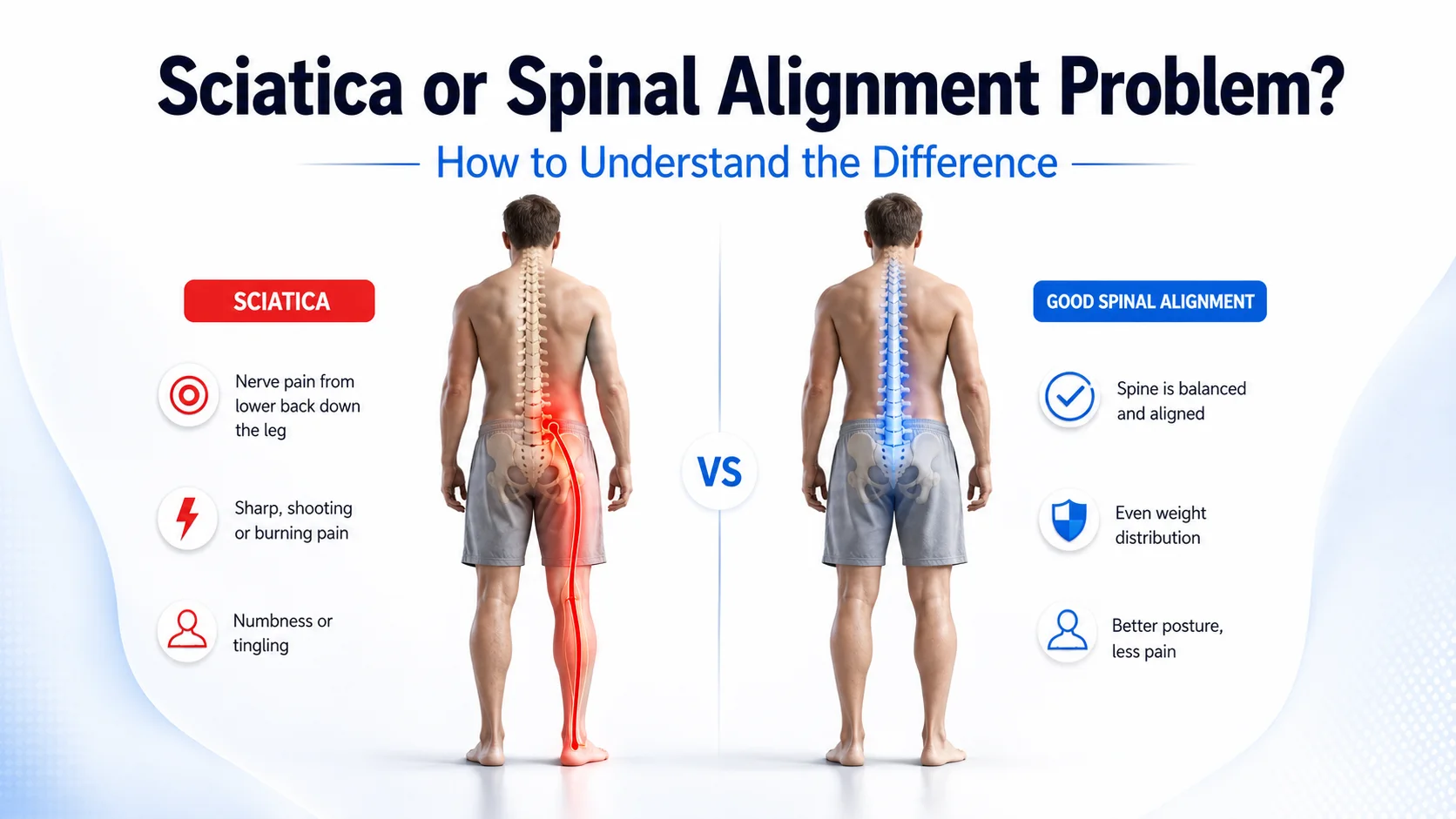
Sciatica or Spinal Alignment Problem? How to Understand the Difference
Sciatica or a spinal alignment problem? Learn how to tell them apart, what is behind your pain, and when a standing spine scan in London can help.
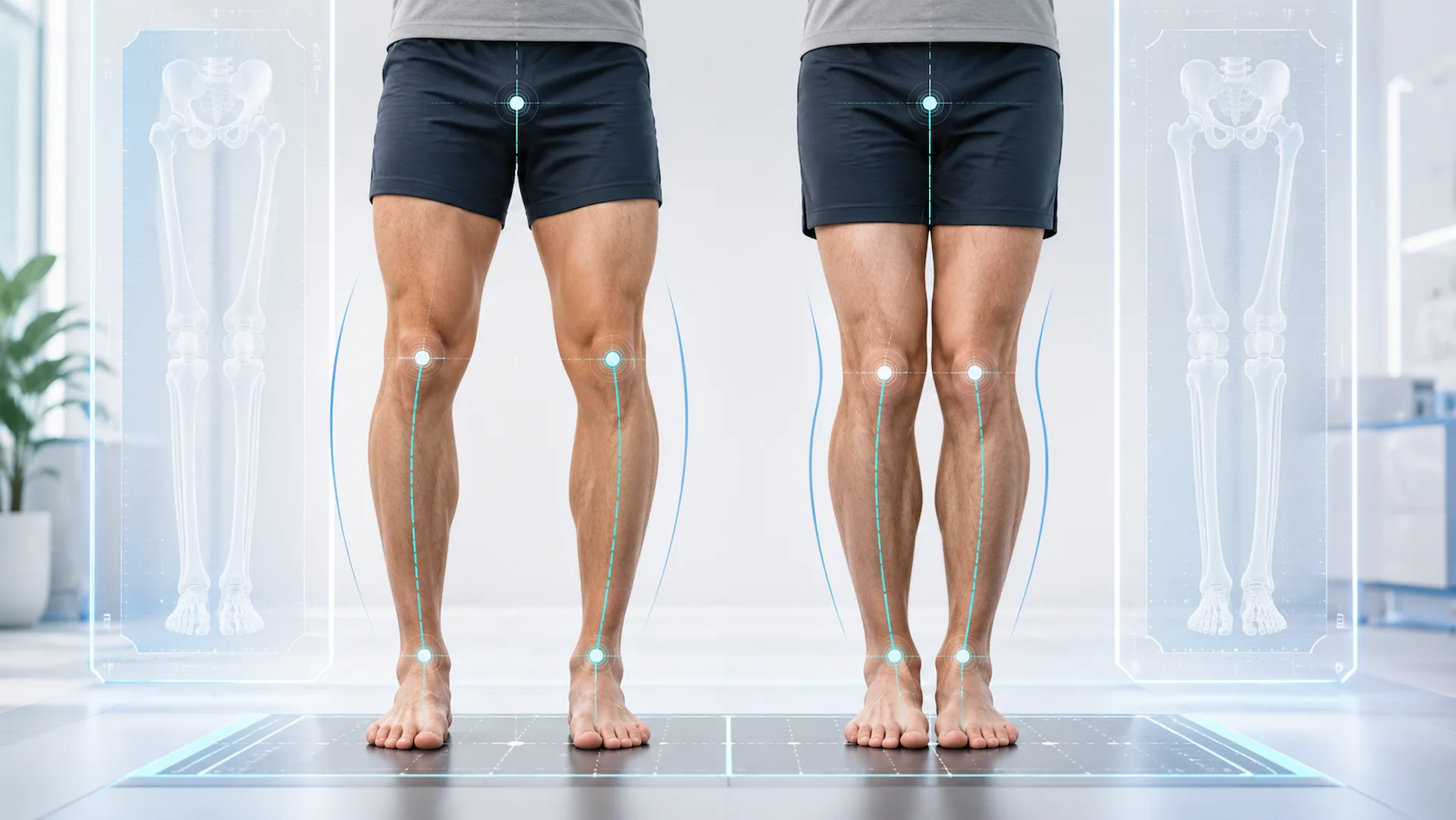
Bow Legs and Knock Knees: When Is a Standing Scan Useful?
Bow legs and knock knees in adults cause more than a visible difference. See how a standing scan measures leg alignment and helps plan the right treatment.
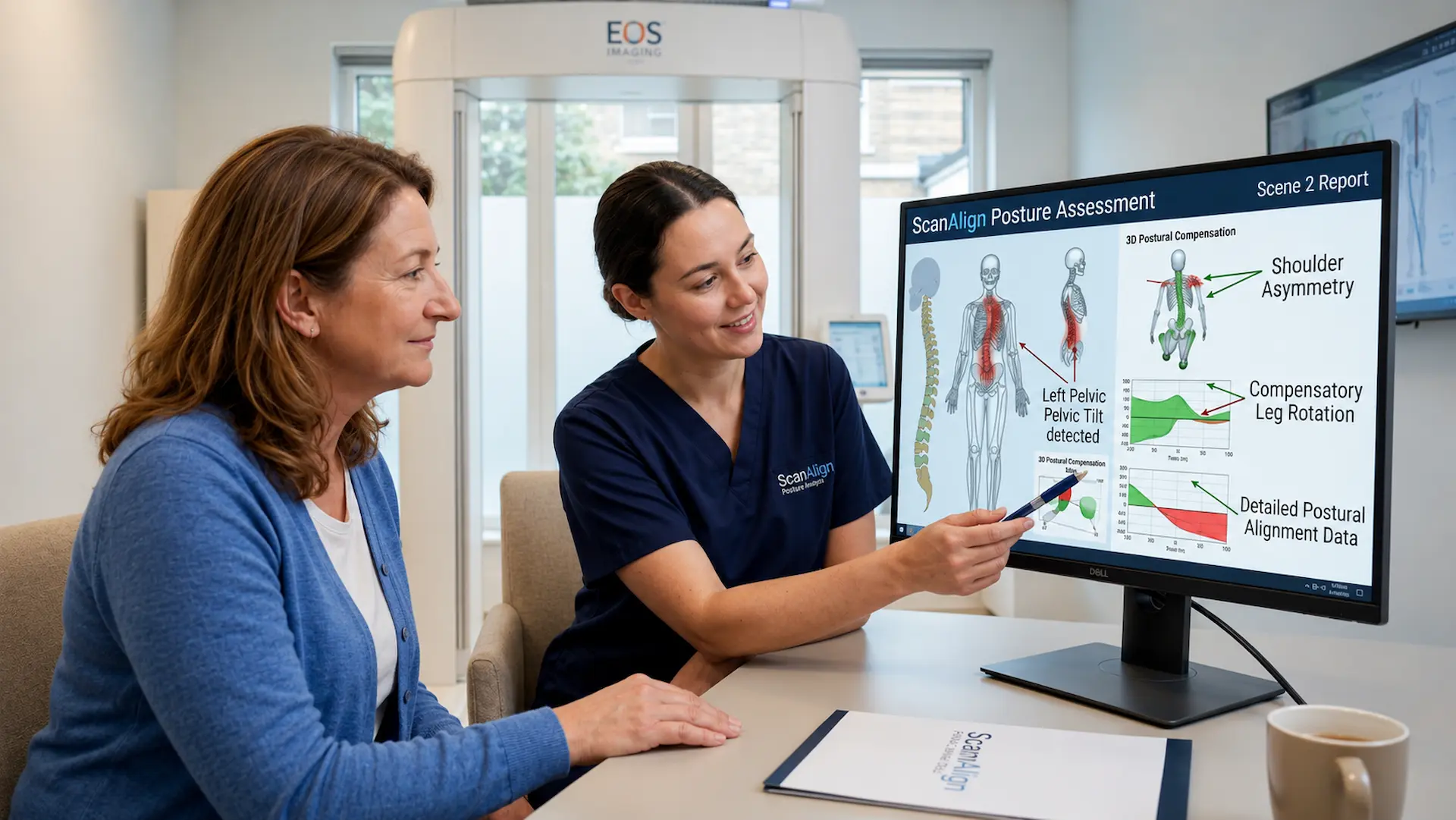
Growing Spines: Low-Dose EOS Imaging for Children and Teenagers
How low-dose EOS imaging helps monitor scoliosis in children and teenagers with detailed standing 3D spine and posture scans in London.