

Why Does My Hip Click, Pop or Snap When I Move?
A clicking or popping hip is usually caused by a tendon sliding over bone. This condition is called snapping hip syndrome. It is common in dancers, runners and people who sit for long hours. It is often painless. But when it hurts or limits your movement, standing whole-body imaging can show the alignment problems that trigger it.
Key points
- Snapping hip syndrome happens when a tendon or muscle catches on a bony bump around the hip.
- There are two main types, internal and external. Each involves different structures.
- Lying-down scans can miss the mechanical cause, because the hip is unloaded and relaxed.
- A standing EOS scan shows how your pelvis, legs and spine work together under your own body weight.
- Imaging is for diagnosis only. It gives your clinician the detail they need to plan the right next step.
You get up from your desk and your hip gives a loud clunk. You swing your leg during a warm-up and feel a rubbery snap at the front of your groin. Or you climb the stairs and hear a pop on the outside of your hip with every step. This is surprisingly common, and most of the time it is not dangerous. But if it keeps happening, or if it hurts, it is worth understanding what is going on.
What are the types of snapping hip syndrome?
Snapping hip syndrome falls into two main types, based on where the snap comes from. In some cases the two types overlap, especially when alignment is off.
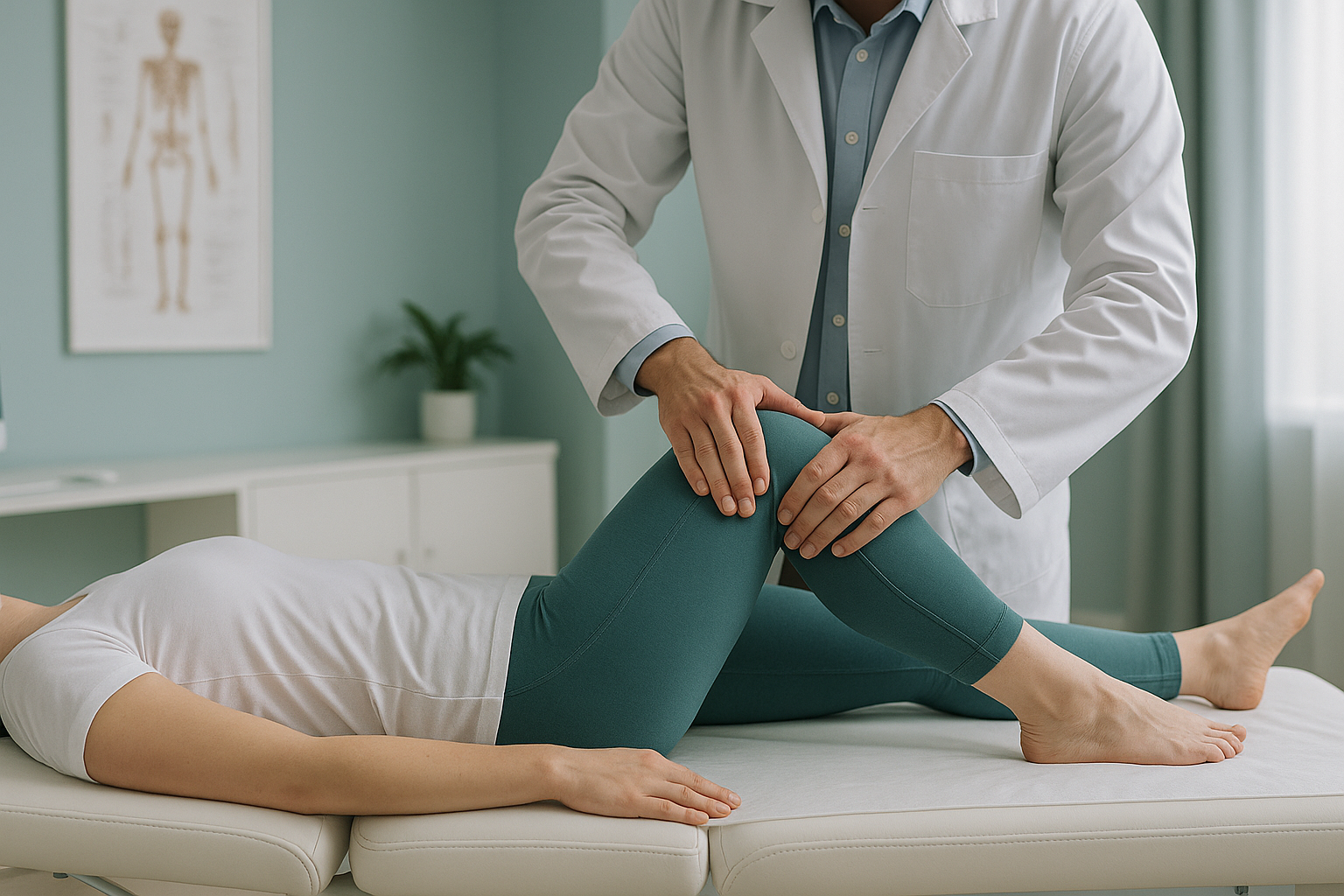
The iliopsoas tendon catches on a bony ridge at the front of the hip socket. You feel a deep click or snap in your groin when you bring your leg forward or turn it outward.
The iliotibial band slides over the greater trochanter, the bony bump on the outside of your hip. This causes a pop on the outer thigh that you can see or hear, often when walking or climbing stairs.
Sometimes the snap comes from inside the joint itself. For example, a hip labral tear or loose cartilage can catch during movement. This is less common, but it can cause a sharper, catching feeling.
What does a clicking hip feel like?
A clicking hip feels like a sudden catch, clunk or snap during movement. It might be painless, a little annoying or truly sore. This depends on the underlying cause and how much inflammation has built up.
A sound you (or others) can hear when you stand, walk or swing your leg. It may happen every time, or only in certain positions.
A dull ache around the front of the hip or on the outer thigh, especially after repeated activity like running or dancing.
The front of the hip feels stiff after sitting. Stretching may ease the snap for a while, but it keeps coming back.
Some people feel as if the hip shifts or clunks out of place. This can be unsettling, even when it is painless.
Snapping hip syndrome is sometimes called dancer's hip. This is because the repeated leg movements in ballet and contemporary dance make it especially common in dancers. But it affects runners, gym-goers and office workers too.
What causes hip popping and snapping?
Hip popping is caused by a tendon or band of tissue flicking over a bony bump. Several factors make this more likely.
Sitting for long periods shortens the iliopsoas, so it catches as it slides over the hip.
Dancers, runners and cyclists load the same tendon path again and again, which increases friction.
A pelvic tilt, a leg length difference or altered femoral version changes how tendons move over bone.
Naturally loose joints allow more tendon movement. A hip hypermobility test can help make this clear.
The key point is that a clicking hip is rarely just about the hip. Your body is a connected chain from your feet to your head. A slight twist in the pelvis, a difference in leg length, or tightness somewhere else can all change the forces going through one hip. That is why pain from snapping hip syndrome sometimes shows up in the knee, the lower back, or even the other hip, far from the real cause.
If the snapping continues, irritation of the bursa near the tendon can develop into iliopsoas bursitis. Over time, some people also develop signs of hip impingement (FAI), where the bone shape of the hip socket adds to the catching feeling.
How is a snapping hip assessed with standing imaging?
A standing, weight-bearing EOS scan captures your whole skeleton in the position where the snap actually happens: upright and loaded. Lying-down imaging relaxes the muscles around the hip and lets gravity flatten your pelvis. This can hide the alignment problems that trigger the click.
You stand naturally inside the scanner. The image shows how your pelvis tilts, whether your legs are the same length, and how your spine and hips relate to each other under load. These are the real-world forces that make your hip snap.
The EOS system uses about 90% less radiation than a standard X-ray, around ten times less. The scan takes seconds, and there is no closed tunnel.
A normal X-ray or CT scan taken while you lie flat removes the effect of gravity and muscle tension. The pelvis settles into a neutral position that may look perfectly balanced, even when it is not in real life.
Lying-down scans are still useful. But for a mechanical problem like a snapping hip, they can miss the alignment clue your clinician needs.
When MRI is the better tool: EOS shows bones, joints and alignment under load. For soft tissue detail, such as a labral tear, tendon inflammation or nerve involvement, MRI is usually the better choice. Your clinician may recommend both, depending on your symptoms.
Thinking about travelling to London to find out what is behind your clicking hip? You can book a hip assessment with a free video consultation first, from home, so we can check whether a standing scan is the right step for you.
Book a free video consultationWhat helps with snapping hip syndrome?
The right approach depends on the cause, which is why accurate imaging matters. ScanAlign is a diagnostic imaging clinic, so we do not provide treatment. But here is what clinicians usually consider once the cause has been found.
- Targeted stretching and strengthening. A physiotherapist can address hip flexor tightness or weak glutes that add to abnormal tendon movement.
- Changing your activity. Adjusting your training load or technique can reduce the repeated friction that irritates the tendon.
- Addressing alignment. If imaging shows a pelvic tilt, a leg length difference or abnormal femoral version, your clinician can include that in a wider plan.
- Further tests. Symptoms that continue or get worse may need more imaging or a specialist review.
The goal of a standing alignment scan is to give your treating clinician the full mechanical picture. Then they can target the actual cause, not just manage the symptom.
Before you start treatment, or change the one you are on, it is worth getting a detailed diagnosis. Knowing whether the cause sits in your pelvis, your legs or your spine changes what will actually help.
Frequently asked questions about snapping hip syndrome
Most clicking hips are harmless. If the click is painless and does not limit your movement, it is usually just a tendon sliding over bone. If it becomes painful, gets worse over time, or comes with swelling or stiffness, it is worth having it assessed.
Internal snapping comes from the iliopsoas tendon catching at the front of the hip, near the groin. External snapping happens when the iliotibial band slides over the greater trochanter on the outside. Internal snapping is often felt deep inside. External snapping can sometimes be seen as a flick under the skin.
Dancers repeat large-range hip movements such as grand battements and développés, which load the iliopsoas tendon again and again. This makes snapping hip syndrome especially common in ballet and contemporary dancers, which is where the name comes from.
Over time, repeated friction can irritate the bursa around the tendon, leading to bursitis. In some cases the mechanical stress adds to labral wear inside the joint. Finding and addressing the cause early can help reduce these risks.
No. ScanAlign is a private, self-pay clinic. You can refer yourself, so you do not need a referral from your doctor. We start with a free video consultation so we can understand your symptoms and confirm that a standing scan is the right step for you.
When you lie down, gravity and relaxed muscles let the pelvis settle into a position that may look balanced even when it is not. Standing under your own weight shows how your pelvis actually tilts, whether your legs are level, and how the hip joint takes load in real life. That is exactly the information needed for a mechanical problem like a snapping hip.
Yes. The EOS system uses about 90% less radiation than a standard X-ray, around ten times less. It captures the full image in one quick exposure while you stand still.
For patients travelling from abroad, the price is confirmed during the free video consultation.
Yes. A pelvic tilt, a leg length difference, or altered rotation of the thigh bone can change how tendons move over the hip with each step. Standing imaging captures these alignment details under load. This can explain why the click happens when walking but not when you are sitting or lying down.
ScanAlign is a diagnostic imaging clinic. We produce detailed alignment reports. Your treating clinician, such as a physiotherapist or orthopaedic surgeon, uses them to plan the right approach. We do not prescribe or give treatment ourselves.
Find out what is behind your clicking hip
A free video consultation, from home, lets us understand your symptoms and advise whether a standing alignment scan in London is the right next step.
Book a free video consultationWritten by Abbas Dhami (Specialist Diagnostic Radiographer)
Sources
- Winston P, Awan R, Cassidy JD, Bleakney RK. Clinical examination and ultrasound of self-reported snapping hip syndrome in elite ballet dancers. Am J Sports Med. 2007;35(1):118-126.
- Allen WC, Cope R. Coxa saltans: the snapping hip revisited. J Am Acad Orthop Surg. 1995;3(5):303-308.
- NHS. Hip pain in adults. nhs.uk/conditions/hip-pain. Accessed 2024.
This page is general information and not a diagnosis.
ScanAlign is the trading name of CoreMed Solutions Ltd and operates under The Harley Street Hospital's CQC licence.