

What Is a Microdiscectomy, and When Is It Recommended?
A microdiscectomy is a minimally invasive spine operation. It removes the part of a herniated disc that is pressing on a nerve. It is usually recommended when leg pain caused by nerve root compression has not improved after several weeks of conservative treatment, such as physiotherapy and pain relief.
Key points
- A microdiscectomy targets disc material that is pressing on a spinal nerve, usually in the lower back.
- It is usually a day-case or overnight procedure, done under general anaesthetic.
- Surgery is considered once conservative treatment has had a fair trial and symptoms continue.
- Most people notice a big drop in leg pain soon after the operation.
- Imaging before and after surgery helps your surgeon plan the operation and track your recovery.
What exactly is a microdiscectomy?
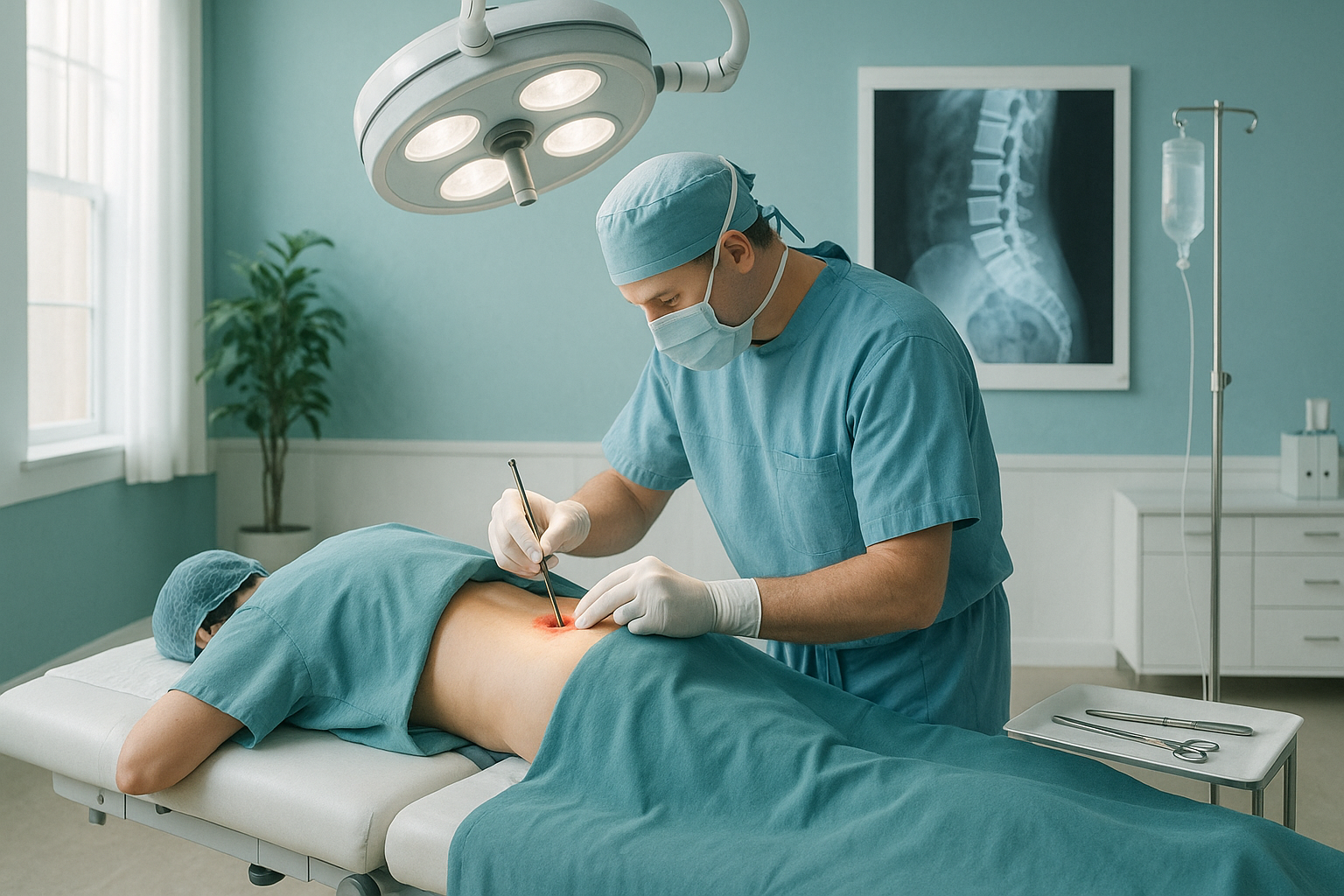
A microdiscectomy is an operation to remove a small piece of a spinal disc. This piece has bulged or burst and is pressing on a nearby nerve root. The surgeon works through a small cut, usually less than a few centimetres long. They use a microscope or magnifying loupes to work precisely. Only the piece of disc causing the problem is removed, not the whole disc.
The operation is sometimes called a lumbar discectomy, because it is most often done in the lower (lumbar) spine. It is different from a laminectomy, which removes part of the bony roof of the spinal canal to relieve wider pressure. In practice, a surgeon may trim a tiny amount of bone to reach the disc. But the main goal is to take pressure off the nerve root, not to widen the canal.
When is a microdiscectomy recommended?
A microdiscectomy is usually recommended when a herniated disc is causing ongoing leg pain, numbness or weakness. This is when the symptoms have not responded to conservative treatment over a reasonable time, usually six to twelve weeks. The key symptom is lumbar radiculopathy, where the pressed nerve sends pain, tingling or weakness down one leg. The operation tends to work better for leg pain than for back pain alone.
Conservative treatment tried first often includes physiotherapy, anti-inflammatory medicine, changing your activities and sometimes steroid injections. Surgery is generally not the first option. Before recommending surgery, your specialist will weigh how severe your symptoms are, how much they affect your daily life and what your scans show.
Urgent note. If you suddenly lose any control of your bladder or bowel, have numbness around your groin or saddle area, or have weakness in both legs that is getting worse quickly, get urgent medical help immediately. Contact your doctor or go to the nearest emergency department. These symptoms may point to a condition called cauda equina syndrome, which needs emergency assessment.
What symptoms suggest you might need a microdiscectomy?
The main symptom is leg pain that follows the path of the pressed nerve. People often describe it as sharp, burning or like an electric shock. Below are the common signs that may mean surgery is worth considering.
Pain spreading from the lower back into the buttock and down one leg, often worse than the back pain itself.
Changed feeling in the leg, foot or toes supplied by the affected nerve.
Trouble lifting the foot, pushing off when walking, or a feeling that the leg is giving way.
Symptoms that have not improved in a meaningful way after weeks of physiotherapy, medicine and rest.
How is lumbar discectomy surgery done?
Lumbar discectomy surgery is done under general anaesthetic, usually as a day case or with one night in hospital. Here is a simple overview of what happens.
You are put to sleep with a general anaesthetic and placed face down on the operating table.
The surgeon makes a short cut over the affected level of the spine, guided by scans taken beforehand.
Using a microscope, the surgeon gently moves the nerve root aside and removes the piece of disc pressing on it.
The cut is closed. You are watched closely as the anaesthetic wears off, and most people can walk the same day.
How long does recovery from a discectomy take?
Most people feel a clear improvement in leg pain within the first few days after surgery. Full recovery is different for each person. It depends on things like fitness, the demands of your job and how long you had symptoms before the operation.
As a rough guide, many people go back to light desk work within two to four weeks. More physical jobs usually take six to twelve weeks. Your surgeon and physiotherapist will give you a timeline for your own case. A gradual return to exercise and lifting is usually advised, rather than going straight back to full activity.
It is common to feel some soreness around the cut for the first few weeks. This is different from the nerve pain you had before, and it usually settles on its own.
What are the risks of a microdiscectomy?
Like any surgery, a microdiscectomy carries some risks. Most are uncommon, but it is important to know about them before you decide.
- The disc herniating again. A small number of people have another disc herniation at the same level in the months or years after surgery.
- Infection. Infection of the wound, or deeper infection, is possible but uncommon with modern surgical methods.
- Nerve damage. There is a small risk of damage to the nerve root or its covering (dura) during surgery.
- Ongoing symptoms. Some people find their back pain or leg symptoms do not fully go away, especially if the nerve was pressed for a long time before surgery.
- Risks of general anaesthetic. Blood clots, breathing problems and reactions to medicine, though these are rare.
Your surgeon will go through these risks with you in detail before you agree to the operation.
How does a standing scan help before or after a microdiscectomy?
The usual scans before surgery, such as MRI, are done while you lie down. This is excellent for seeing soft tissue detail, like the disc and the nerve. But lying-down scans relax the muscles and remove the effect of gravity. This can hide alignment problems that only show up when you are upright and carrying your body weight.
A standing whole-body EOS scan shows your full spinal alignment under load, from your head down to your feet, in a single image. This can show how a disc problem fits into a bigger picture of posture changes your body makes to cope. For example, a herniated disc on one side can make you lean away from the pain. This shifts your pelvis and changes the curves in your spine. These shifts cannot be seen on a lying-down scan.
After surgery, a standing image can help your surgeon and physiotherapist see whether your alignment has improved and guide your rehabilitation. ScanAlign standing EOS imaging uses about 90% less radiation than a standard X-ray, around ten times less, making it a practical option for follow-up checks.
Before you start a treatment, or change the one you are on, it is worth getting a detailed diagnosis. Knowing whether the cause sits in your pelvis, your legs or your spine changes what will actually help.
A note about MRI. EOS shows bones, joints and alignment clearly. For soft tissue detail, such as discs, nerves and ligaments, MRI is usually the better tool. The two types of scan answer different questions and often work well together. Your surgeon may use both when planning or reviewing your surgery.
Thinking about a scan before or after spinal surgery? You can book pre-operative or follow-up imaging at our clinic at 19 Harley Street, London.
Book a free video consultationFrequently asked questions about microdiscectomy
The two terms are often used to mean the same thing. A microdiscectomy uses a microscope or magnifying loupes through a smaller cut. A traditional discectomy may involve a larger opening. Both have the same goal: removing disc material that is pressing on a nerve.
Many microdiscectomies are done as day-case surgery, which means you go home the same day. Some people stay one night. Your surgical team will advise you based on your own situation.
This depends on how physical your job is. People with desk jobs often go back within two to four weeks. More physical jobs may need six to twelve weeks. Your surgeon will give you specific advice.
Published research suggests that a microdiscectomy relieves leg pain in most patients when they are carefully chosen for surgery. Results for each person depend on many factors, including how long the nerve was pressed and their general health. Your surgeon can talk you through what to expect in your case.
Yes. Some patients have another herniation at the same level. Keeping a healthy weight, staying active and following your physiotherapy programme can help lower this risk, though it cannot be removed completely.
A microdiscectomy is mainly aimed at relieving leg pain caused by a pressed nerve. Its results are less predictable for back pain on its own. If your main problem is back pain without significant leg symptoms, your specialist may recommend other approaches first.
No. ScanAlign accepts self-referrals. You can book a free video consultation to discuss whether an EOS scan would help in your situation, whether that is before or after spinal surgery.
An EOS scan uses about 90% less radiation than a standard X-ray, around ten times less. This makes it especially practical when follow-up or repeated imaging is needed.
An MRI is done lying down and is excellent at showing soft tissues like discs and nerves. A standing EOS scan shows how your whole skeleton lines up under the force of gravity. Together, they give your surgeon a fuller picture, especially when posture changes your body makes to cope are suspected.
Most guidelines recommend trying conservative treatment first. This usually includes physiotherapy, pain-relief medicine, staying as active as you comfortably can, and sometimes guided injections. Surgery is usually considered when these have had a fair trial and symptoms are still severe.
Understand your alignment before or after surgery
A standing whole-body EOS scan shows how your spine, pelvis and legs line up under gravity. It can help your surgical team plan the operation or track your recovery.
Book a free video consultationSources
- NHS, "Lumbar decompression surgery," nhs.uk, accessed 2024.
- Weinstein JN et al., "Surgical vs Nonoperative Treatment for Lumbar Disk Herniation: The Spine Patient Outcomes Research Trial (SPORT)," JAMA, 2006;296(20):2441-2450.
- British Association of Spine Surgeons (BASS), patient information on discectomy, spinesurgeons.ac.uk.
Written by Abbas Dhami (Specialist Diagnostic Radiographer)
This page is general information and not a diagnosis.
ScanAlign is the trading name of CoreMed Solutions Ltd and operates under The Harley Street Hospital's CQC licence.