

Is Yoga Safe If You Are Hypermobile?
Yes, yoga can be safe and good for you if you are hypermobile, but you need to change how you do it. The key is to build strength and control, not to push deeper into stretches. Without these changes, hypermobile people risk overstretching joints that already move beyond their normal range. This can lead to pain and instability.
Key takeaways
- Yoga is not bad for hypermobility, but it must be adapted to your body.
- When joints are loose, strength and stability matter more than flexibility.
- Avoid locking or hyperextending your joints, even if it feels easy.
- Pain after a yoga class is a signal to change your approach, not to push through.
- A standing alignment assessment can show how your joints take load under gravity. This helps guide safer practice.
Why does hypermobility change the way you should do yoga?
Joint hypermobility means your joints move further than the usual range. In a yoga class, that extra range can feel like a gift. You may look impressive in deep poses. But looking flexible often hides a lack of the muscle control needed to keep those positions stable.
Most yoga classes are designed for people with average joint range. Instructions like "go deeper" or "sink lower" assume the student has a natural end-point where connective tissue stops the movement. If you are hypermobile, that braking point is softer. You can slide past it without feeling a clear stretch. The load then goes into ligaments and joint capsules instead of muscles.
Over time, this can lead to hypermobile joints and pain, especially in the wrists, lower back, knees and shoulders. It does not mean yoga is harmful. It means the goal of your practice should move away from gaining flexibility and towards building strength, proprioception and joint awareness.
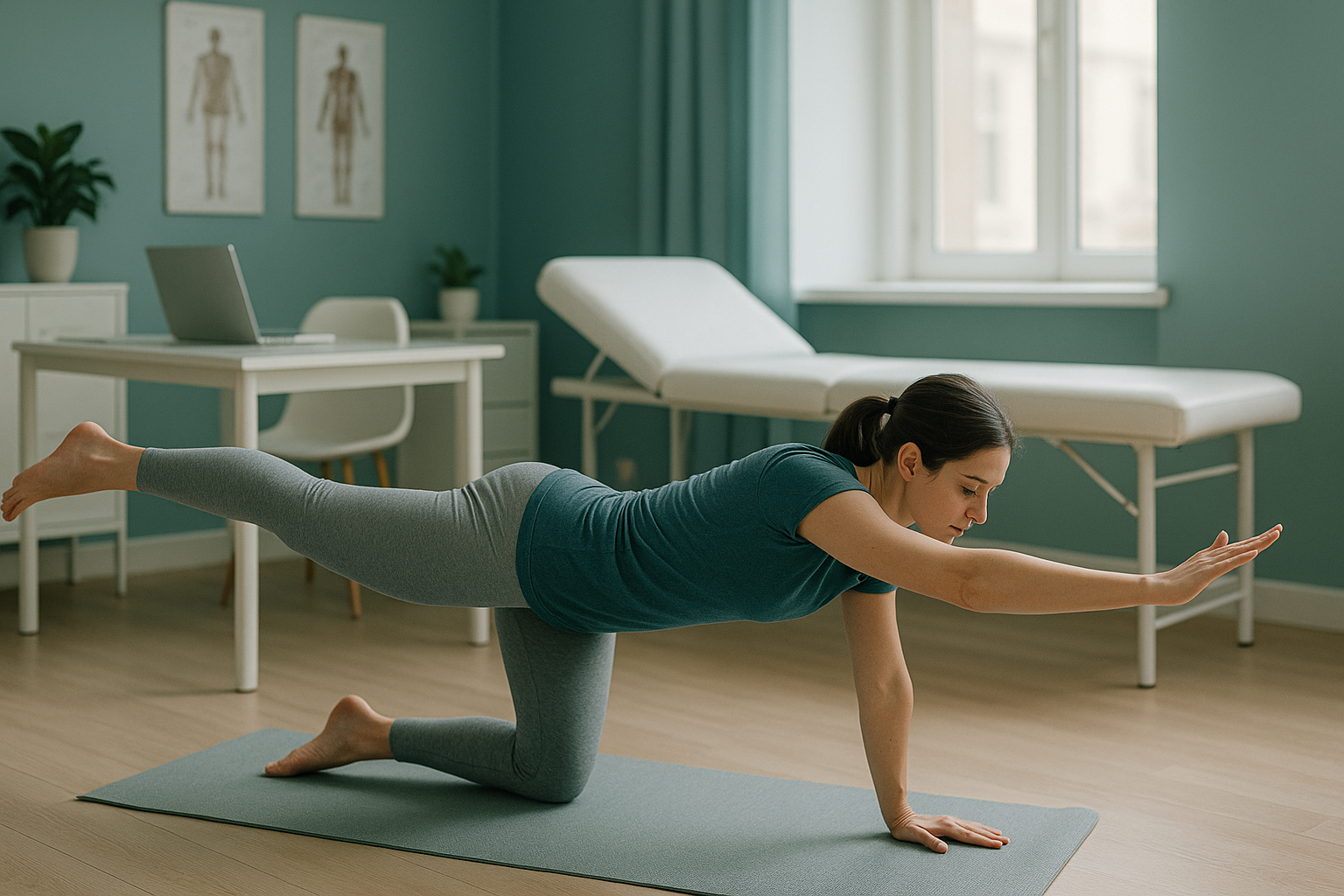
What are the warning signs that yoga is affecting your hypermobile joints?
Pain during or after a yoga class is the clearest signal. But there are smaller signs that your joints are being pushed beyond what they can safely control.
A dull ache in the joints (not the muscles) that starts hours after practice and lasts a day or more.
Joints that click, catch or lock as you move from one pose to the next.
A feeling that your knee, shoulder or wrist might "give way" in weight-bearing poses.
Muscles that tire quickly because they are working overtime to keep loose joints stable.
A note about sudden symptoms. If you ever have sudden numbness, weakness, or loss of bladder or bowel control during or after exercise, get urgent medical help from your doctor or the nearest emergency department. Do not book a scan instead.
How should hypermobile people change their yoga practice?
The most important change is simple: stop before your end range. If a joint can move to its very limit, hold it just short of that point. Use your muscles to control the position. This is sometimes called "working in the mid-range."
Blocks, straps and bolsters stop you from sinking too deep. They are tools, not crutches.
Moving slowly between poses builds control and proprioception, your sense of where your body is in space.
Keep a slight bend in your elbows and knees. Never lock them straight, even if they easily go further.
Styles that focus on holds and muscle engagement (such as Hatha or Iyengar) tend to suit hypermobile bodies better than fast, flowing sequences.
Talk to your teacher
A good yoga teacher will be glad to know about your hypermobility. Many already know about it. Tell them before class so they can give you instructions that focus on engagement rather than depth. If you have been diagnosed with hypermobility syndrome, tell them that too, because it can affect more than just your joints.
If you are not sure how your body aligns under load, a standing assessment can show you and your teacher exactly what to work with.
Book a free video consultationHow does a standing alignment assessment help hypermobile people who do yoga?
A standing alignment assessment captures your skeleton while it carries your weight, just as your body works in a yoga class. Standard scans are taken lying down. This relaxes the muscles and lets loose joints settle into different positions. It may hide the very alignment problems that cause trouble under load, when you stand, balance or hold a pose.
With ScanAlign standing EOS imaging, a full-body image is taken while you stand naturally. It shows how your pelvis, spine, hips and knees relate to each other under gravity. This is especially useful for hypermobile people, because their joints often compensate in a chain. For example, a pelvic tilt might change how your lower back curves, which shifts load into one knee. Pain can show up far from the original cause.
The scan uses about 90% less radiation than a standard X-ray, around ten times less. It takes only a few minutes and needs no preparation.
When MRI is the better tool. EOS shows bones, joints and alignment. For soft tissue, discs or nerves, MRI is usually the better option. If your symptoms suggest a disc or nerve problem, your clinician may recommend MRI instead of, or alongside, a standing assessment.
Before you start treatment, or change the one you are on, it is worth getting a detailed diagnosis. Knowing whether the cause sits in your pelvis, your legs or your spine changes what will actually help.
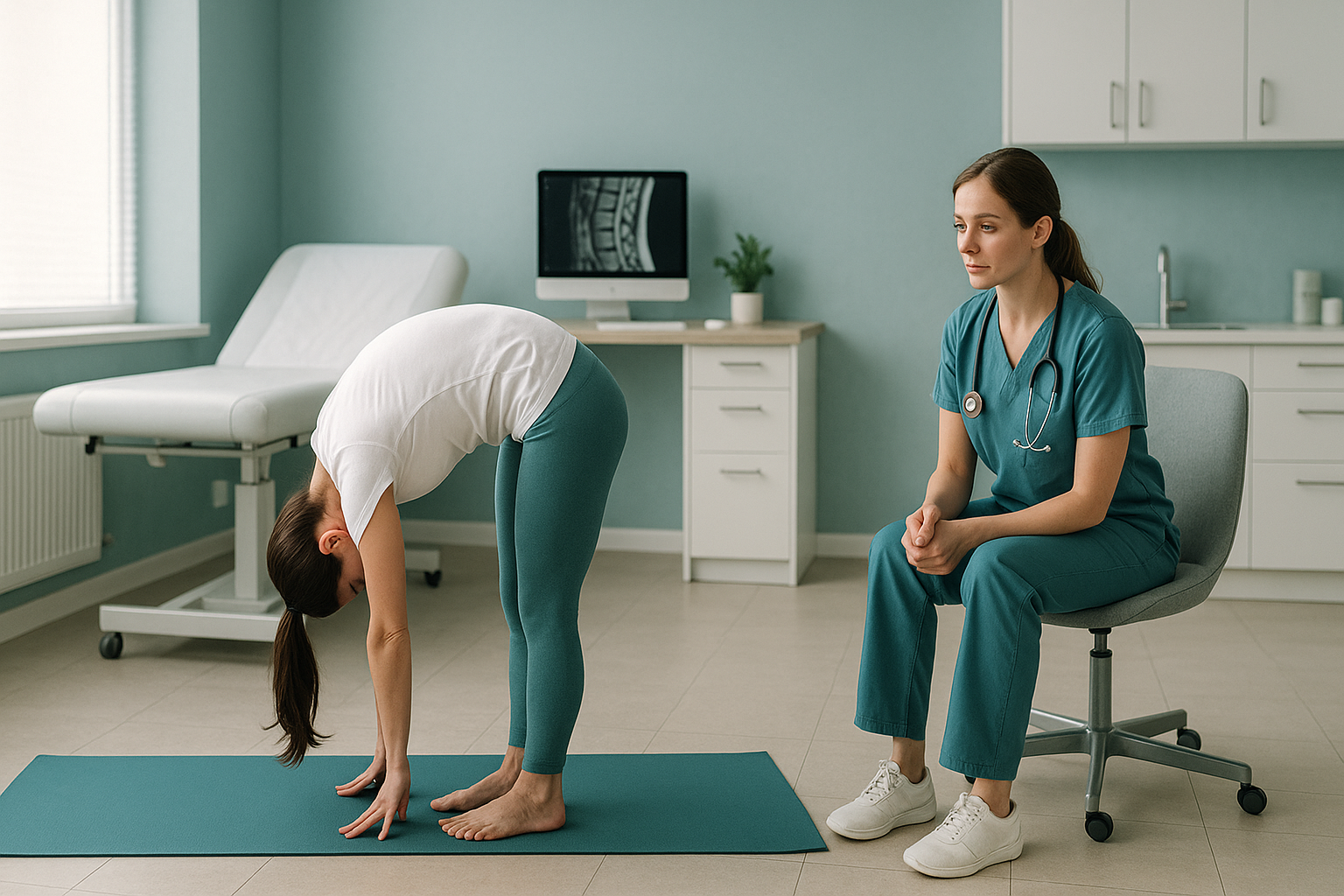
Frequently asked questions
No. Yoga is not bad for hypermobility in itself. It only becomes a problem when poses push joints beyond their safe range without muscle control. Modified yoga that focuses on strength and stability can actually be very helpful.
Styles that focus on slower movement, alignment and holds tend to work best. Iyengar and Hatha are often recommended because they encourage props and deliberate muscle engagement. Fast-flowing vinyasa can be harder, because there is less time to control each joint position.
You do not need to stop stretching completely, but the focus should change. Instead of stretching loose joints to gain more range, aim for active stretches where your muscles control the movement. Passive stretching to your full range is usually unnecessary and can overload ligaments.
Many people find out informally, when they notice they can bend further than most. A clinician can use the Beighton score, a simple set of tests that checks joint range at the fingers, wrists, elbows, knees and spine. A high score suggests generalised hypermobility. You can read more in our guide to joint hypermobility.
Flexibility without strength means the load passes through passive structures (ligaments, joint capsules) instead of muscles. This causes an inflammatory response and a dull ache. The solution is to stay short of your end range and engage the muscles around each joint for the whole pose.
A standing whole-body image shows how your spine, pelvis and legs align under gravity. It can reveal tilts, curves or compensations that may explain why certain poses load your lower back unevenly. This information helps clinicians and teachers tailor advice to your body.
Yes. The EOS system uses about 90% less radiation than a standard X-ray, around ten times less. The scan is quick, non-invasive and needs no preparation.
No. ScanAlign accepts self-referrals. You can book a free video consultation to discuss whether a scan is right for you.
The price for patients travelling from abroad is confirmed during the free video consultation, which you can arrange from our book an alignment assessment page.
Hypermobility simply means joints that move beyond the usual range. Hypermobility syndrome is diagnosed when that extra range comes with symptoms such as chronic pain, fatigue or frequent injuries. The difference matters because the syndrome may need a broader management plan.
See how your body really aligns
A free video consultation lets you talk through your symptoms from home and find out whether a standing alignment assessment in London could help guide your yoga practice safely.
Book a free video consultationSources
- Castori M, et al. "A framework for the classification of joint hypermobility and related conditions." American Journal of Medical Genetics Part C: Seminars in Medical Genetics, 2017; 175(1): 148–157.
- NHS. "Joint hypermobility." nhs.uk, reviewed 2023.
- Simmonds JV, Keer RJ. "Hypermobility and the hypermobility syndrome." Manual Therapy, 2007; 12(4): 298–309.
Written by Abbas Dhami (Specialist Diagnostic Radiographer)
This page is general information and not a diagnosis.
ScanAlign is the trading name of CoreMed Solutions Ltd and operates under The Harley Street Hospital's CQC licence.