
How Do You Share Your Scan With Your Doctor Back Home?
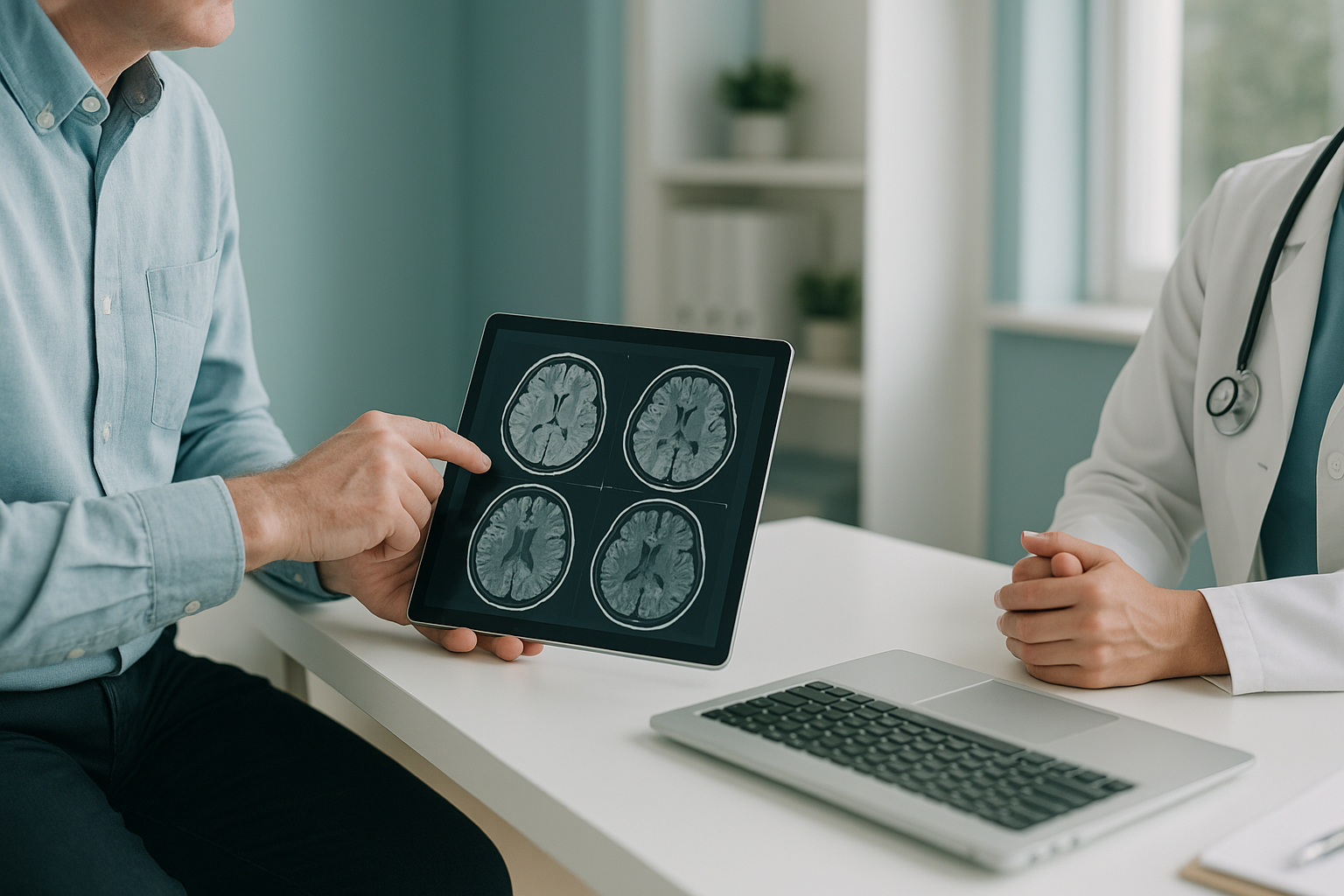
After your EOS scan at ScanAlign, we send your images and report straight to the consultant, surgeon or family doctor you choose. We share the images digitally in the standard medical format called DICOM, so they open in any hospital viewing system. You do not need to carry a CD or USB.
Key points
- We share your images securely in DICOM format, the universal standard for medical imaging.
- We send them digitally to whoever you name: a consultant, a surgeon or your family doctor.
- No CDs, no USBs, no apps to download.
- You also get a written report. Read more about how EOS scan results are reported.
- We handle your data under UK data protection rules. You can read about your rights as a patient.
What is DICOM, and why does it matter for sharing medical images?
DICOM stands for Digital Imaging and Communications in Medicine. It is the universal file format that hospitals, clinics and radiology departments around the world use to store and share scans. When your images are in DICOM format, any consultant with a standard hospital PACS (picture archiving and communication system) can open and view them at full diagnostic quality.
This matters because a photo on your phone, a screenshot or even a PDF does not carry enough detail for a surgeon or specialist to plan treatment. DICOM files keep every measurement, every layer of contrast and the exact scale of the image. So your consultant sees exactly what we see.
What are the steps from scan to consultant?
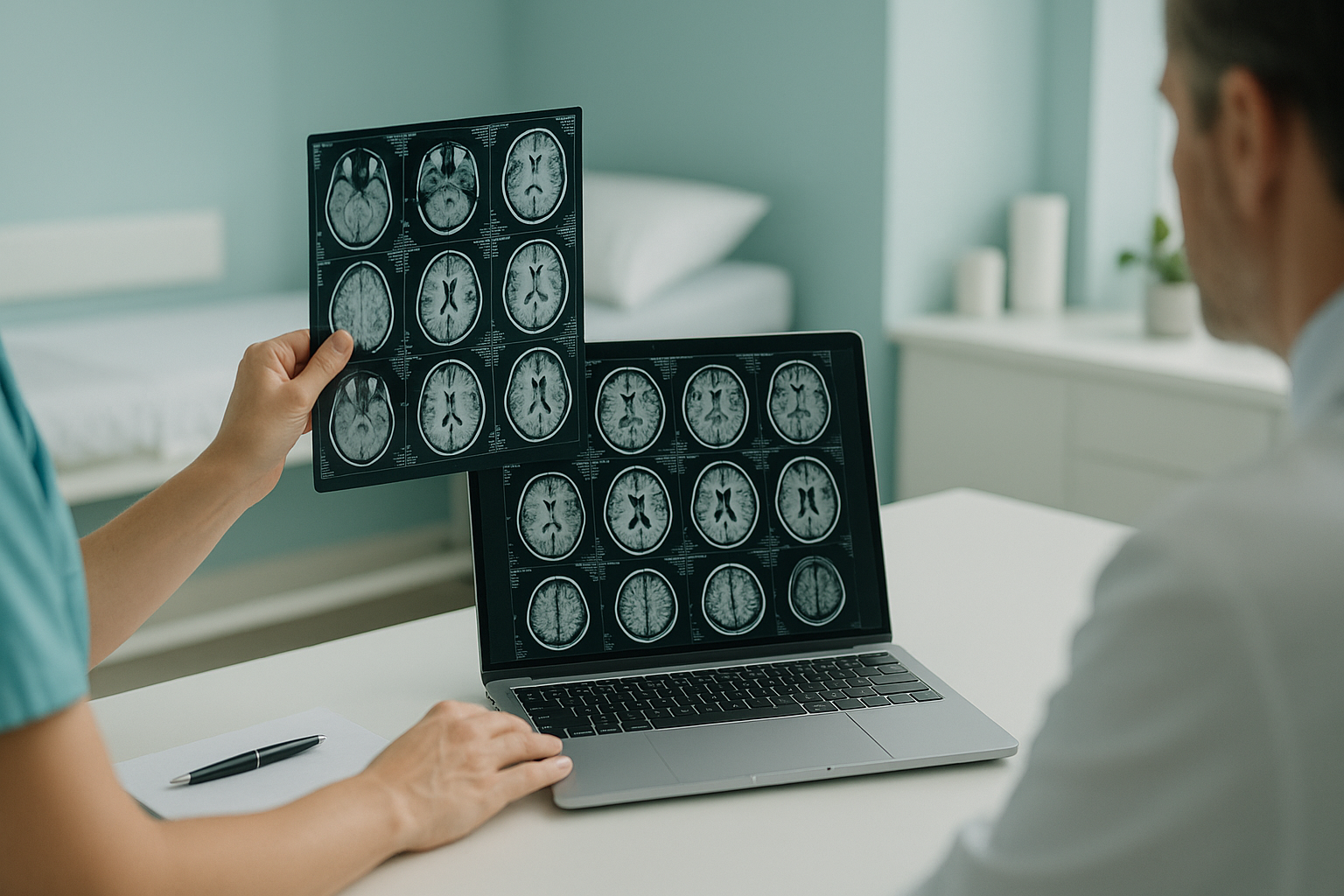
The process is simple. You tell us who should get your images, and we handle the transfer securely and promptly.
Your standing EOS scan is done at ScanAlign, standing EOS imaging in London, at 19 Harley Street.
A specialist radiologist reviews your images and writes a detailed report. Your images are stored in DICOM format.
We send your DICOM images and report digitally to the consultant, surgeon or family doctor you name, using a secure, encrypted transfer.
Your consultant opens the images on their standard hospital or clinic viewing system, at full diagnostic quality, ready to go through with you at your next appointment.
Is it safe to share medical images digitally?
Yes. In the UK, digital image transfer is how hospitals and clinics routinely share scans, in both the NHS and the private sector. ScanAlign uses encrypted, secure methods that comply with UK data protection rules, including the UK GDPR and the Data Protection Act 2018.
We only share your images with the people you tell us to. You always decide who sees your scan. If you have questions about how we handle your data, you can read about your rights as a patient.
A note on MRI. EOS imaging shows bones, joints and whole-body alignment in a standing position. For soft tissue, discs or nerves, MRI is usually the better tool. If your consultant needs both kinds of imaging, your EOS and MRI images can be shared side by side so they get the full picture.
Before you start a treatment, or change the one you are on, it is worth getting a detailed diagnosis. Knowing whether the cause sits in the pelvis, the legs or the spine changes what will actually help.
Want to know what happens before and during your scan? You can also book your scan or read about how EOS scan results are reported.
Book a free video consultationFrequently asked questions about sharing your scan
You just tell ScanAlign who should get your images: a consultant, a surgeon or your family doctor. We send them the full DICOM image set and report digitally, using a secure, encrypted transfer. You do not need to carry or upload anything yourself.
DICOM (Digital Imaging and Communications in Medicine) is the universal file format for medical images. It keeps full diagnostic quality, measurements and scale, so your consultant can view and analyse the scan on any standard hospital viewing system.
No. ScanAlign shares images digitally. CDs and USBs are older methods that many hospitals are moving away from. A digital transfer is faster, more reliable and does not depend on your consultant having a CD drive.
Yes. You can ask us to send your images and report to as many clinicians as you need. Just tell us who should get a copy and we will arrange it.
Free DICOM viewers are available for personal use, such as Horos (Mac) and RadiAnt (Windows). However, clinical interpretation should always be done by a qualified specialist. Your written report gives you the expert analysis you need.
Once your report is ready, we share your images and report promptly. If you have a specific deadline, such as an upcoming appointment with a surgeon, tell our patient support team and we will do our best to meet it.
No. ScanAlign is a self-pay, self-referral clinic. You do not need a letter from your doctor to book. However, we can send a copy of your results to your doctor if you would like us to.
Yes. We use encrypted, secure transfer methods that comply with the UK GDPR and the Data Protection Act 2018. Your images are only shared with the people you allow.
Yes. Because ScanAlign uses the DICOM format, your images work with any PACS viewer used in NHS or private hospitals in the UK. Your consultant does not need any special software.
The price for patients travelling from abroad is confirmed during your free video consultation, where we explain everything before you commit.
Ready to get the full picture?
Book a free video consultation to find out how a standing EOS scan could help your consultant understand what is really going on.
Book a free video consultationWritten by Abbas Dhami (Specialist Diagnostic Radiographer)
Sources
- DICOM Standards Committee. The DICOM Standard. National Electrical Manufacturers Association (NEMA). dicomstandard.org
- Information Commissioner's Office. Guide to the UK General Data Protection Regulation (UK GDPR). ico.org.uk
- The Royal College of Radiologists. Standards for the communication of radiological reports and fail-safe alert notification. rcr.ac.uk
This page is general information and not a diagnosis.
ScanAlign is the trading name of CoreMed Solutions Ltd and operates under The Harley Street Hospital's CQC licence.