
Where Can You Get a Second Opinion on Your Scan in London?
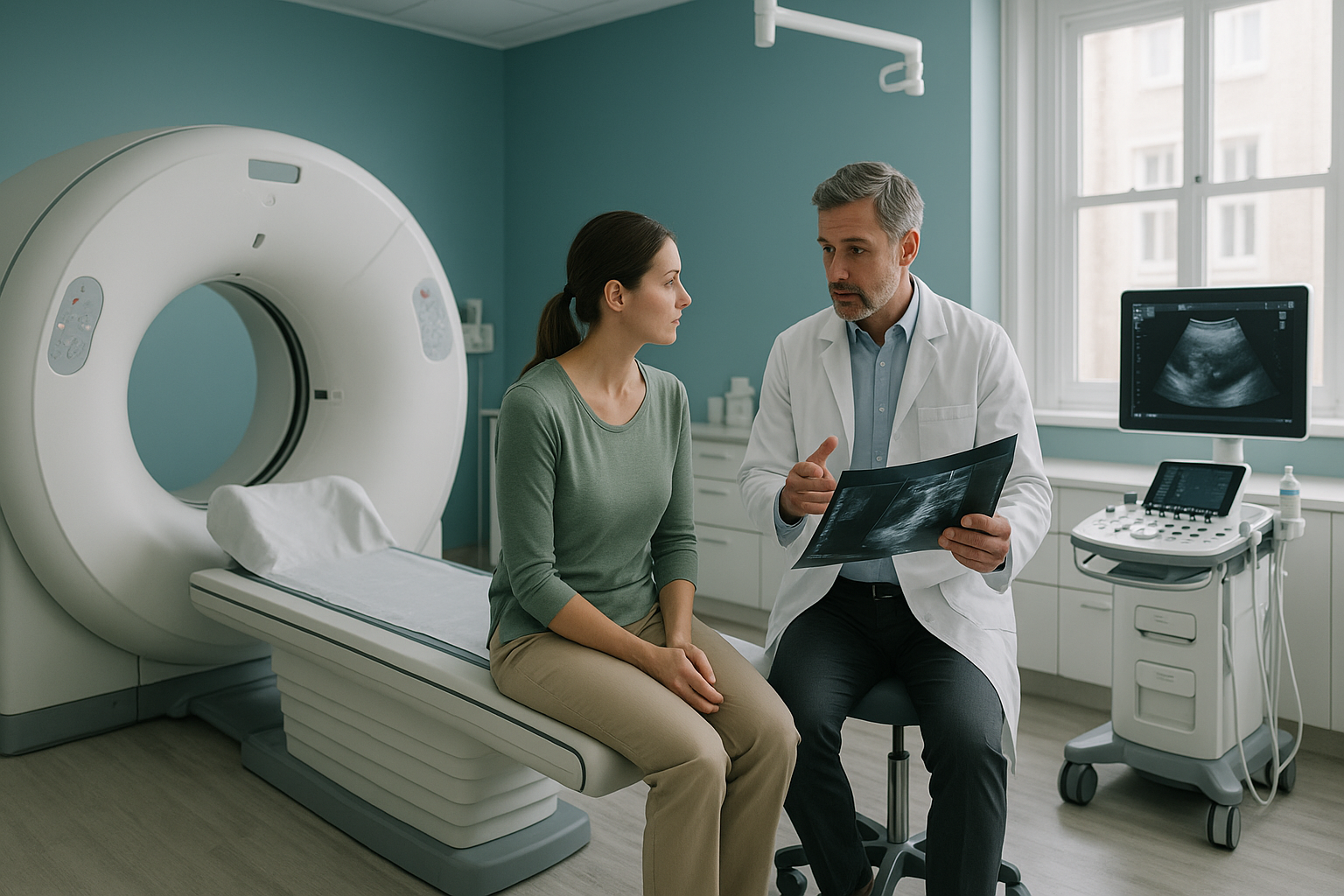
Many private clinics, hospitals and specialist radiology services in London offer second opinions on scans. A second opinion can mean a different specialist writes a new report on your existing scan. Or it can mean a new scan that asks a different clinical question. Neither one means the first report was wrong.
Key points
- A second opinion usually means a new report on your existing images, or new images, not questioning the first radiologist.
- You do not always need a referral from your doctor to get a private scan in London.
- Standing, weight-bearing scans can show alignment problems that lying-down scans may miss.
- EOS imaging uses about 90% less radiation than a standard X-ray, around ten times less.
- For soft-tissue concerns such as discs or nerves, MRI is usually the better tool.
Perhaps you have had a scan before and the results did not match your symptoms. Or your treatment has stopped making progress. You are not alone. Many people look for an independent review of their scans to see if a fresh look changes anything. The good news is that you have several options. None of them mean your first scan was wrong. Often, a second opinion simply asks a different question of the same body.
Why would you want a second opinion on your scan?
You might want a second opinion because your symptoms have continued despite treatment. Your report may have been unclear. Or a consultant may have advised surgery and you want more information first. A different type of scan, or a review by a sub-specialist, can sometimes bring out findings that were not the focus of the first report.
A second opinion is not about proving anyone wrong. It is about making sure the clinical question is asked in the right way, with the right type of scan, in the right position.
What are your options for a second opinion on a scan in London?
In London, a second opinion on a scan usually takes one of two forms. A different radiologist writes a new report on your existing scans, or you have a completely new scan.
Re-reporting means a different radiologist reviews the same images. This helps when you want a sub-specialist to look, for example a musculoskeletal radiologist reviewing a scan first reported by a general radiologist. Many private radiology services in London offer this. They often use DICOM files, which you can ask for from the hospital that did your first scan.
A new scan makes sense when the first scan may not have captured what matters. For example, a standard lying-down X-ray of the spine does not show how your skeleton behaves under gravity and body weight. A new scan can also use a completely different type of imaging, such as moving from X-ray to MRI, or from MRI to a standing whole-body scan. This depends on the clinical question.
In many cases, both options are available privately in London without a referral from your doctor. To understand how EOS scan results are reported, you can read more about the process and what the report covers.
How does a standing scan change a second opinion?
Standing, weight-bearing scans can show alignment problems that lying-down scans miss entirely. When you lie flat for a normal X-ray, CT or MRI, gravity is taken away and your muscles relax. Your joints settle into a different position. A tilt in the pelvis, a curve in the spine, or uneven load through the knees may only appear when you are upright and carrying your full weight.
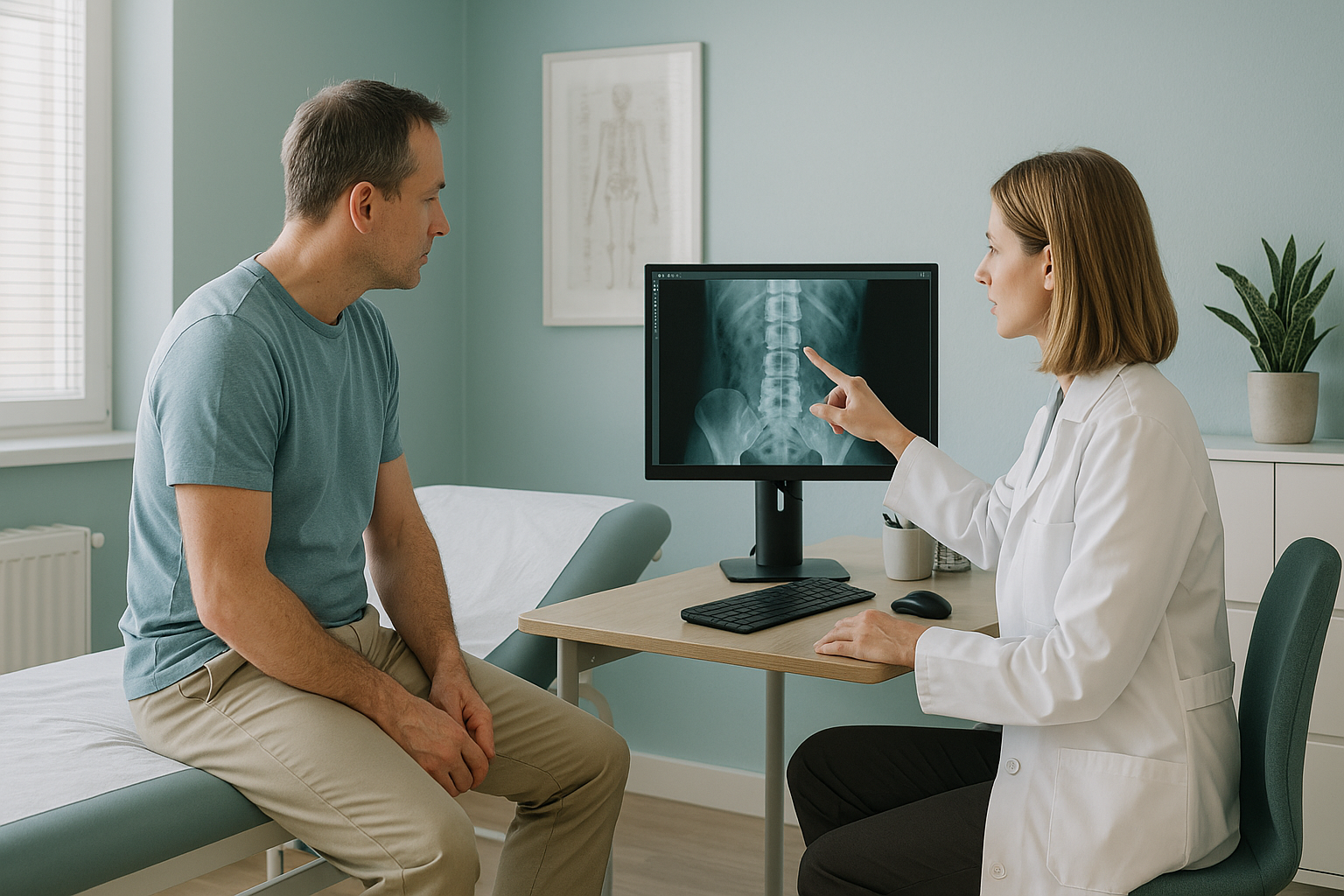
Your body is a connected chain from feet to head. A problem in one area, such as a difference in leg length or a stiff hip, forces another area to make up for it. Pain often shows up away from its true cause. A standing whole-body scan captures this whole chain in a single exposure. This is why it can change the direction of a second opinion.
At ScanAlign, private standing imaging in London, EOS technology takes a full-length, standing image of your skeleton using about 90% less radiation than a standard X-ray, around ten times less. This makes it practical to scan from your ankles to your skull in one go. It gives your clinician context that a scan of a single area simply cannot provide.
When MRI is the better choice: EOS shows bones, joints and whole-body alignment clearly. For soft tissue, discs, ligaments or nerves, MRI is usually the better tool. A good second opinion starts with choosing the right type of scan for your clinical question.
How do you get a second opinion on your scan at ScanAlign?
The process is simple. You do not need a referral from your doctor to book privately, and you can arrange an independent assessment directly.
You speak with a specialist diagnostic radiographer who reviews your history and previous scans. Together, you decide whether a new standing scan would add value, before you plan any travel.
If a new scan is right for you, your EOS scan takes place at our clinic in London. You stand naturally while the system takes a full-length image in seconds.
A specialist reports on your images, focusing on alignment and weight-bearing biomechanics. Find out more about how EOS scan results are reported.
Your report and images are yours. Share them with your surgeon, physiotherapist or own doctor to guide the next steps in your care.
Who can a second opinion on a scan help?
A second opinion is useful in many situations, but it is not always the right next step. Here is a quick guide.
- Ongoing back, hip or knee pain with no clear diagnosis
- Previous scans that did not match your symptoms
- Thinking about joint replacement or spine surgery
- Posture or alignment concerns not checked while standing
- Wanting a whole-body view rather than scans of single areas
- A new injury or trauma that needs urgent assessment
- Soft-tissue, disc or nerve problems (MRI is usually better)
- Numbness, weakness, or loss of bladder or bowel control (get urgent medical help from your doctor or the nearest emergency department)
Before you start a treatment, or change the one you are on, it is worth getting a detailed diagnosis. Knowing whether the cause sits in your pelvis, your legs or your spine changes what will actually help.
To learn more about the team and the clinic, visit the about ScanAlign page.
Not sure whether a new scan would help? A free video consultation lets you talk through your situation with a specialist diagnostic radiographer before you commit to anything.
Book a free video consultationFrequently asked questions
No. At ScanAlign you can refer yourself for a private standing EOS scan without a referral from your doctor. You are welcome to bring a referral if you have one, but it is not required.
Not at all. A second opinion usually means asking a different clinical question, using a different type of scan, or getting a review by a sub-specialist. The first report may have been entirely correct for the question asked at the time.
ScanAlign specialises in new standing EOS scans rather than writing new reports on other clinics' scans. During your free video consultation, you can discuss your previous scans to decide whether a new standing scan would add value.
EOS takes a full-length, standing image of your skeleton using about 90% less radiation than a standard X-ray, around ten times less. It also images you in your natural upright posture, which normal lying-down X-rays cannot do.
Yes. The EOS system uses about 90% less radiation than a standard X-ray, around ten times less. This very low dose makes it one of the lowest-radiation methods available for imaging the skeleton.
The price for patients travelling from abroad is confirmed during the free video consultation. The video consultation carries no obligation.
Yes. Your report and images belong to you. Many patients share their EOS results with orthopaedic surgeons or spine consultants to help plan before surgery.
When you lie flat, gravity is taken away and your muscles relax. Joints settle differently. A tilt, curve or uneven load under your body weight, as you stand and walk, can cause pain, yet it may not appear at all when you are lying down.
ScanAlign is at 19 Harley Street, London, inside The Harley Street Hospital. Once you are in London, the clinic is easy to reach from several central London Underground stations.
Start with a free video consultation. You will speak with a specialist diagnostic radiographer who can discuss your history, review any previous scans, and advise whether a standing EOS scan would help answer your question.
Ready for a fresh look?
A free video consultation lets you discuss your scan history with a specialist from home. No referral needed, no obligation.
Book a free video consultationSources
- The Royal College of Radiologists. Standards for the Reporting and Interpretation of Imaging Investigations (2nd edition, 2018).
- Illés, T. & Somoskeöy, S. "The EOS imaging system and its uses in daily orthopaedic practice." International Orthopaedics, 36(7), 1405-1411 (2012).
- NHS England. Getting a second opinion. nhs.uk (accessed 2024).
Written by Abbas Dhami (Specialist Diagnostic Radiographer).
This page is general information and not a diagnosis.
ScanAlign is the trading name of CoreMed Solutions Ltd and operates under The Harley Street Hospital's CQC licence.