
Can You Have a Healthy Pregnancy With Scoliosis?
Yes. Most women with scoliosis go through pregnancy, labour and delivery without complications. The curve itself does not usually affect fertility, the growing baby, or your ability to give birth. Planning ahead makes a real difference, especially for pain relief and the placing of an epidural.
Key points
- Scoliosis does not prevent a healthy pregnancy or a normal delivery.
- Back pain may increase, but the curve rarely gets permanently worse.
- An epidural is usually still possible. Tell your obstetric anaesthetist early.
- X-ray based imaging is not safe during pregnancy, so plan any scans before you conceive or after the birth.
- A standing whole-body image before or after pregnancy shows how your spine and pelvis cope with the extra load.
Learning that you have a curve in your spine can raise many questions when you are planning a family. Will pregnancy make it worse? Can you still have an epidural? Will you need a C-section? The short answer to all three is reassuring.
Does pregnancy make scoliosis worse?
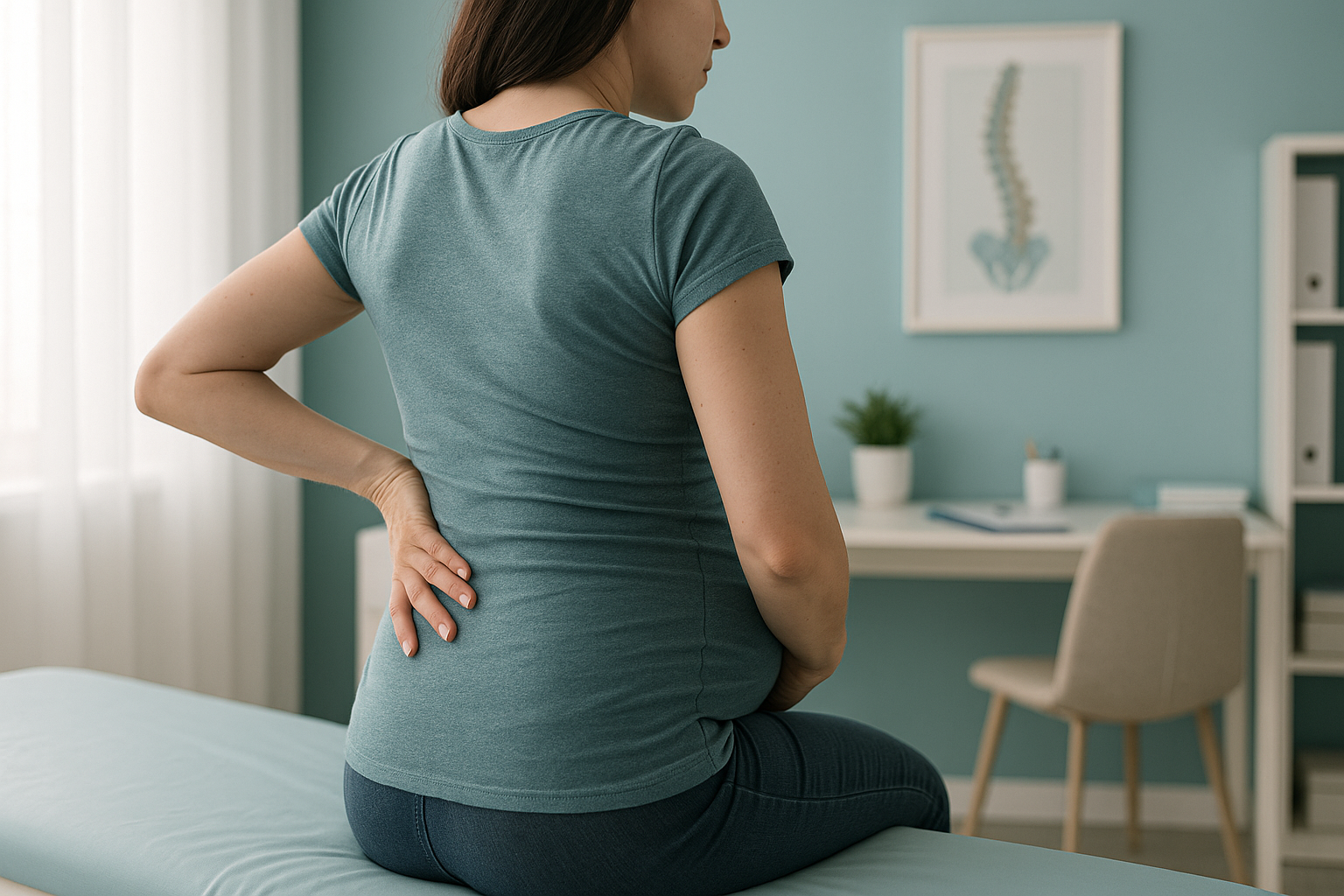
For most women, no. Research shows that pregnancy does not usually cause a scoliosis curve to progress permanently. Your posture will change as your bump grows, because the extra weight moves your centre of gravity forward. This can make an existing curve feel more noticeable. You may also have more back pain than someone without scoliosis. But once you have given birth and your body recovers, the curve usually goes back to where it was.
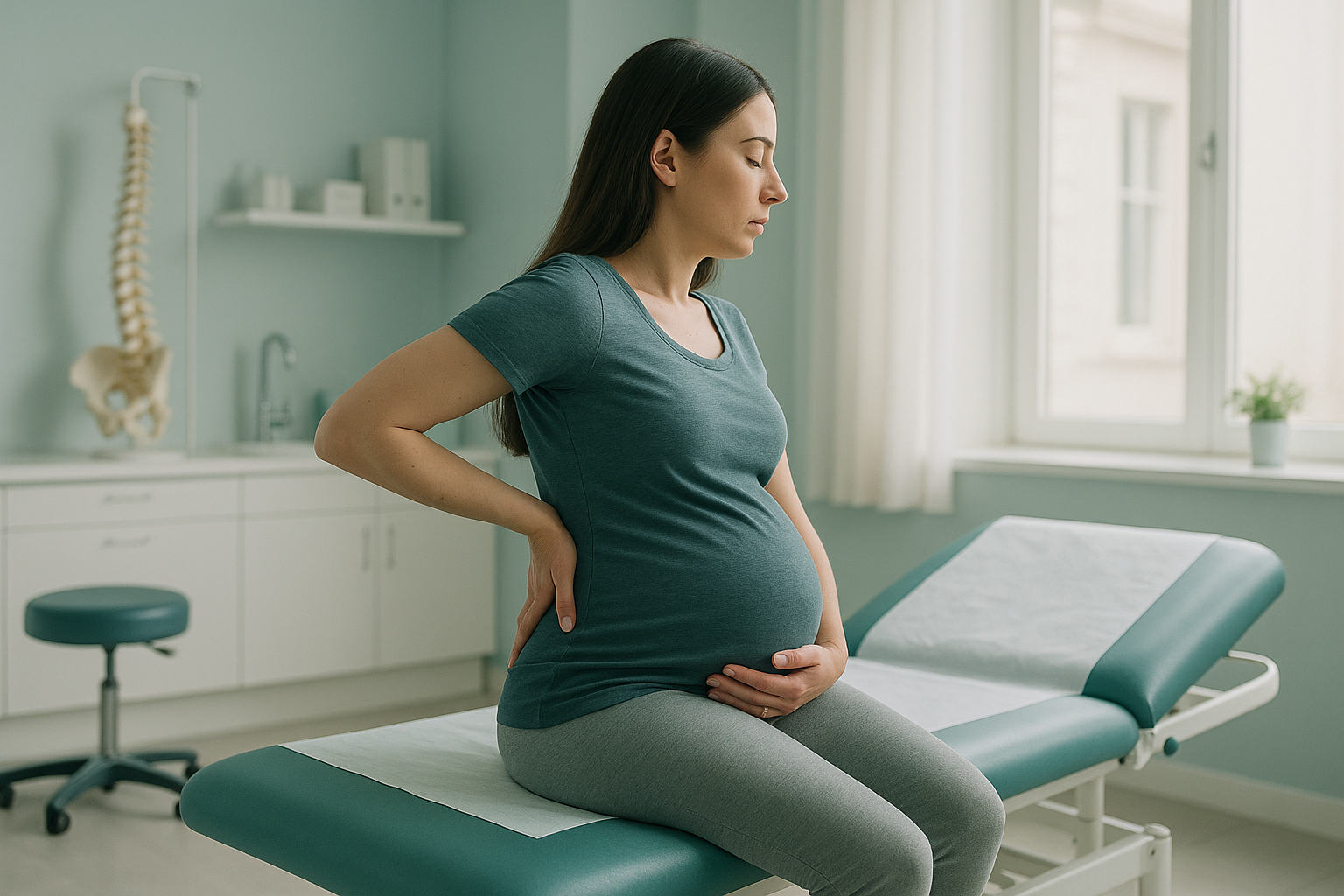
The hormones relaxin and progesterone loosen your ligaments to prepare for birth. In a spine with scoliosis, this loosening can make your joints feel less stable and add to aching. This is temporary.
When back pain needs urgent attention
If you develop sudden numbness or weakness in your legs, or any loss of bladder or bowel control, get urgent medical help straight away. Contact your doctor or go to the nearest emergency department. These symptoms are rare, but they need immediate assessment whether or not you have scoliosis.
Can you have an epidural with scoliosis?
Yes, in most cases. An epidural involves placing a fine needle into the space around your spinal cord. If you have scoliosis, the spaces between your vertebrae may be slightly rotated or narrower on one side. This can make the procedure a little more complex. It does not usually make it impossible.
If you have had scoliosis surgery and are thinking about pregnancy, an early talk with an obstetric anaesthetist is especially important. Metalwork from a fusion can block the usual epidural route. But other pain relief options exist, and they can be planned well in advance.
Does scoliosis affect how you give birth?
Scoliosis alone is not a reason for a C-section. Most women with a spinal curve can have a normal vaginal delivery. The decision depends on the same factors as for anyone else: the position of the baby, the size of the pelvis, and how labour progresses.
If you have had spinal fusion surgery, the fused part of your spine will not bend during labour. But this rarely prevents a vaginal birth. Your gynaecologist and midwife will discuss delivery positions that are comfortable and effective for you.
Your pelvis plays a key role. The body is a connected chain from your feet to your head, and a curve in the spine can subtly change how the pelvis sits. Understanding your pelvic alignment before pregnancy gives your birth team useful information.
How is scoliosis assessed before or after pregnancy?
Standing whole-body imaging is the clearest way to see how your spine, pelvis and legs line up under your own body weight. EOS imaging uses about 90% less radiation than a standard X-ray, around ten times less. It captures your full skeleton in one upright scan, showing the connected chain of joints from head to feet.
This matters because standard lying-down imaging relaxes your muscles. It can hide alignment problems that only appear when you are standing and bearing weight. A curve that looks mild on a lying-down scan may behave differently when gravity and your muscles are involved.
Important: No X-ray based imaging, including EOS, should be done during pregnancy. If you are planning to conceive, a baseline standing image beforehand gives you and your medical team a clear starting point. After the birth, a follow-up scan shows whether anything has changed.
Book a free video consultationWhen MRI is the better tool: EOS shows bones, joints and alignment. For soft tissue, discs or nerves, MRI is usually the better choice. If you have nerve pain or disc symptoms as well as scoliosis, your clinician may recommend MRI too. MRI does not use radiation, so it can sometimes be considered during pregnancy if it is medically needed.
How can you prepare for pregnancy with scoliosis?
Preparing is simple. Most of it involves the same good habits advised for any pregnancy, with a few extra steps for your spine.
Get a baseline image
A standing whole-body scan before you conceive records your current alignment. ScanAlign standing EOS imaging captures the full picture in one visit.
Tell your maternity team
Share your scoliosis history and any imaging at your first antenatal visit. Ask to see an anaesthetist early if you want to discuss epidural options.
Stay active and supported
Gentle exercise, pregnancy yoga and physiotherapy can help manage back pain. A physiotherapist who knows scoliosis well can tailor exercises to your curve.
Review after birth
Once you have recovered, a standing image after the birth shows whether pregnancy changed your alignment, so any next steps can be planned clearly.
Before you start a treatment, or change the one you are on, it is worth getting a detailed diagnosis. Knowing whether the cause sits in the pelvis, the legs or the spine changes what will actually help.
- You have scoliosis and want a baseline before conceiving
- You are planning to discuss an epidural or anaesthesia
- You had more back pain during pregnancy and want a check after the birth
- You have had spine surgery and want to review how your fusion is holding up
- Any X-ray based imaging, including EOS, is not done while you are pregnant
- If you need imaging during pregnancy, your doctor may consider MRI or ultrasound instead
Frequently asked questions
Most women with scoliosis have pregnancies without complications. You may have more back pain than average because the extra weight loads a spine that is already curved. But serious complications from scoliosis alone are uncommon.
Research suggests that pregnancy does not usually cause a lasting increase in curve size. Posture changes during pregnancy are temporary, and the curve usually returns to how it was before pregnancy after the birth.
In most cases, yes. The procedure may be slightly more complex if your vertebrae are rotated, but an experienced obstetric anaesthetist can usually find a suitable approach. Tell your maternity team about your scoliosis early.
An epidural may still be possible below the level of your fusion. Your anaesthetist will review your surgical history and any available imaging to decide the best option. Other pain relief methods can also be planned.
Scoliosis on its own is not a reason for a C-section. The decision is based on the same factors as for any birth, including the baby's position, the size of the pelvis and how labour progresses.
No. EOS uses X-rays, so it is not done during pregnancy. The best time for a standing spine and alignment scan is before you conceive, or after you have given birth and recovered.
An EOS scan uses about 90% less radiation than a standard X-ray, around ten times less. It is one of the lowest-dose imaging options available for seeing the full skeleton.
When you lie down, gravity is removed and your muscles relax. This can make a curve look milder than it really is. Standing imaging captures your spine under real-world load. It shows your true alignment and how your pelvis, hips and legs connect to the curve.
No. ScanAlign is a private self-pay clinic, so you can book directly yourself. The process starts with a free video consultation to discuss whether a scan is right for you.
The price for patients travelling from abroad is confirmed during the free video consultation. This consultation is the first step, with no obligation.
Planning ahead makes all the difference
Whether you are preparing for pregnancy or have recently given birth, a free video consultation helps you decide if travelling to London for a standing alignment scan is the right next step.
Book a free video consultationSources
- Betz RR, Bunnell WP, Lambrecht-Mulier E, MacEwen GD. Scoliosis and pregnancy. Journal of Bone and Joint Surgery. 1987;69(1):90-96.
- Obstetric Anaesthetists' Association (OAA). Information for mothers with scoliosis or previous spinal surgery. oaa-anaes.ac.uk
- NHS. Back pain in pregnancy. nhs.uk
Written by Abbas Dhami (Specialist Diagnostic Radiographer)
This page is general information and not a diagnosis.
ScanAlign is the trading name of CoreMed Solutions Ltd and operates under The Harley Street Hospital's CQC licence.