
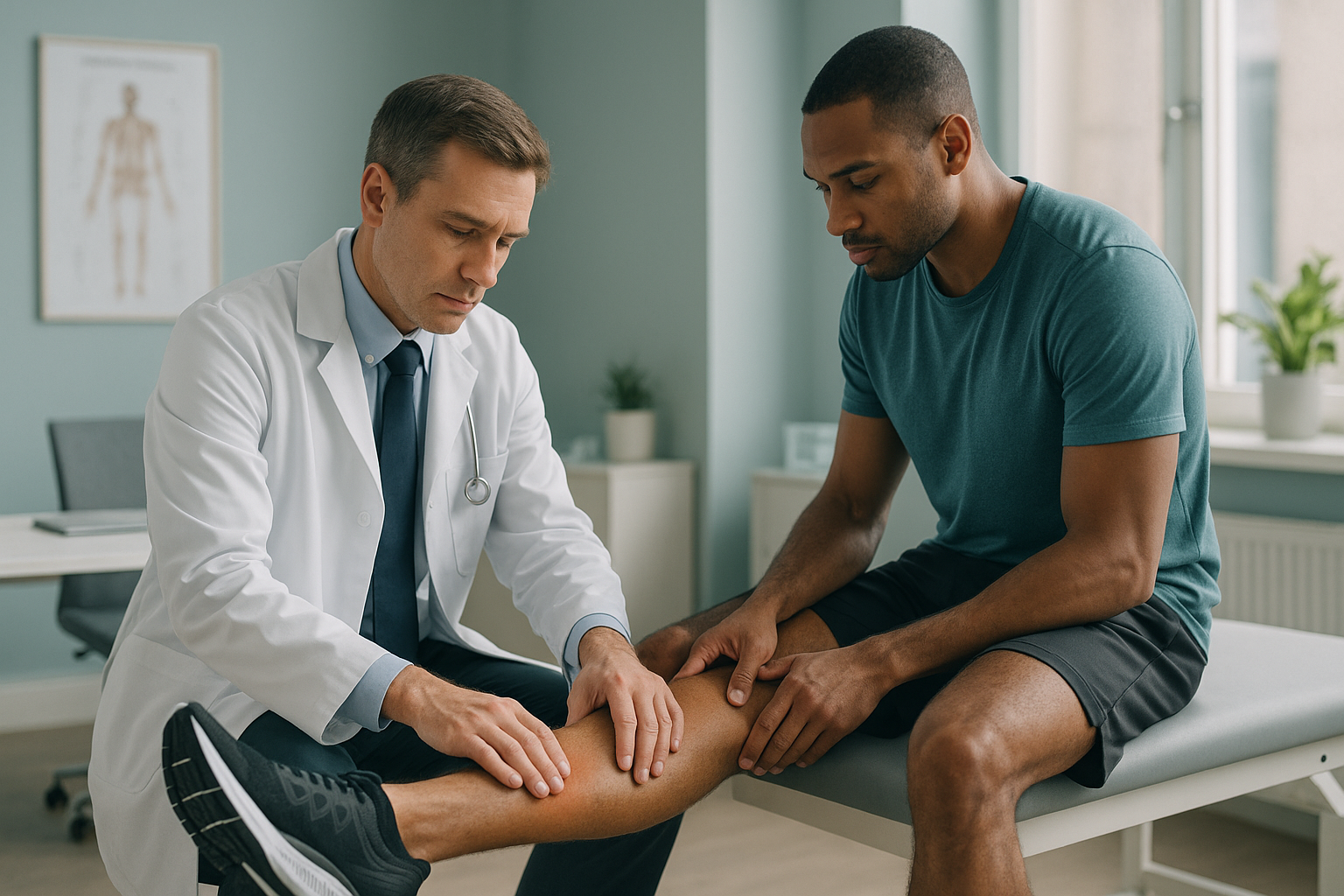
Why Do Runners Keep Getting the Same Injury?
Most running injuries that keep coming back are not caused by bad luck or by running too much alone. They happen because a hidden alignment problem, such as a difference in leg length or a hip drop, forces some tissues to take more load than they can handle. Until that imbalance is found, the same injury keeps coming back.
Key points
- Overuse injuries make up most common running injuries, and most are linked to biomechanical asymmetry.
- The body makes up for alignment problems, so pain often shows up away from its real cause.
- Standard scans taken lying down can miss alignment problems that only appear when you are standing and bearing weight.
- A standing whole-body scan maps your skeleton under load. This helps pinpoint why the same area keeps breaking down.
- Finding the root cause lets you and your clinician target rehab more precisely.
You have done the rehab. You have rested. You have gone back to training with care. Then, a few weeks later, the same knee flares up or the same shin starts aching. If you keep getting injured when you run, you are not alone. Research suggests that a runner who has had one overuse injury is much more likely to have another. The question to ask is not "how do I manage this again?" but "what is actually causing it?"
Why do running injuries keep coming back?
Running injuries come back because most treatment focuses on the painful tissue, not on the reason that tissue is being overloaded. A calf strain heals. But if a subtle pelvic tilt makes one leg work harder with every stride, the calf will break down again once you increase your training load.
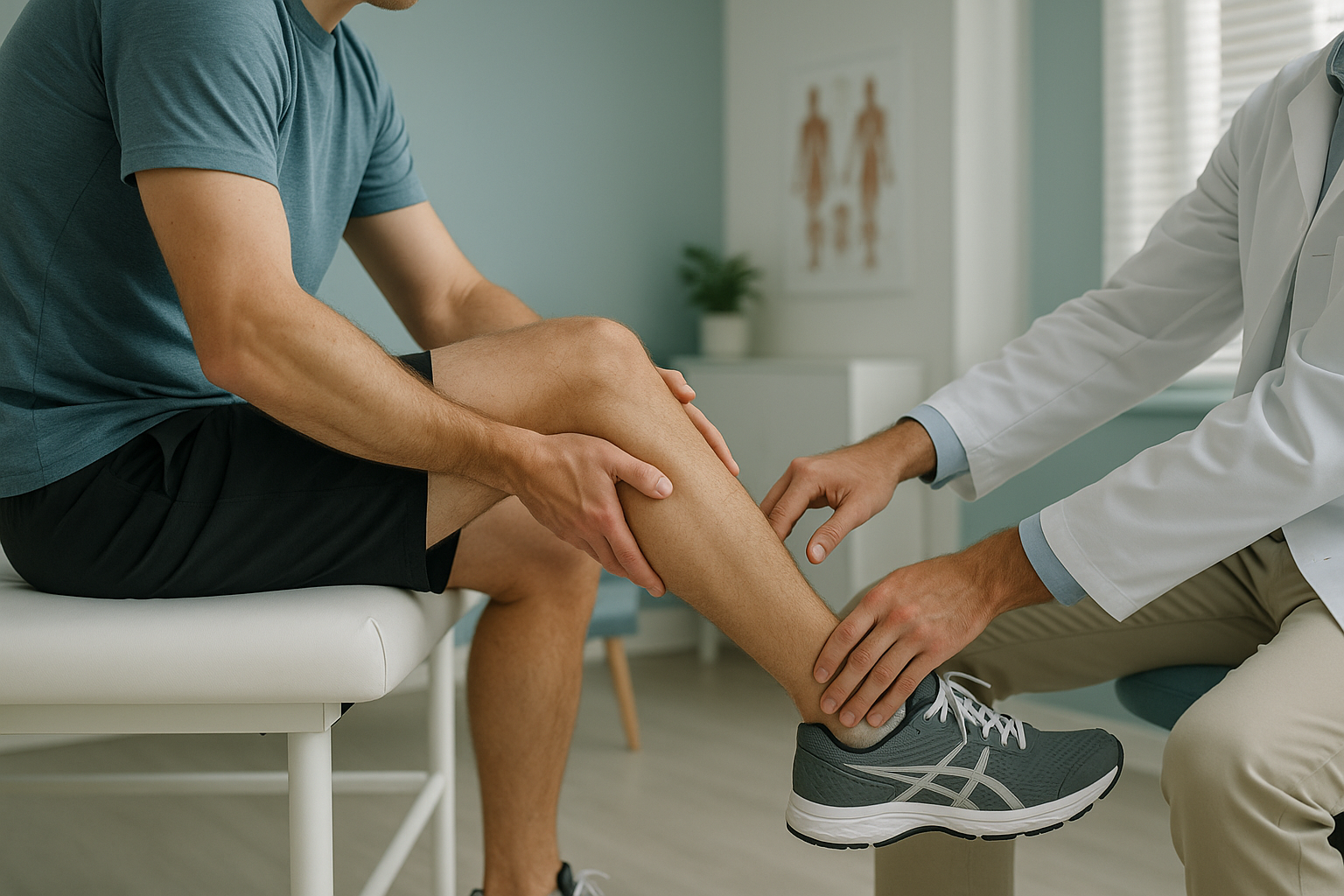
Common running injuries, such as shin splints, runner's knee, Achilles tendinopathy and IT band syndrome, are overwhelmingly overuse injuries. They build up slowly when the total load on a tissue is more than it can recover from. Training mistakes, like suddenly running much more, play a part. But they rarely tell the whole story. When the same injury returns after proper rest and a sensible return to running, something structural is usually involved.
What are the signs that alignment is behind your running injury?
A running injury linked to alignment tends to follow a clear pattern. If any of these sound familiar, a hidden imbalance may be the missing piece.
Your left knee or right calf keeps flaring up, while the other side stays fine.
You fix one problem and a new one appears nearby, such as knee pain moving to the hip.
You always break down at a similar weekly distance, however slowly you build up.
Physiotherapy helps for weeks. Then the same problem creeps back once you increase your training load.
How does one alignment problem cause pain somewhere else?
Your body is a connected chain from your feet to your head. When one link is out of place, the links above and below adjust to keep you balanced. This is called compensation, and it happens automatically.
A small difference in leg length, for example, can cause the pelvis to tilt. The hip on one side drops slightly with every stride. The knee on that side turns inward a little more. The foot rolls in further. Over thousands of steps in each run, that tiny extra load adds up until a tissue reaches its breaking point.
The result: your knee hurts, but the root cause is in your pelvis. Treating the knee alone will not stop the cycle. This is why sports injury prevention now focuses more and more on whole-body biomechanics rather than single muscle groups.
An uneven pelvis changes hip drop and stride mechanics on one side.
Even a small difference means one leg takes more force with each stride.
A rotated or curved spine shifts your centre of mass and changes how your foot lands.
When the knee turns inward or outward, it changes how force travels through the joint.
Why does a standing scan show what a normal scan misses?
A standing scan captures your skeleton under the same pull of gravity it faces when you run. Scans taken lying down, whether X-ray, CT or MRI, relax your muscles and let your joints settle into a different position. Alignment problems that only appear when you are upright and bearing weight can be invisible on a standard scan.
An EOS scan takes a full-length image of your skeleton from head to feet while you stand naturally. It shows how your spine, pelvis, hips, knees and ankles line up as one connected system while they carry your real weight. Leg length differences, pelvic tilts and rotational imbalances are visible because gravity is acting on your body, just as it does when you run.
EOS uses about 90% less radiation than a standard X-ray, around ten times less. You can learn more about how it works on ScanAlign standing EOS imaging.
When you lie down for a standard X-ray, CT or MRI, your muscles relax and your joints decompress. A leg length difference may become smaller or disappear. A pelvic tilt may flatten out. The image looks reassuring, but it does not show how your body actually behaves during a run.
This is why runners are sometimes told their scans are "normal" even though they keep getting hurt.
When is MRI the better choice? EOS shows bones, joints and alignment. For soft-tissue problems like muscle tears, disc injuries or nerve compression, MRI is usually the better tool. If your clinician suspects a soft-tissue cause, MRI and EOS can work together rather than compete.
What helps break the cycle of running injuries that keep coming back?
Breaking the cycle starts with understanding the cause. Once you know exactly where the imbalance is, you and your clinician can target your plan instead of guessing.
Strength work, changes to your step rate, gait retraining and new footwear are all common approaches. But they work best when guided by objective data about your alignment. A scan report that shows your whole skeleton under load gives your physiotherapist, osteopath or sports medicine doctor a clear starting point.
Before you start treatment, or change the one you are on, it is worth getting a detailed diagnosis. Knowing whether the cause sits in your pelvis, your legs or your spine changes what will actually help.
You can read more about preventing sports injury with 3D skeletal scans to understand how imaging supports injury prevention plans.
Tired of the same injury coming back? A free video consultation with our specialist radiographer, from wherever you are, can help you decide whether travelling to London for a standing alignment scan is the right next step.
Book a free video consultationFrequently asked questions about running injuries and alignment
Sensible training lowers your risk. But it cannot remove it if a hidden alignment problem is making one area work harder than it should. A subtle leg length difference or pelvic imbalance can overload tissues at any amount of training.
Runner's knee, IT band syndrome, shin splints, Achilles tendinopathy and stress fractures are all often linked to biomechanical asymmetry. Each one involves repeated overload on a specific tissue.
Yes. Even a small difference changes how force spreads through your pelvis, knees and ankles with every stride. Over thousands of steps, that imbalance can push a tissue past what it can take.
An EOS scan is a low-dose standing X-ray that captures your whole skeleton from head to feet in one image. It shows how your bones and joints line up while carrying your real weight. This reveals imbalances that standard lying-down scans can miss.
EOS uses about 90% less radiation than a standard X-ray, around ten times less. It is one of the lowest-dose skeletal imaging methods available.
No. ScanAlign accepts self-referrals. You can book a free video consultation directly, and a specialist radiographer will discuss whether a scan is right for you.
The price for patients travelling from abroad is confirmed during the free video consultation.
No. EOS is designed for bones, joints and alignment. For soft-tissue problems such as muscle tears, disc injuries or nerve problems, MRI is usually the better tool. The two can work well together.
Standard scans are taken while you lie down. This relaxes your muscles and lets your joints settle into a different position. Alignment problems that only appear when you are standing and bearing weight can be invisible in that relaxed state.
ScanAlign is a diagnostic imaging clinic, not a treatment provider. We provide the detailed alignment data that helps your physiotherapist, osteopath or sports medicine doctor plan your treatment more precisely.
Ready to find out what is behind your injury that keeps coming back?
A free video consultation with our specialist radiographer takes a few minutes and costs nothing. You can join from home. We will talk through your injury history and help you decide whether a standing alignment scan in London is the right next step.
Book a free video consultationWritten by Abbas Dhami (Specialist Diagnostic Radiographer)
Sources
- Videbæk S, Bueno AM, Nielsen RO, Rasmussen S. Incidence of Running-Related Injuries Per 1000 h of Running in Different Types of Runners: A Systematic Review and Meta-Analysis. Sports Medicine. 2015;45(7):1017-1026.
- Heiderscheit BC, Chumanov ES, Michalski MP, Wille CM, Ryan MB. Effects of Step Rate Manipulation on Joint Mechanics during Running. Medicine & Science in Sports & Exercise. 2011;43(2):296-302.
- NHS. Overview: Sports injuries. nhs.uk. Available at: https://www.nhs.uk/conditions/sports-injuries/
This page is general information and not a diagnosis.
ScanAlign is the trading name of CoreMed Solutions Ltd and operates under The Harley Street Hospital's CQC licence.