
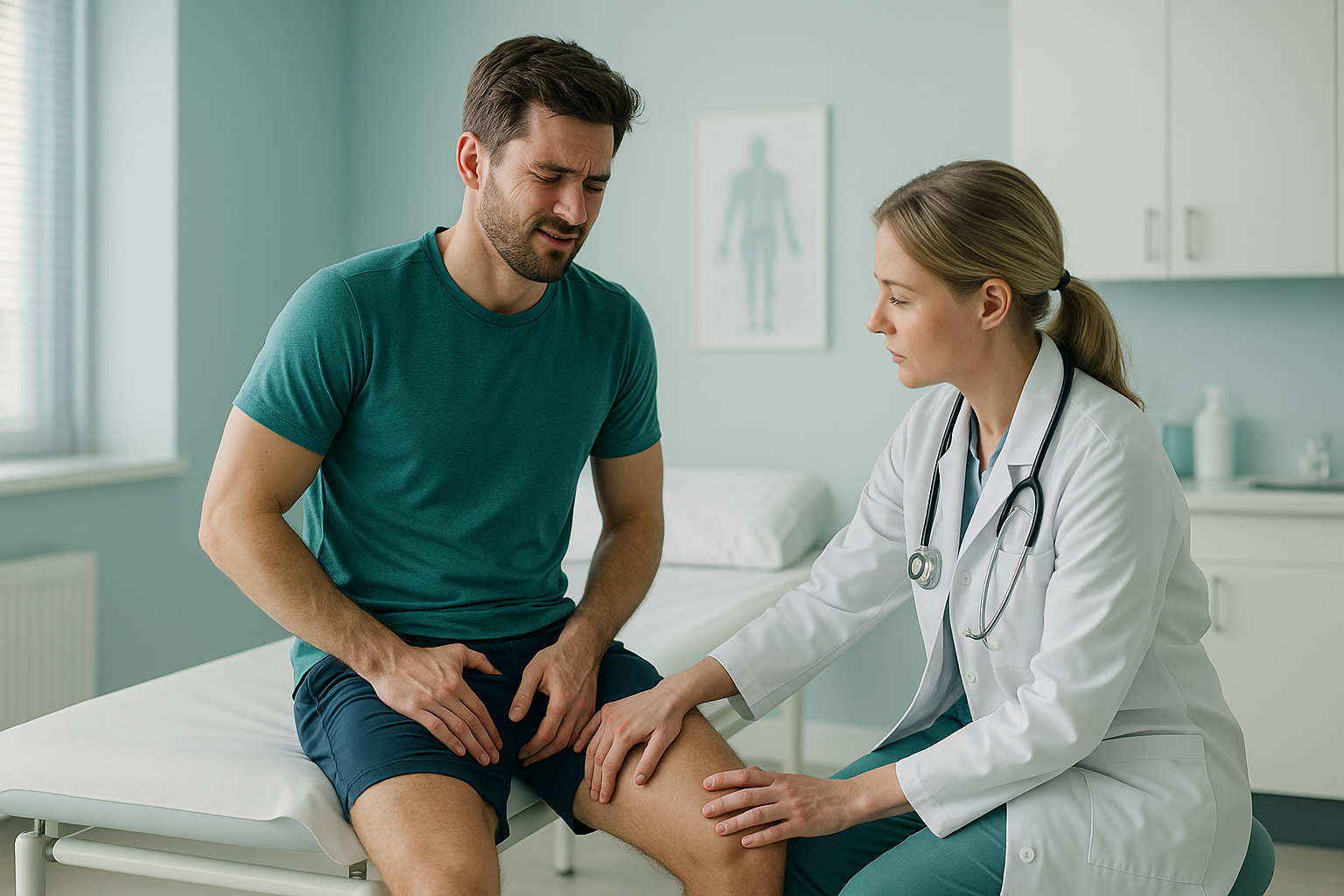
Why Do Footballers Get Recurrent Groin and Hamstring Injuries?
In football, groin and hamstring injuries that keep coming back often come down to how the pelvis and hips are aligned under load. Kicking, sprinting and cutting put extreme force through the adductors and hamstrings. If the pelvis is tilted, or one hip moves differently from the other, these muscles are overloaded again and again. That is why the same injury keeps coming back.
Key points
- Most recurring groin strains are not just "muscle tightness". They often involve problems with how the pelvis and hips are aligned.
- Hamstring reinjury rates in football are high because the root cause, often an asymmetry further up the chain, is not dealt with.
- Scans done lying down can miss alignment problems that only appear when you are standing and bearing weight.
- A standing whole-body image of the pelvis, hips and legs can show the mechanical reason behind repeated strains.
What actually happens when a footballer strains their groin or hamstring?
A groin injury in football usually involves the adductor muscles, the group on the inner thigh that pull your leg inward. When you kick a ball, these muscles work at full stretch while also trying to keep the pelvis steady. If the force is more than the muscle can handle, fibres tear. The adductor longus is the one injured most often.
Hamstring injuries happen in a different way. During a sprint, your hamstrings have to slow down the lower leg just before your foot hits the ground. This is called eccentric loading, where the muscle lengthens while contracting. It is a huge amount of force. If the muscle is already tired, or slightly overstretched by a pelvic tilt, it gives way.
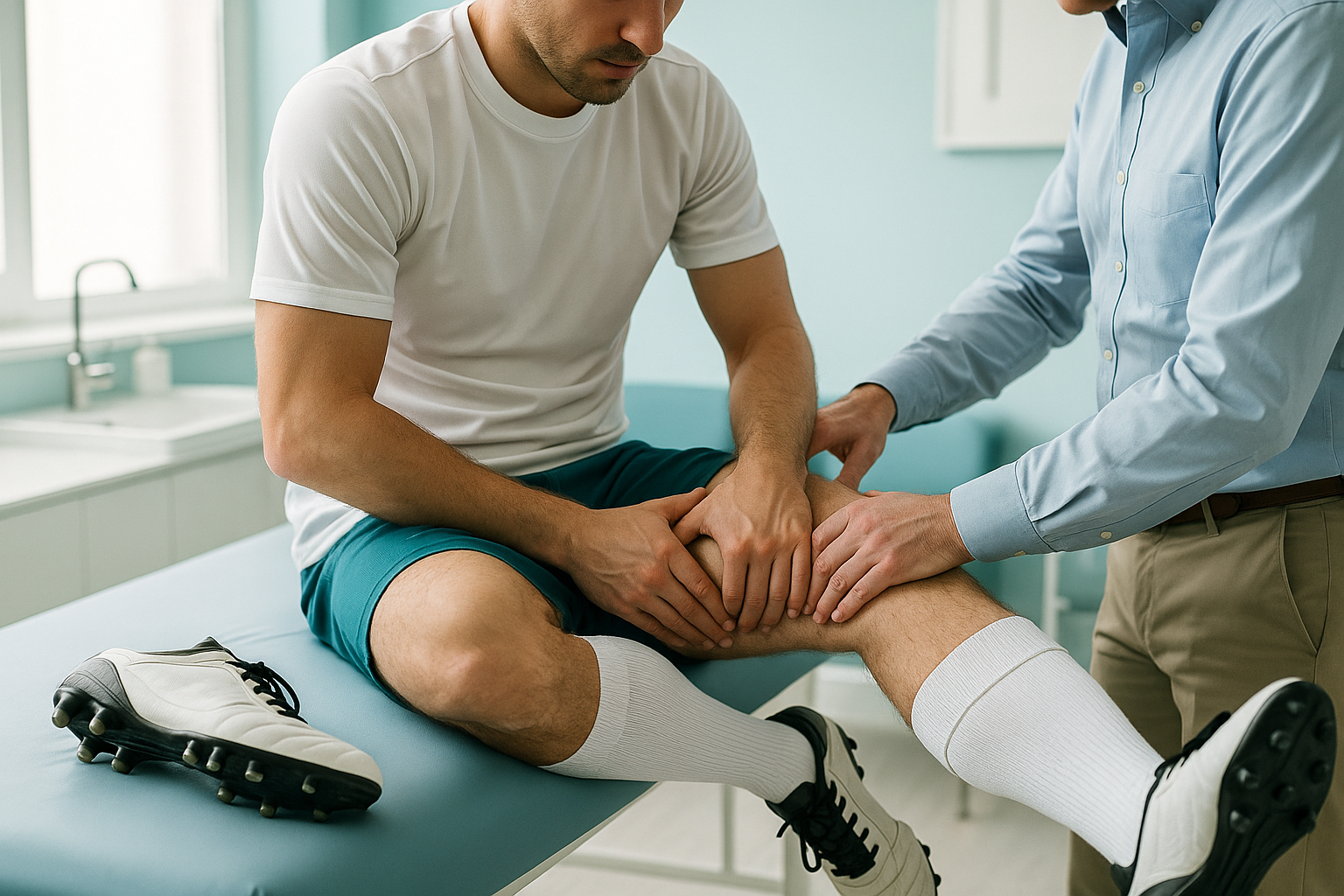
The frustrating part is the pattern. You rest, you do your rehab, you go back to playing, and within weeks the same muscle goes again. Research shows hamstring reinjury rates in professional football can be as high as one in three. The reason is often that rehabilitation deals with the muscle but not the mechanical cause behind the overload.
What are the signs that your groin or hamstring problem is linked to alignment?
Not every groin injury in football is caused by alignment. But some patterns suggest the problem goes deeper than muscle tiredness alone.
The injury keeps coming back to the same muscle on the same leg, despite thorough rehabilitation.
A deep ache or sharp pull in the groin, specifically when kicking or crossing, not just when running.
One hamstring or adductor always feels tighter, even after stretching. This asymmetry is a clue.
Strength tests in the gym look good, but match load, especially cutting and pivoting, sets off the injury again.
If any of these sound familiar, the problem may not be the muscle itself. It may be how your pelvis and hips are positioned when you are on your feet and moving.
What causes recurring groin and hamstring strains in footballers?
Repeated adductor strains and recurring hamstring tears in football are rarely caused by one thing alone. They come from a mix of factors, many of which are hidden.
Even a slight tilt pre-loads one side. The adductors or hamstrings on that leg are working harder before you take a single step.
Bony changes in the hip joint can limit range of motion. This forces the groin muscles to overcompensate when kicking. Learn more about hip impingement (FAI).
A structural or functional difference in leg length changes how force travels through the chain with every stride.
If the hamstring is not strong enough while lengthening, it tears during high-speed running. Match load speeds up the problem.
Your body is a connected chain, from your feet up through your pelvis and spine. A problem at the hip can make the groin compensate. A rotated pelvis can overload one hamstring. Pain often shows up away from its true cause. This is why working on the muscle alone does not stop the injury coming back.
How does a standing scan help with recurring football injuries?
The usual imaging for a groin or hamstring problem is an MRI or ultrasound, done lying down. These are excellent at showing muscle tears and soft-tissue damage. But they do not show alignment. When you lie down, gravity is removed, your muscles relax and the pelvis settles into a neutral position it may never actually hold when you are upright.
What it shows: A full weight-bearing image of the pelvis, both hips and the full length of both legs, taken in one exposure while you stand. This shows pelvic tilt, rotation, leg length asymmetry and hip joint angles exactly as they are when you run and kick.
The EOS system uses about 90% less radiation than a standard X-ray, around ten times less. The scan takes seconds and shows how your body actually takes load under gravity.
What it shows: Excellent soft-tissue detail. An MRI can identify a torn adductor, an inflamed tendon or a labral tear. But it cannot reliably show whether your pelvis is tilted, or whether one leg is functionally shorter than the other, because gravity is not acting on you.
This is why many footballers get an "all clear" on MRI yet still keep breaking down. The muscle heals, but the mechanical overload stays hidden.
ScanAlign standing EOS imaging captures the pelvis, hips and lower limbs in a single standing exposure. The report measures alignment, symmetry and joint position, so your physiotherapist, surgeon or sports medicine team can see exactly what is driving the repeated injury.
A note on MRI: EOS shows bones, joints and alignment. For soft-tissue injuries such as muscle tears, tendon damage or labral problems, MRI is usually the better tool. In many cases, both are needed. EOS finds the alignment cause. MRI finds the tissue damage.
What helps break the cycle of recurring groin and hamstring injuries?
ScanAlign is a diagnostic imaging clinic, not a treatment provider. But knowing the general approach can help you ask your medical team the right questions.
- Check alignment first. Before more rehab, find out whether a pelvic tilt, hip asymmetry or leg length difference is driving the overload. A standing whole-body scan is the most direct way to see this.
- Targeted rehabilitation. Once the alignment picture is clear, a physiotherapist can work on the specific imbalance rather than using a general hamstring or adductor programme.
- Eccentric strength work. Nordic hamstring exercises and similar programmes are well supported by research. But they work best when the underlying alignment lets the muscle take load evenly.
- Return-to-play screening. A follow-up standing scan can confirm that alignment has improved before you go back to match load, reducing the risk of reinjury.
Before you start treatment, or change the one you are on, it is worth getting a detailed diagnosis. Knowing whether the cause sits in the pelvis, the legs or the spine changes what will actually help.
For more on how imaging can be part of a structured approach, read about sports injury prevention.
Struggling with a groin or hamstring problem that keeps coming back? A free video consultation with our specialist radiographer can help you decide whether a standing alignment scan in London is the right next step.
Book a free video consultationFrequently asked questions
In many cases, rehab heals the muscle but does not deal with the underlying reason the muscle was overloaded. A pelvic tilt, hip asymmetry or small leg length difference can keep putting extra strain on the same spot. So the injury comes back once match load returns.
Yes. Conditions such as hip impingement (FAI) limit how far the hip can move. This forces the adductor muscles to work harder during kicking and cutting. This extra demand often leads to recurring adductor strain.
A groin strain is a tear of the adductor muscle fibres. A sports hernia, sometimes called athletic pubalgia, involves weakness or a tear in the abdominal wall near the pubic bone. Both can cause groin pain when kicking, and imaging helps tell them apart.
Research shows the reinjury rate can be around one in three. The most common reason is going back to play before the muscle and the underlying biomechanical factors are fully resolved. Scar tissue, leftover weakness and pelvic asymmetry that has not been dealt with all play a part.
A standing X-ray, specifically an EOS scan, captures your pelvis, hips and full legs while you bear weight. This shows alignment and asymmetry that scans done lying down often miss. It helps your medical team understand the mechanical reason behind your repeated injury.
Yes. EOS uses about 90% less radiation than a standard X-ray, around ten times less. The scan is quick, painless and non-invasive.
No. ScanAlign accepts self-referrals. You can book a hip and pelvis scan directly after a free video consultation with our specialist radiographer.
The price for patients travelling from abroad is confirmed during the free video consultation. The first video consultation is free and there is no obligation to go ahead.
EOS is designed to show bones, joints and alignment. For soft-tissue injuries such as muscle tears or tendon damage, MRI is usually the better tool. In many cases, both types of imaging are valuable.
Sudden weakness, numbness, or any loss of bladder or bowel control along with groin or hip pain needs urgent medical attention. Contact your doctor, call your local emergency number, or go to the emergency department. Do not wait to book a scan.
Stop guessing why the same injury keeps coming back
A free video consultation with our specialist radiographer can help you work out whether a standing alignment scan is the right next step for your groin or hamstring problem, before you plan a trip to London.
Book a free video consultationWritten by Abbas Dhami (Specialist Diagnostic Radiographer)
Sources
- Hölmich P. Long-standing groin pain in sportspeople falls into three primary patterns. British Journal of Sports Medicine. 2007;41(4):247-252.
- Ekstrand J, Waldén M, Hägglund M. Hamstring injuries have increased by 4% annually in men's professional football. British Journal of Sports Medicine. 2016;50(12):731-737.
- NHS. Sprains and strains. NHS.uk. Available at: https://www.nhs.uk/conditions/sprains-and-strains/ (accessed 2024).
This page is general information and not a diagnosis.
ScanAlign is the trading name of CoreMed Solutions Ltd and operates under The Harley Street Hospital's CQC licence.