

What Is Paget's Disease of Bone and How Does It Affect You?
Paget's disease of bone is a long-term condition. In it, the normal cycle of bone breakdown and renewal goes wrong. The affected bones become thicker, weaker and sometimes misshapen. It most often shows up in the pelvis, spine and legs of adults over 50. Many people have no symptoms at all. Blood tests and bone scans are the main tools used to diagnose it.
Key takeaways
- Paget's disease causes abnormal bone remodelling. Bones become thicker but weaker in structure.
- It is often found by chance on an X-ray or blood test, when there are no symptoms.
- Diagnosis relies on blood tests (raised alkaline phosphatase) and bone scans, not standing imaging alone.
- If Paget's changes the shape of your pelvis, spine or legs, a standing assessment can show how your alignment has been affected.
- Treatment, when needed, is managed by a rheumatologist or specialist. This is usually with medicines called bisphosphonates.
You may have been told you have Paget's disease after a routine blood test showed a raised alkaline phosphatase level. Or an X-ray taken for something else may have shown thickened bone. Either way, the name can sound worrying. Knowing what is really happening inside the bone helps you make sense of any next steps your doctor suggests.
What are the symptoms of Paget's disease of bone?
Many people with Paget's disease have no symptoms at all. When symptoms do appear, they tend to develop slowly over months or years. They depend on which bone is affected.
When to seek urgent help. If you develop sudden numbness, weakness in your legs, or loss of bladder or bowel control, contact your doctor or go to the nearest emergency department straight away. These could be signs of nerve compression that needs immediate attention.
What causes Paget's disease of bone?
The exact cause is not fully understood. Current evidence points to a mix of genetic and environmental factors. These disrupt the body's normal bone remodelling cycle.
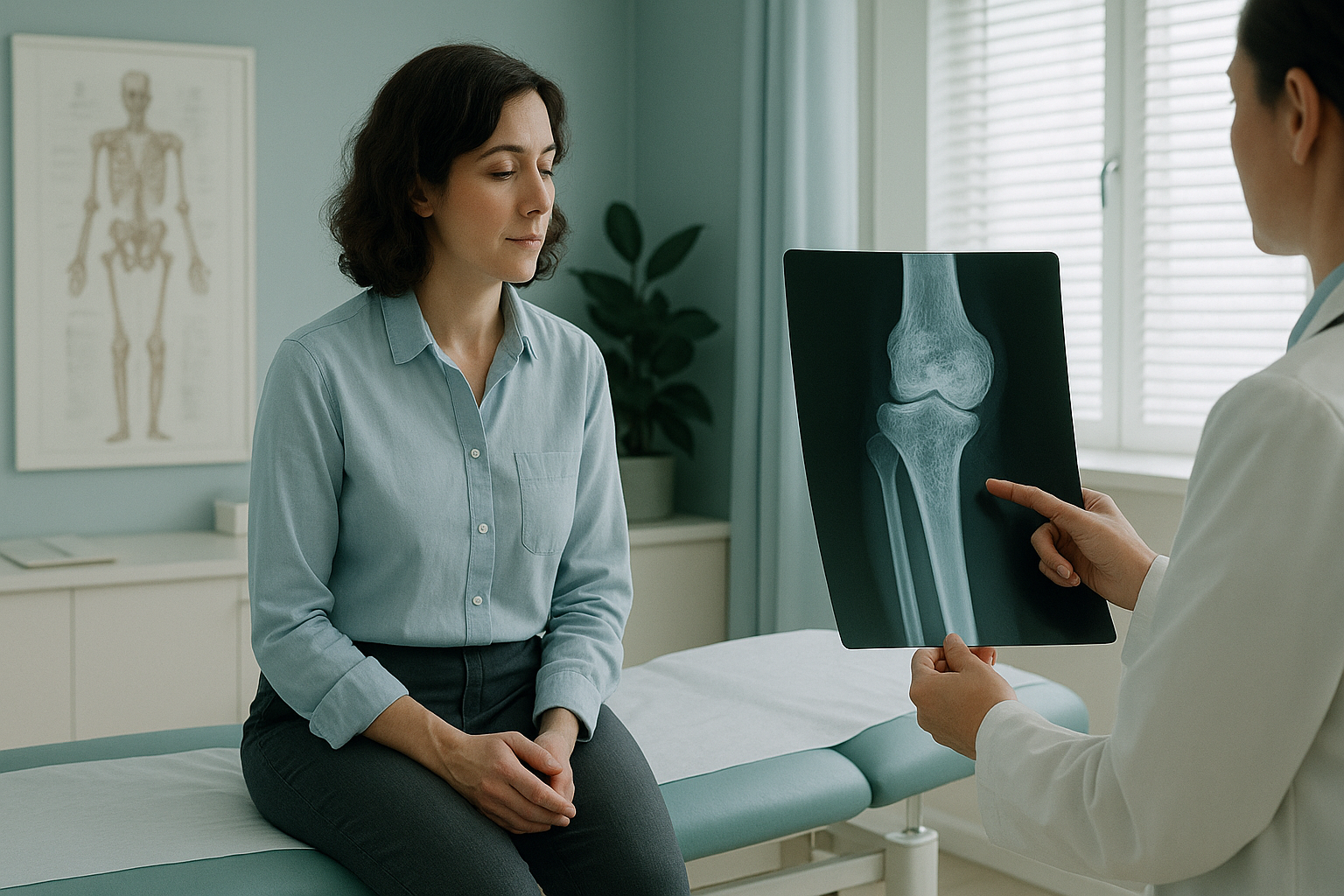
Paget's disease is not the same as osteomalacia, which is a softening of bone due to vitamin D deficiency. Both can cause bone pain in older adults. But the underlying problem, the diagnosis and the management are quite different.
How is Paget's disease of bone diagnosed?
Diagnosis usually relies on blood tests and a bone scan, not standard imaging alone. Many cases are found by accident. A blood test may show a raised alkaline phosphatase level, or thickened bone may appear on an X-ray taken for another reason.
The key diagnostic tools
- Blood test. Alkaline phosphatase (ALP) is an enzyme released during bone remodelling. A raised ALP level with normal liver function is a strong pointer towards Paget's disease.
- Bone scan (radionuclide scan). A small amount of tracer is injected into a vein. It collects in areas of active bone turnover. This shows exactly which bones are affected.
- X-ray. X-rays can show typical changes such as thickened trabeculae (the internal struts of bone), enlarged bone, or areas where bone density looks patchy. However, an X-ray alone does not confirm Paget's disease in every case.
Your doctor will usually arrange the blood test. If the results suggest Paget's, they will refer you to a rheumatologist or metabolic bone specialist for confirmation and a management plan.
A note on imaging choices. EOS and standard X-rays show bones, joints and alignment well. For soft tissue, discs or nerves, MRI is usually the better tool. If your specialist suspects nerve compression caused by thickened bone, they may ask for an MRI along with other tests.
How does Paget's disease affect your posture and alignment?
When Paget's disease changes the shape of a weight-bearing bone, it can shift the way your whole body lines up when you stand. For example, a bowed thigh bone tilts the pelvis. The spine then curves to compensate. Over time, you may develop pain in your back or hip that is actually caused by the alignment shift, not by the Paget's itself.
This is why the difference between lying-down imaging and standing imaging matters. When you lie on a table for a standard X-ray, CT or MRI, gravity is removed and your muscles relax. The image may miss the tilt or curve that appears as soon as you stand up and bear weight. A full standing image of the skeleton, from head to foot, shows the complete chain of compensation.
You may have a confirmed diagnosis of Paget's disease, and your specialist may want to understand how it has changed your alignment. If so, ScanAlign standing EOS imaging captures the full picture in one low-dose exposure, with about 90% less radiation than a standard X-ray, around ten times less. This does not diagnose Paget's disease itself. Blood tests and bone scans do that. But it can show the knock-on effects on alignment that help guide decisions about bracing, joint replacement planning or physiotherapy.
If you already have a Paget's diagnosis and want to understand how it has affected your alignment, you can book a standing assessment at our London clinic. Or you can start with a free video consultation from home to discuss whether it is the right step before you travel.
Book a free video consultationWhat helps manage Paget's disease of bone?
Not everyone with Paget's disease needs treatment. If the condition is not causing pain or affecting a critical bone, your specialist may suggest monitoring. This means regular blood tests to track alkaline phosphatase levels.
When treatment is needed
If you have bone pain, a weight-bearing bone is involved, or there are changes near a joint, your rheumatologist will usually consider medicine. Bisphosphonates are the most common choice. These drugs slow down the overactive bone cells, so healthier bone can form. They are usually given as a short course of tablets or a single intravenous infusion.
Ongoing monitoring
After treatment, your specialist will check your alkaline phosphatase level from time to time. A falling level usually means the medicine is working. Most people do not need repeat courses. Some do, if their levels rise again over the years.
Supporting your body day to day
- Stay active within comfort. Gentle, regular movement helps keep joints mobile and muscles strong around affected bones.
- Get enough calcium and vitamin D through your diet and, if advised, supplements. Your specialist will guide you.
- Use suitable pain relief as discussed with your doctor or specialist.
ScanAlign is a diagnostic imaging clinic and does not provide treatment. If you need a clearer picture of how Paget's has changed your skeletal alignment, imaging can inform the treatment plan your specialist makes for you.
Before you start treatment, or change the one you are on, it is worth getting a detailed diagnosis. Knowing whether the cause sits in your pelvis, your legs or your spine changes what will actually help.
Frequently asked questions about Paget's disease of bone
No. Paget's disease is a benign condition of abnormal bone remodelling. In very rare cases, a bone affected by long-standing Paget's can develop a type of bone cancer called osteosarcoma, but this is uncommon. Your specialist will monitor you if there are any concerns.
Alkaline phosphatase is an enzyme involved in bone and liver activity. A raised level with normal liver function often points to increased bone turnover. Paget's disease is one of the most common causes, but your doctor will rule out other possibilities first.
Yes. If Paget's affects a vertebra in your spine, the thickened bone can press on nerves or change the shape of the spine. This leads to back pain and stiffness. Alignment changes from a bowed leg or tilted pelvis can also cause secondary back pain.
Usually, yes. Your specialist will normally ask for a bone scan to find out which bones are involved. X-rays of the affected areas may follow. These tests guide decisions about whether treatment is needed.
EOS imaging is not the main tool for diagnosing Paget's disease. Blood tests and bone scans do that. However, if you already have a diagnosis and your specialist wants to see how bone changes have affected your standing alignment, an EOS scan can provide that full-body picture.
An EOS scan uses about 90% less radiation than a standard X-ray, around ten times less. This makes it a very low-dose option when your specialist needs a full standing image of your skeleton.
It can be. Having a close relative with Paget's disease increases your risk. Researchers have found several genes linked to the condition, though not everyone with those genes will develop it.
No referral is needed. ScanAlign is a private self-pay clinic, and you can refer yourself. However, for Paget's disease in particular, the main diagnostic tests (blood tests and bone scans) are best arranged through your doctor or specialist first. Standing alignment imaging is most useful once the diagnosis is confirmed.
For patients travelling from abroad, the price is confirmed during the free video consultation. You can also visit the ScanAlign FAQs page.
Both conditions affect bone and can cause pain, but the underlying problem is different. Paget's disease involves overactive bone remodelling that produces disorganised bone. Osteomalacia is caused by a lack of vitamin D, which leads to soft, undermineralised bone. The tests and treatments for each are different.
Want to understand how Paget's has changed your alignment?
If you already have a diagnosis and want to see the bigger picture, start with a free video consultation from home. We will help you decide if a standing assessment in London is the right next step.
Book a free video consultationWritten by Abbas Dhami (Specialist Diagnostic Radiographer)
Sources
- NHS. "Paget's disease of bone." nhs.uk. Available at: https://www.nhs.uk/conditions/pagets-disease-bone/
- Ralston SH et al. "Diagnosis and management of Paget's disease of bone in adults: a clinical guideline." Journal of Bone and Mineral Research, 2019; 34(4):579-604.
- Paget's Association UK. Patient information resources. Available at: https://paget.org.uk/
This page is general information and not a diagnosis.
ScanAlign is the trading name of CoreMed Solutions Ltd and operates under The Harley Street Hospital's CQC licence.