
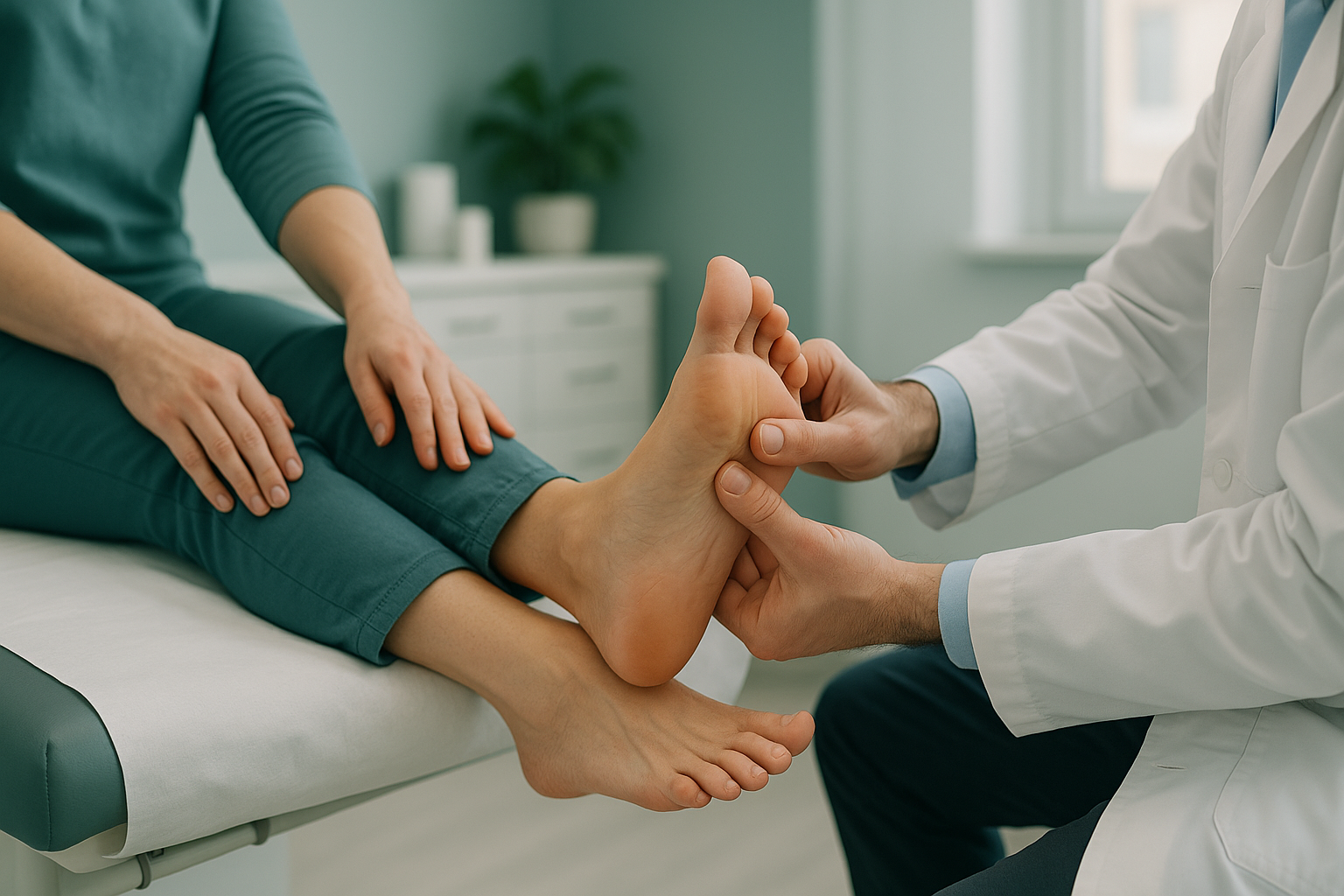
What Is Morton's Neuroma, and Why Does It Feel Like a Stone in My Shoe?
Morton's neuroma is a thickening of the tissue around one of the nerves between your toes. It is most often between the third and fourth toes. It causes a sharp, burning pain in the ball of your foot. It can feel as if you are standing on a pebble. It is not a true tumour. It is a nerve irritation made worse by pressure and tight shoes.
Key takeaways
- The pain sits in the ball of the foot. It often spreads into the toes as numbness or tingling.
- Narrow shoes, high heels and abnormal loading of the front of the foot are the most common triggers.
- Ultrasound is usually the first imaging test. Standing whole-body imaging can show the wider alignment and loading pattern that played a part.
- Most people get better without surgery, with changes to footwear, metatarsal pads or injections.
- ScanAlign does not diagnose Morton's neuroma directly. It shows how your overall alignment affects the way your foot takes load.
What does Morton's neuroma feel like?
Morton's neuroma usually feels like a sharp, burning pain under the ball of your foot, right between two of the metatarsal bones. Many people say it is like standing on a marble or a folded sock. The discomfort often gets worse when you walk, especially in tight shoes. It eases when you take them off.
Symptoms can come and go. Some people notice them only on longer walks. Others feel them every time they wear a certain pair of shoes. If you get sudden weakness, loss of feeling in your foot, or pain that does not ease at all with rest, see your doctor or go to your nearest emergency department.
What causes Morton's neuroma?
Morton's neuroma develops when the interdigital nerve between two metatarsal heads is squeezed or irritated again and again. Over time the tissue around the nerve thickens, and the nerve itself becomes inflamed. Several things raise the risk.
Your body is a connected chain from your feet to your head. If your arch drops, your knee may turn inward. Your hip and pelvis then make up for it further up. All of this changes the way your foot strikes the ground. These changes can focus pressure right where the nerve sits. This is why looking at the foot alone sometimes misses the bigger picture.
Where exactly is the nerve affected?
The nerve runs between the metatarsal heads in the ball of the foot. In most cases, the interdigital nerve between the third and fourth toes is the one affected. Less often, it occurs between the second and third toes.
How is Morton's neuroma diagnosed?
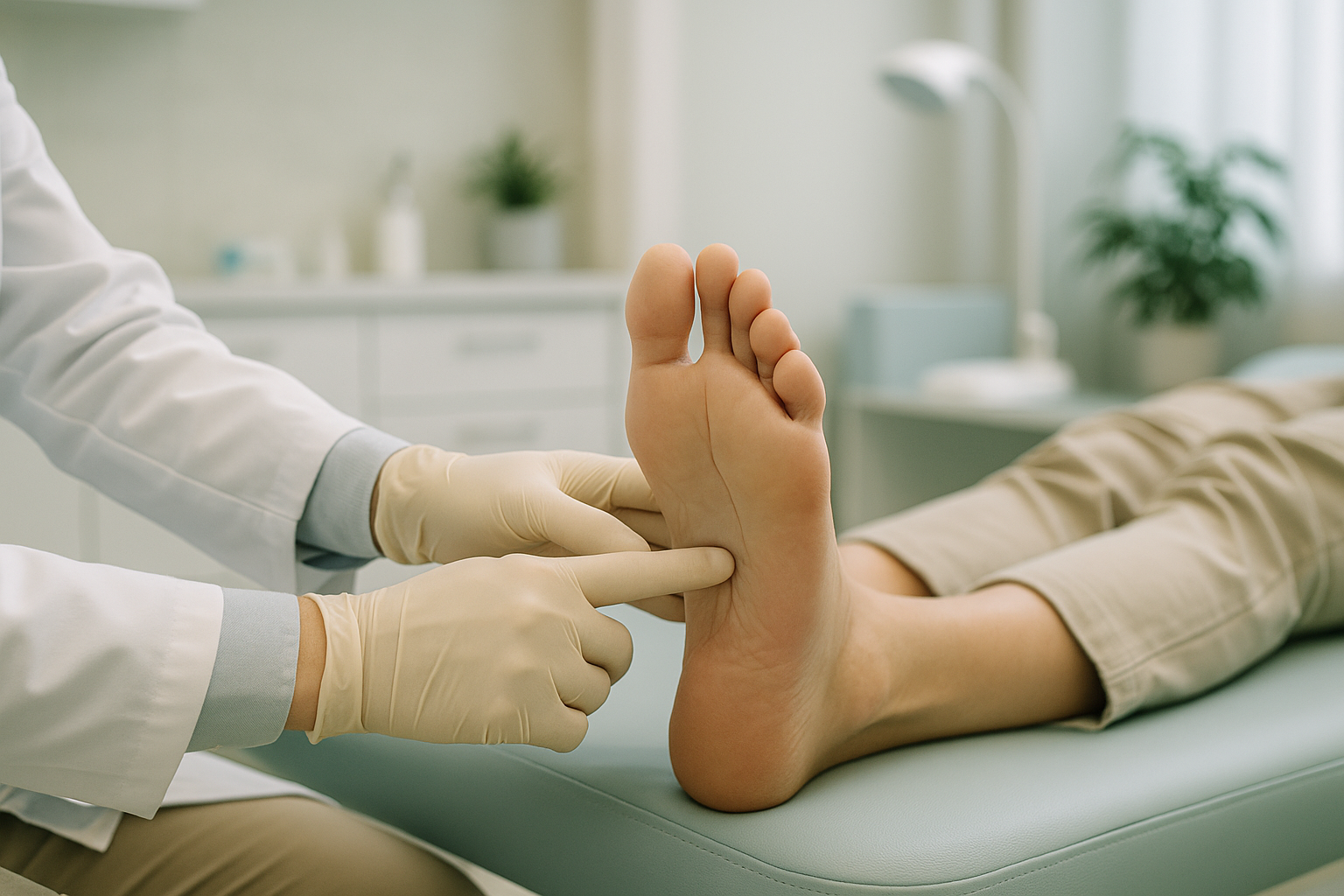
Diagnosis usually starts with a clinical examination. Your clinician may squeeze the metatarsal heads together to bring on the pain, or feel for a typical "click" (sometimes called Mulder's click). If imaging is needed, ultrasound is the usual first test. It is quick, widely available and good at confirming the thickened nerve tissue.
MRI can also show a neuroma clearly. It is sometimes used when the diagnosis is unclear, or if your clinician suspects another soft-tissue problem at the same time.
A note on MRI and ultrasound. EOS imaging shows bones, joints and whole-body alignment. It does not image the soft tissue of the nerve itself. To confirm Morton's neuroma directly, ultrasound or MRI is usually the better tool. Standing imaging adds value by showing the wider loading and alignment pattern that may be contributing to your symptoms.
Why does standing alignment matter for Morton's neuroma?
Standing whole-body imaging matters because it shows how your skeleton bears weight when you are upright and under load, which is linked to your pain. When you lie down for a standard X-ray, CT or MRI, gravity is removed. Your muscles relax and your arches may lift slightly. The loading pattern that squeezes the nerve disappears from the picture.
An EOS scan captures your whole skeleton from head to feet while you stand. This shows the chain of alignment from your pelvis, through your knees, to your arches and the front of your foot. If your arch has dropped, or your leg is turned slightly inward, that shift focuses pressure onto the metatarsal heads. Understanding this chain helps clinicians address the cause, not just the place where it hurts.
At ScanAlign, weight-bearing standing imaging gives this wider context. It does not replace the ultrasound or MRI that confirms the neuroma. It adds the load picture, so that any treatment, whether footwear advice, orthotics and overpronation correction or a surgical plan, can take account of the forces going through your foot.
If you have ongoing pain in the front of your foot and want to understand the alignment behind it, we offer a free video consultation. You can join it from home and talk about whether imaging in London is right for you.
Book a free video consultationWhat helps manage Morton's neuroma symptoms?
Most people with Morton's neuroma get better without surgery. The options below are often recommended by family doctors, podiatrists and orthopaedic specialists. ScanAlign is a diagnostic imaging clinic, so we do not provide these treatments. We list them so you can discuss options with your own clinician.
- Wider shoes with a roomy toe box. Giving the metatarsal heads more space reduces pressure on the nerve.
- Lower heels. A lower heel shifts load away from the ball of the foot.
- Metatarsal pads. A small pad placed behind the metatarsal heads can spread them apart and relieve pressure on the nerve.
- Orthotics. Custom-made or ready-made insoles can correct overpronation and spread the load on the front of the foot differently.
- Steroid injection. A corticosteroid injection around the nerve can reduce inflammation and pain. Results vary.
- Surgery. If non-surgical measures fail, surgery may be considered to remove the thickened nerve tissue (neurectomy) or to release the structures around it.
If your clinician recommends orthotics or surgery, understanding your full alignment through gait analysis and standing imaging helps make sure the solution takes account of the way your whole body loads the foot.
Before you start a treatment, or change the one you are on, it is worth getting a detailed diagnosis. Knowing whether the cause sits in your pelvis, your legs or your spine changes what will actually help.
Frequently asked questions about Morton's neuroma
No. Despite the name, it is not a tumour. It is a thickening of the tissue around the interdigital nerve, caused by irritation and pressure.
It most often affects the nerve between the third and fourth toes. It can also occur between the second and third toes, but this is less common.
Mild cases sometimes settle if you switch to wider shoes with lower heels and cut down on activities that load the front of the foot. But if the nerve tissue has thickened a lot, symptoms often come back without further treatment.
An EOS scan shows the bones and joints of your whole skeleton while you stand. For foot pain, it shows your arch position, leg alignment, and how your pelvis and spine affect the load through your foot. It does not image the nerve itself.
Yes. EOS uses about 90% less radiation than a standard X-ray, around ten times less. It is one of the lowest-dose skeletal imaging options available.
No. ScanAlign accepts self-referrals. You can book a foot and alignment assessment directly through our website.
The price for patients travelling from abroad is confirmed during the free video consultation, and you can read what is included on our frequently asked questions page.
Yes. A narrow toe box squeezes the metatarsal heads together and presses on the nerve between them. Over time, this irritation can cause the tissue around the nerve to thicken.
Metatarsalgia is a general term for pain in the ball of the foot. Morton's neuroma is one specific cause of metatarsalgia. Other causes include stress fractures, joint inflammation and thinning of the fat pad.
See your doctor if the pain lasts more than a couple of weeks, if you notice numbness getting worse, or if it is affecting your daily life. If you develop sudden weakness, loss of bladder or bowel control, or severe symptoms in your leg, get urgent medical help from your doctor or your nearest emergency department.
Understand the alignment behind your foot pain
A free video consultation lets us talk about your symptoms, and whether standing whole-body imaging in London could help your clinician plan the right next step.
Book a free video consultationWritten by Abbas Dhami (Specialist Diagnostic Radiographer)
Sources
- NHS. "Morton's neuroma." nhs.uk, 2023.
- Betts RP, Franks CI, Duckworth T. "Foot pressure studies in Morton's neuroma." The Foot, 1995; 5(3): 135-141.
- American Academy of Orthopaedic Surgeons. "Morton's Neuroma." OrthoInfo, 2022.
This page is general information and not a diagnosis.
ScanAlign is the trading name of CoreMed Solutions Ltd and operates under The Harley Street Hospital's CQC licence.