
What Does Limb Lengthening Surgery Involve?
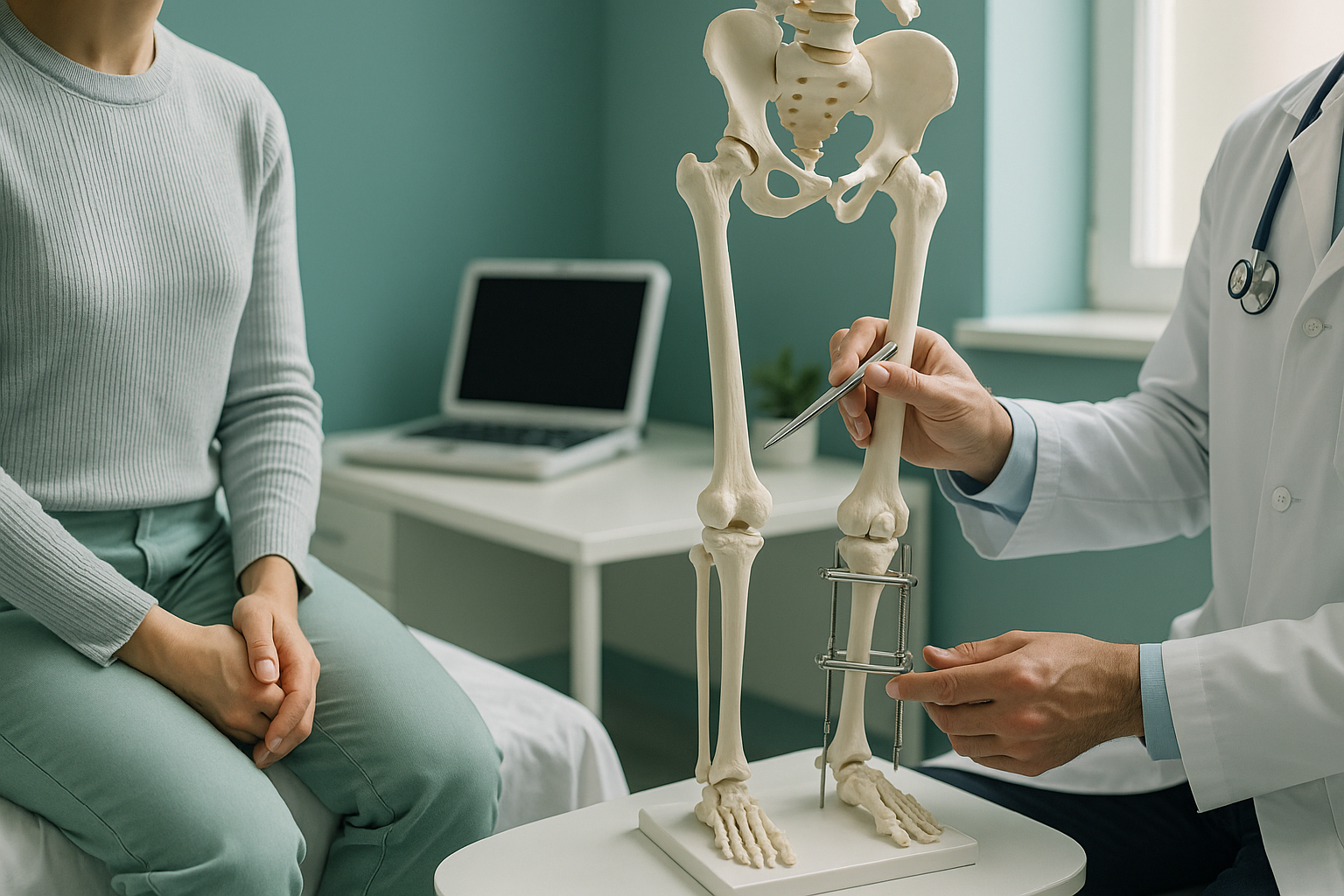
Limb lengthening surgery uses a controlled process called distraction osteogenesis. A surgeon cuts the bone. The two ends are then slowly pulled apart, so new bone grows in the gap. The surgery can correct a leg length discrepancy, straighten a deformity, or increase height for cosmetic reasons. Recovery takes many months and carries real risks.
Key takeaways
- Limb lengthening relies on distraction osteogenesis. The body grows new bone between bone ends that have been separated.
- An external fixator (such as an Ilizarov frame) or an internal lengthening nail is used to control the separation.
- Recovery commonly takes six to twelve months or longer, with intensive physiotherapy.
- Cosmetic leg lengthening carries the same surgical risks as reconstructive lengthening. These risks should be weighed carefully.
- Accurate full-limb imaging before surgery helps the surgeon plan the cut and predict lower limb alignment after lengthening.
Perhaps one of your legs is clearly shorter than the other. Perhaps you have a limb deformity, or you are thinking about cosmetic height increase. Either way, you have probably come across the term limb lengthening surgery. This page explains what the surgery really involves, what recovery looks like, and the risks you should understand before you decide.
How does limb lengthening surgery work?
The surgeon carefully cuts through a bone (an osteotomy). The two ends are then slowly separated, and the body fills the gap with new bone. This natural process is called distraction osteogenesis. It was pioneered in the 1950s by Professor Gavriil Ilizarov. It is still the basis of all modern lengthening techniques.
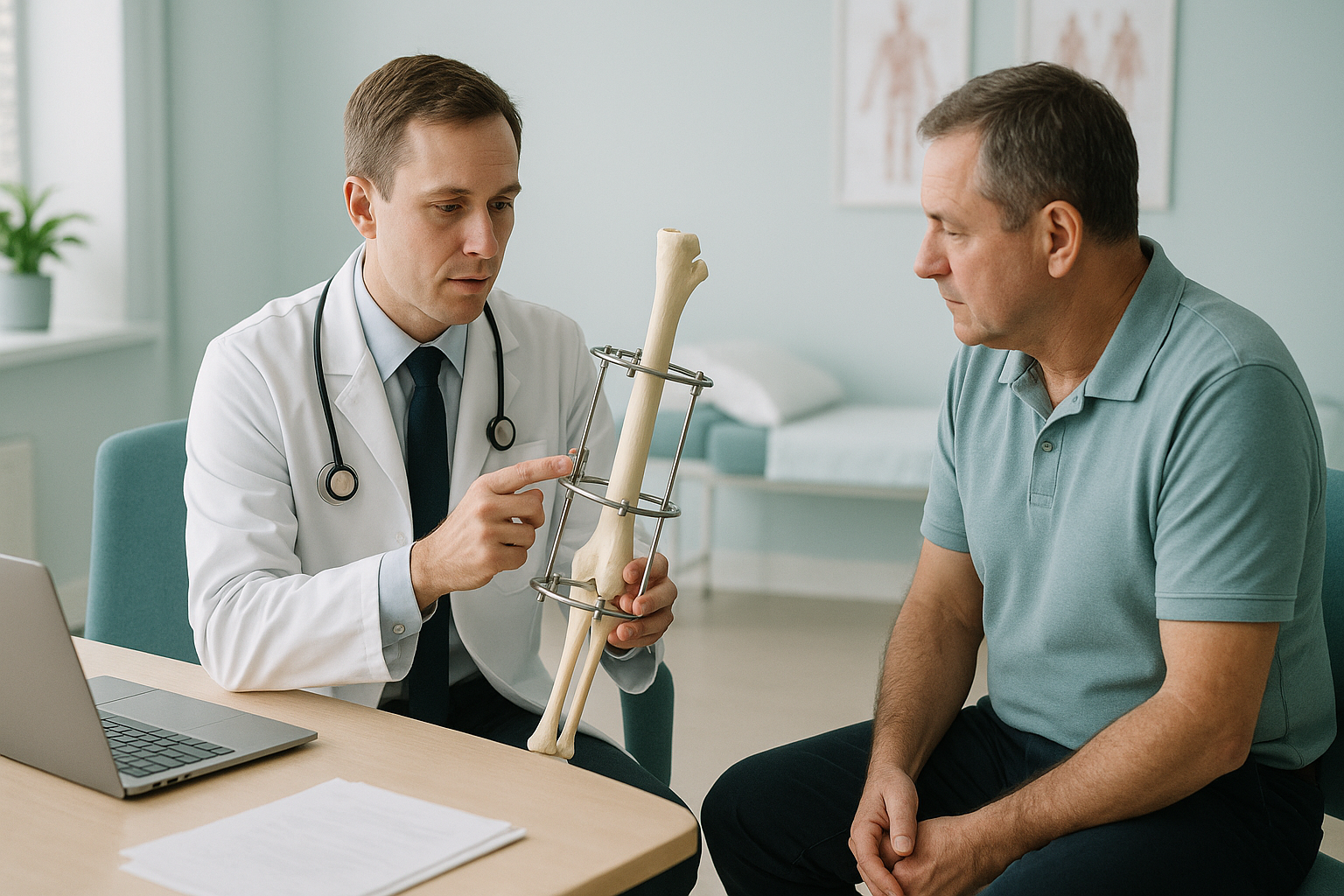
The procedure has three phases:
- Osteotomy. The surgeon makes a controlled cut through the bone, usually the tibia (shin) or femur (thigh).
- Distraction. After a few days of rest, a device slowly separates the bone ends, typically by about one millimetre per day. New bone, blood vessels and soft tissue form in the widening gap.
- Consolidation. Once the planned length is reached, the new bone needs time to harden and mature. This phase is often the longest part of recovery.
External fixator vs internal nail
Two main devices control the separation. An external fixator, such as the Ilizarov frame, is a metal frame of rings and wires attached outside the leg. It can be adjusted a great deal. It lets the surgeon correct angular deformities at the same time as lengthening. An intramedullary lengthening nail sits inside the bone. It is adjusted with a magnet or a motorised mechanism. The nail is less visible and generally more comfortable. But it cannot correct all types of deformity, and it is more expensive.
What are the risks of limb lengthening surgery?
Limb lengthening surgery carries real risks. You should understand them fully before you give consent. They apply whether the surgery is for reconstructive or cosmetic reasons.
Pin-site infections are common with external fixators. Deep bone infection (osteomyelitis) is rarer but serious.
Stretching nerves and blood vessels too quickly can cause numbness, weakness or circulation problems.
Muscles and tendons tighten as the bone lengthens. Without constant physiotherapy, joints can become permanently stiff.
The new bone may form too slowly (delayed union) or not at all (non-union). This sometimes needs further surgery.
Other possible complications include misalignment during lengthening, and early bone fusion that stops the process too soon. Some people also find it hard to cope mentally with a long, painful recovery. If you have sudden numbness, weakness, or loss of feeling during recovery, get urgent medical help through your surgical team, your doctor or your nearest emergency department.
How long is limb lengthening recovery?
Recovery typically takes six to twelve months at the very least. A full return to sport or heavy activity can take longer. Recovery is not just about the bone healing. It includes intensive daily physiotherapy, pain management and a gradual return to putting weight on the leg.
Surgery and latency (days 1 to 7)
The bone is cut and the fixator or nail is fitted. A short rest period allows the first healing response before distraction begins.
Distraction phase (weeks to months)
The bone is separated gradually. Daily physiotherapy is essential to keep joints moving and prevent contractures. Regular X-rays check progress.
Consolidation phase (months)
New bone hardens and matures. External fixators stay in place until the bone is strong enough. This is often the most frustrating part of the process.
Rehabilitation
Ongoing physiotherapy rebuilds strength and flexibility. Full recovery is a commitment measured in months, not weeks.
The consolidation phase alone often lasts roughly twice as long as the distraction phase. Smoking, poor nutrition and certain medical conditions can slow bone healing further.
Is cosmetic leg lengthening safe?
Cosmetic leg lengthening uses the same surgical techniques as reconstructive lengthening, so it carries the same risks. The difference is the reason for surgery. In reconstructive surgery, the benefit is correcting a functional problem: a significant leg length discrepancy or a deformity that affects walking. In cosmetic surgery, the benefit is more height in someone whose legs are structurally normal.
This difference matters. Complications like infection, nerve damage and joint stiffness weigh more heavily when the starting point is a healthy, working leg. No surgery is free of risk. The recovery is truly hard. It often means months of limited movement, daily pain and relying on crutches or a frame.
If you are thinking about cosmetic limb lengthening, it is worth asking yourself some honest questions. What do you expect from it? Can you take months away from work and activity? Have you talked the decision through with someone you trust? A thorough consultation with an experienced limb reconstruction surgeon, not just a cosmetic surgery clinic, is strongly recommended.
A note on soft-tissue imaging. EOS and standing X-rays show bones, joints and alignment clearly. For soft-tissue concerns such as muscles, nerves or blood vessels, MRI is usually the better tool. Your surgeon may ask for both types of imaging when planning your surgery.
Why does imaging before surgery matter for limb lengthening?
Accurate imaging before surgery is essential. The surgeon needs to know exactly how much length to add and how the mechanical axis of the leg will change. Getting this wrong risks creating new alignment problems, such as knock-knees or bow legs, that may need further correction.
A full-leg standing x-ray captures both legs from hip to ankle on a single image while you stand upright with your weight on your legs. This gives the surgeon a true picture of your bone lengths, joint angles and overall lower limb alignment under real load.
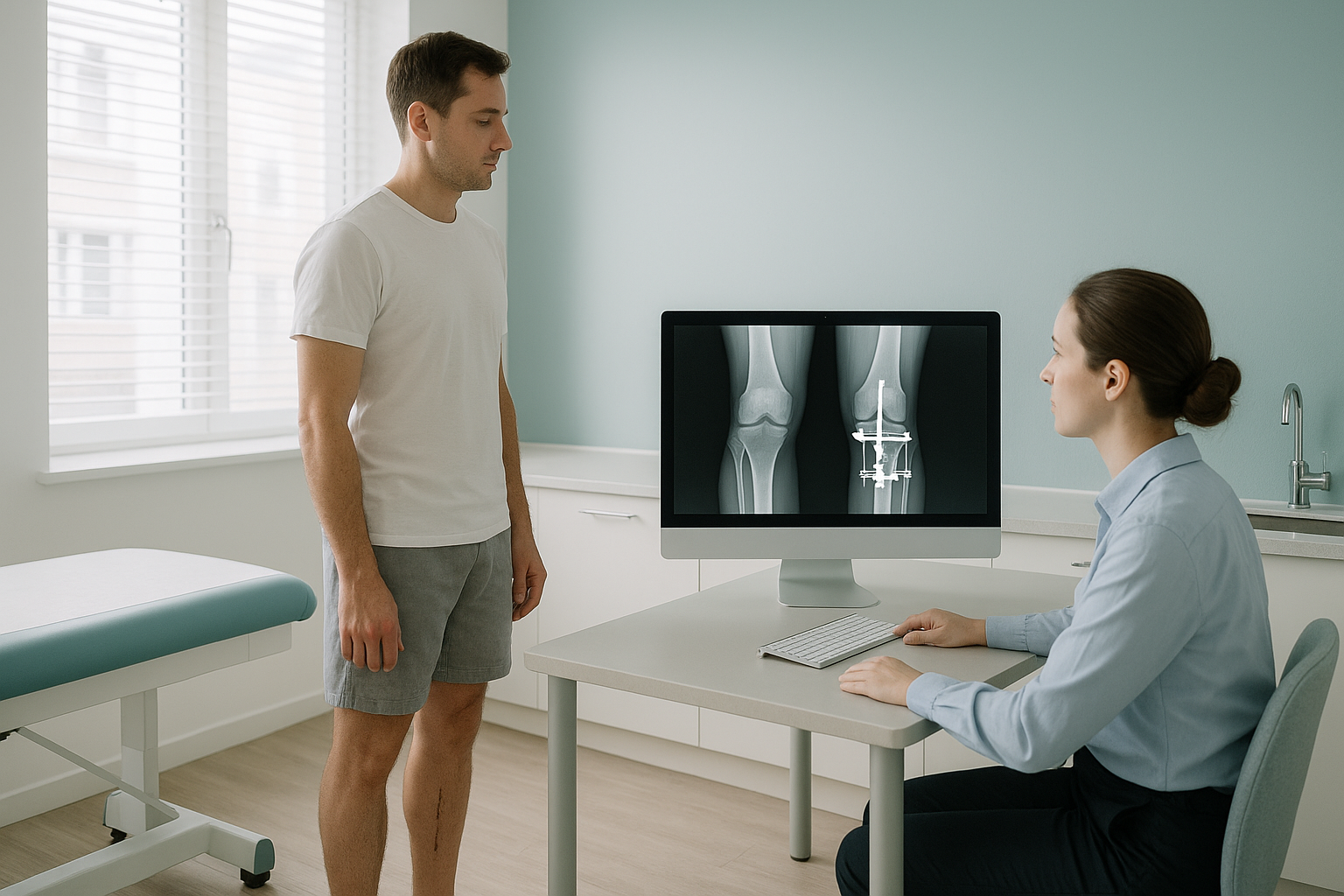
Imaging done lying down can relax the muscles and flatten out alignment problems that only appear when you stand. This is why standing imaging gives better information for planning surgery. EOS technology uses about 90% less radiation than a standard X-ray, around ten times less. This makes it a practical choice when several images are needed before and after surgery.
Before you start treatment, or change the one you are on, it is worth getting a detailed diagnosis. Knowing whether the cause sits in the pelvis, the legs or the spine changes what will actually help.
If you are preparing for limb lengthening or want to understand your leg alignment, you can book full-limb measurement imaging at ScanAlign, standing EOS imaging in London. Your images and report can be shared directly with your surgical team.
Book a free video consultationFrequently asked questions about limb lengthening surgery
Distraction osteogenesis is the natural process used in limb lengthening. After a bone is cut in surgery, the two ends are slowly pulled apart. The body responds by growing new bone, blood vessels and soft tissue to fill the gap. The ends are usually separated by about one millimetre per day.
An Ilizarov frame is an external fixator. It is made of metal rings joined by rods, with wires that pass through the bone. It allows very precise control of lengthening and angular correction. It stays attached to the leg through both the distraction and consolidation phases.
It depends on the bone being lengthened and on individual factors. Surgeons typically aim for a few centimetres per bone segment. Going beyond what the soft tissues can tolerate increases the risk of complications. Your surgeon will discuss realistic limits during planning.
Costs vary widely. They depend on the hospital, the surgeon, the device used and whether the surgery is reconstructive or cosmetic. ScanAlign provides imaging before surgery, not surgery itself. We do not publish surgical costs, but your surgeon or hospital will give you a full breakdown. The price of your scan, if you are travelling from abroad, is confirmed during the free video consultation.
No. ScanAlign is a self-referral clinic, so you can book directly without a referral from your doctor or a consultant. Many people book imaging so they can bring accurate measurements to their first surgical consultation.
Most people feel significant discomfort during the distraction phase, especially as the soft tissues are stretched. Pain is managed with medication and by carefully adjusting the rate of distraction. The consolidation phase is generally less painful, but it can be frustrating because movement is limited.
Whether you can put weight on the leg depends on the technique used and your surgeon's protocol. Many patients use crutches or a wheelchair for weeks or months. Physiotherapy is essential throughout, to keep the joints moving and the muscles strong.
EOS captures the full leg from hip to ankle in a single standing image, with about 90% less radiation than a standard X-ray, around ten times less. Because you are upright with your weight on your legs, the image shows your true alignment under load. X-rays taken lying down can miss this.
Generally no. In the UK, the NHS typically funds limb lengthening only for medical reasons, such as correcting a significant leg length discrepancy or deformity. Cosmetic lengthening is usually available only through private clinics.
EOS uses about 90% less radiation than a standard X-ray, around ten times less. It is a very low-dose imaging system. The scan takes only a few seconds, and you simply stand still inside the machine. There is no injection or contrast dye involved.
Planning limb lengthening? Start with accurate imaging.
A standing full-leg scan gives your surgeon precise bone length and alignment measurements. No referral needed.
Book a free video consultationWritten by Abbas Dhami (Specialist Diagnostic Radiographer)
Sources
- Paley, D. (2002). Principles of Deformity Correction. Springer. A widely referenced textbook on distraction osteogenesis and limb reconstruction planning.
- British Orthopaedic Association. Guidance on limb reconstruction surgery standards in the United Kingdom.
- Ilizarov, G.A. (1989). The tension-stress effect on the genesis and growth of tissues. Clinical Orthopaedics and Related Research, 238, 249-281.
This page is general information and not a diagnosis.
ScanAlign is the trading name of CoreMed Solutions Ltd and operates under The Harley Street Hospital's CQC licence.