
Leg Length Discrepancy in Children: How Do You Measure a Difference in a Growing Child?
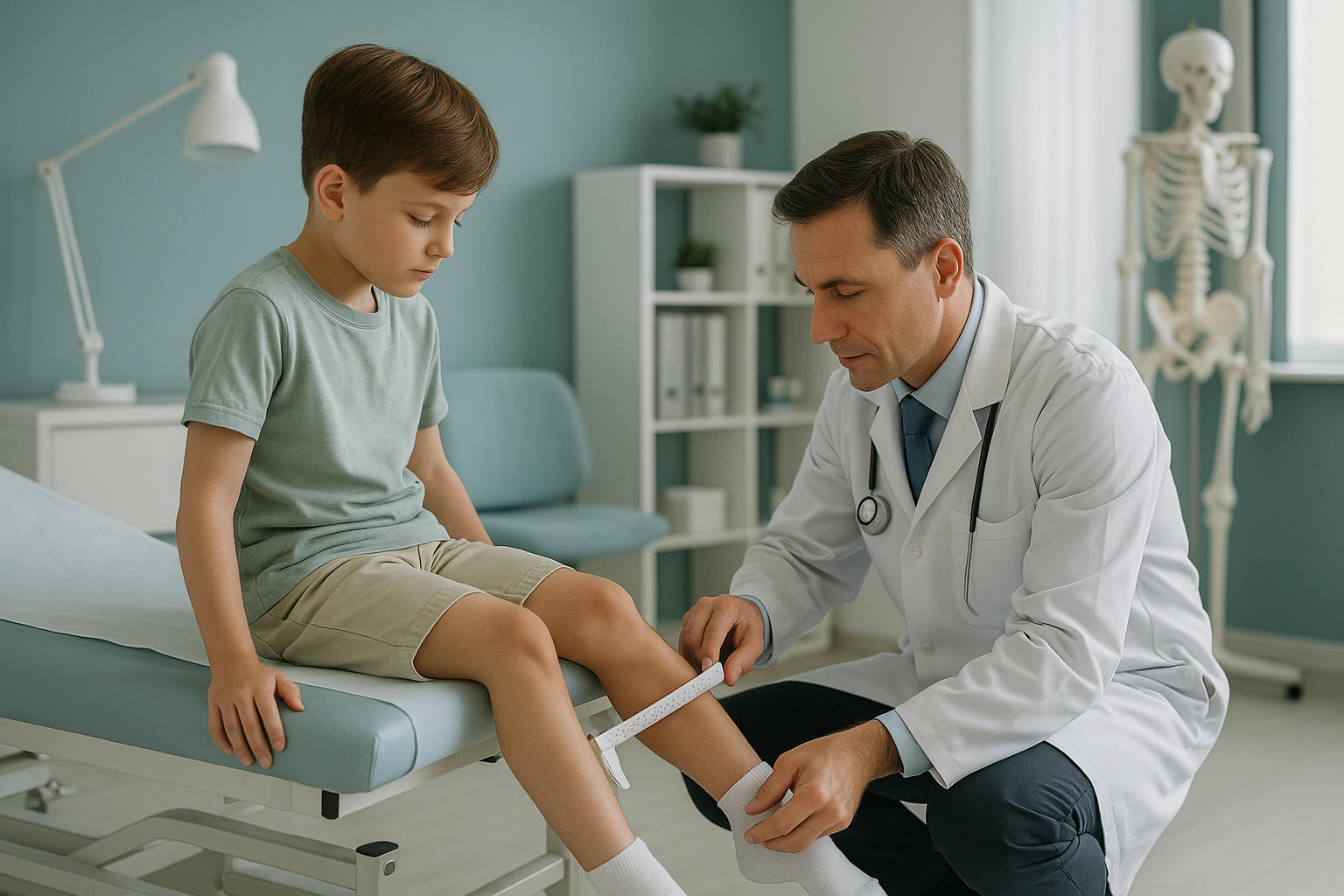
In children, a leg length discrepancy is measured with a full-length X-ray taken while standing. It shows both legs, from hip to ankle, in one image. Children are still growing, so one measurement is not enough. Repeat scans at regular intervals show how the difference changes over time. This helps the orthopaedic team decide if and when to act.
Key points
- A leg length difference is common in children and often mild, but it can increase as the child grows.
- Accurate measurement needs a full-length standing image, not just a measuring tape.
- Repeat monitoring is essential, because the expected difference once growth is complete guides treatment decisions.
- Each scan adds radiation, so using the lowest dose technology matters most for children.
- EOS standing imaging uses about 90% less radiation than a standard X-ray, around ten times less.
What is a leg length discrepancy in a child?
A leg length discrepancy means one leg is measurably shorter than the other. It is surprisingly common in children. Small differences often go unnoticed. Larger ones can change the way a child walks, cause a visible limp, or tilt the pelvis. Over time, this may lead to compensatory curves in the spine.
The main difference between adults and children is growth. A child's bones are still getting longer at the growth plates near the knee and hip. A small gap today can stay the same, close on its own, or widen as the child gets taller. That is why it is so important to understand the expected difference once growth is complete.
What are the signs your child has one leg longer than the other?
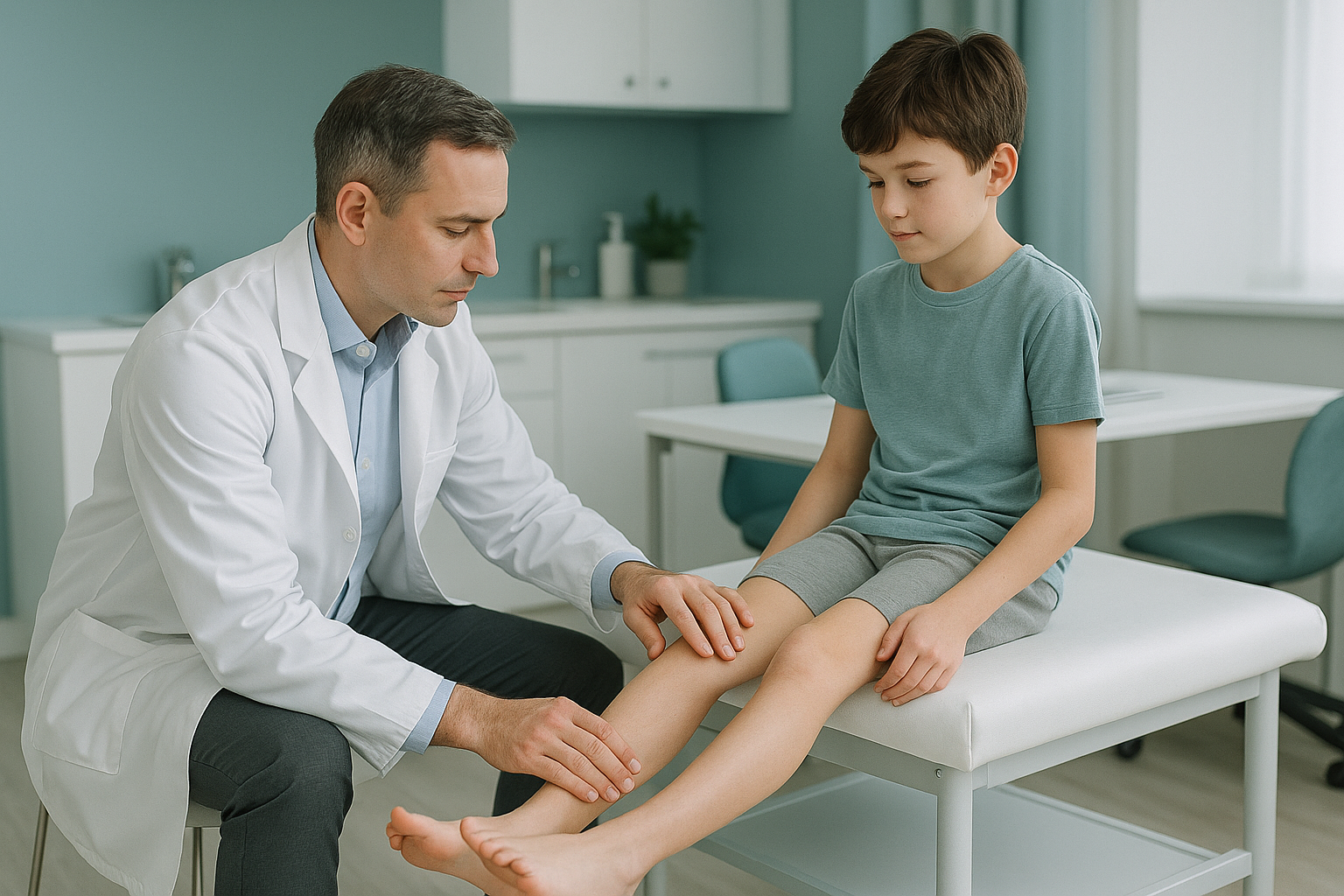
Parents usually notice a leg length difference in everyday life, not through a formal test. These are the most common signs.
A noticeable bob or dip when walking, especially when tired or after sport.
One side of the waistband sits higher, or a belt slopes to one side.
The child walks on tiptoe on the shorter side to even things out.
Aching after activity, sometimes on the side opposite the shorter leg.
What causes a leg length difference in children?
A limb length inequality in a child can be structural, meaning the bone itself is shorter. Or it can be functional, where the legs are the same length but something else, such as a tight muscle or a pelvic tilt, makes one look shorter. The main structural causes fall into a few groups.
One growth plate grows faster or slower than the one on the other side, slowly widening the gap.
A break near a growth plate can speed up or slow down bone growth on that side.
Some children are born with a shorter femur or tibia on one side.
A bone infection in early childhood can disturb normal growth at the affected plate.
How is a leg length discrepancy measured accurately?
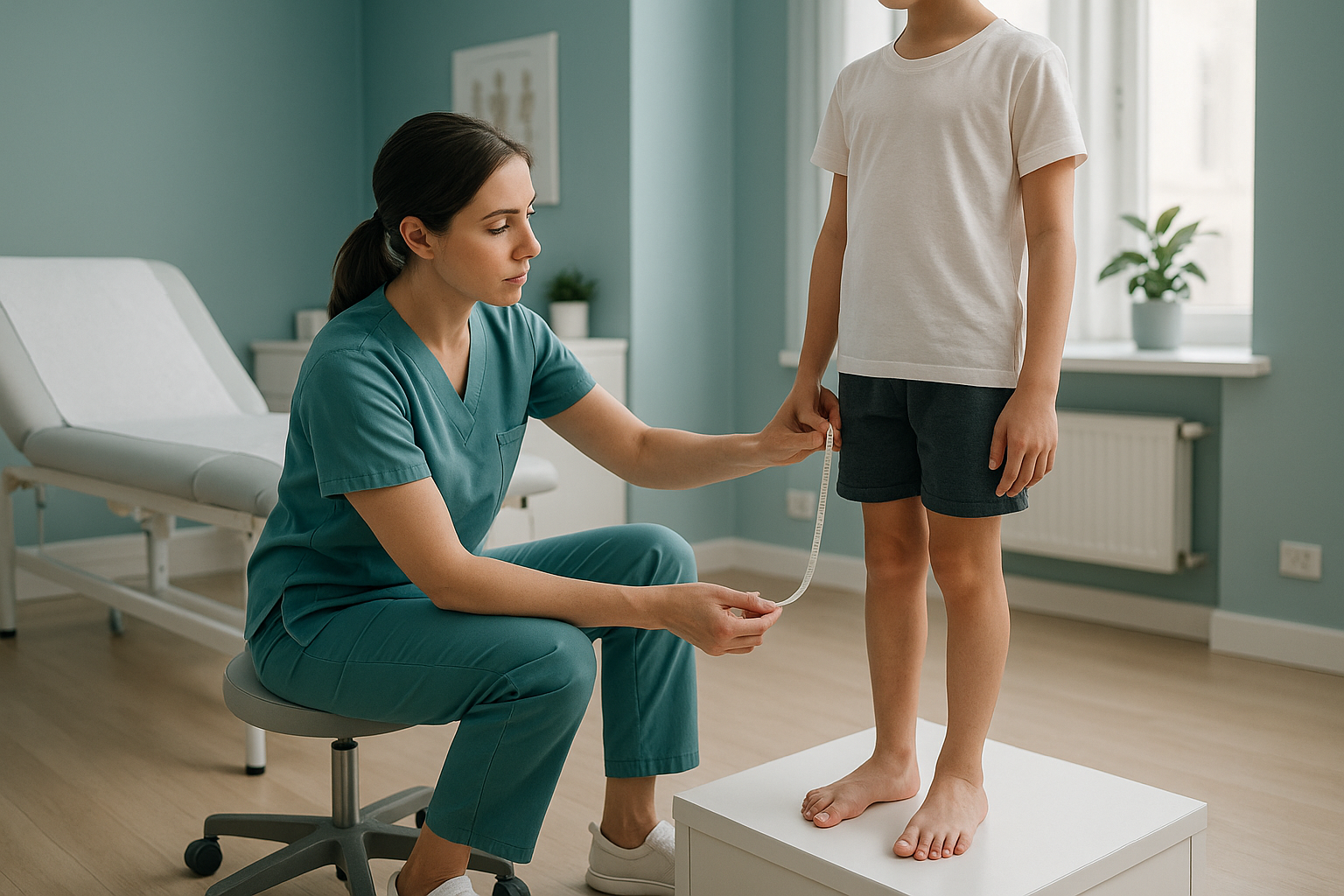
Accurate measurement needs a full-length image of both legs, taken while the child stands and bears weight. A measuring tape from hip to ankle gives a rough guide. But it cannot separate the femur (thigh bone) from the tibia (shin bone), or show exactly where the shortening is. Clinicians need that detail to predict how the difference will change as the child grows.
A standing scanogram, or long-leg X-ray, shows both legs on one image. The specialist can then compare bone lengths section by section. When taken at intervals, usually every six to twelve months, these repeat measurements build a growth curve. That curve lets the team estimate the expected difference once growth is complete. It helps them decide whether a shoe raise, physiotherapy or surgery is the right option. One such surgery is epiphysiodesis, where one growth plate is deliberately slowed.
Before your child starts treatment, or changes the one they are on, it is worth getting a detailed diagnosis. Knowing whether the cause sits in the pelvis, the legs or the spine changes what will actually help.
Do you need to start or continue monitoring for your child? Children's imaging at ScanAlign uses ultra-low-dose EOS to track leg length over time.
Book a free video consultationWhy does standing imaging matter for a child's leg length?
When a child lies down for a normal X-ray or CT scan, gravity is taken out of the picture. Muscles relax, the pelvis settles flat, and any compensatory tilt the child uses in real life disappears. The image may show the bones accurately, but it misses how the child really stands and moves.
A standing, weight-bearing image shows the full mechanical picture. It shows pelvic obliquity, any spinal curve that has formed to compensate, and the true alignment from hip to ankle under load. For the orthopaedic team, this is the information that guides real-world decisions.
Standing scan: Both legs bear weight. The pelvis tilts as it does in daily life. The image shows the true leg length difference, any compensatory spinal curve, and real joint angles. This is the view the surgeon or physiotherapist needs.
Lying-down scan: Gravity is taken away. The pelvis sits flat on the table. Muscles relax and may hide a functional part of the discrepancy. The bone lengths can be seen, but the way the whole body compensates is hidden.
Read more about EOS scanning for leg length discrepancy and how it fits into a monitoring plan.
Why does radiation dose matter most when monitoring children?
This is where monitoring leg length in children is very different from a one-off adult scan. A child who needs repeat measurements may have an X-ray every six to twelve months for several years. Each scan adds to their total radiation dose. Children are more sensitive to radiation than adults, because their cells are dividing faster.
EOS imaging uses about 90% less radiation than a standard X-ray, around ten times less. Over a monitoring plan of, say, five or six scans across several years, that reduction adds up a lot. A lower dose per scan means a far lower total exposure by the time the child's skeleton has finished growing.
At ScanAlign, low dose standing imaging, every scan for a child is done on the EOS system, precisely because dose matters so much for growing children.
When is MRI better? EOS shows bones, joints and alignment clearly. The clinical team may suspect a soft-tissue cause, such as a muscle contracture, a growth plate problem that needs cross-sectional detail, or a nerve-related issue. In that case, MRI is usually the better tool. The two scans answer different questions and often work well together.
Frequently asked questions
Small differences are very common. Studies suggest most people have a minor limb length inequality. In most children it causes no symptoms and needs no treatment. It only becomes a clinical concern when the gap is large enough to affect walking, posture or comfort.
Sometimes. If both growth plates are healthy, the difference may stay stable, or now and then close, as the child grows. In other cases the gap widens. Repeat measurement is the only reliable way to find out which pattern your child follows.
Epiphysiodesis is a minor surgical procedure. It slows or stops growth at one growth plate in the longer leg, so the shorter leg can catch up. Timing is critical and depends on how much growth the child has left. That is why accurate repeat measurements are so important.
A shoe raise can level the pelvis and improve comfort while the child is growing, but it does not change bone length. It helps manage the difference rather than correct it. Your child's specialist will advise whether a raise is suitable, based on the size of the discrepancy.
How often depends on the child's age, the size of the difference, and how fast they are growing. Many specialists recommend imaging every six to twelve months during the peak growth years. But your child's orthopaedic team will set the right schedule.
Yes. EOS uses about 90% less radiation than a standard X-ray, around ten times less. That lower dose matters most for children who need repeated scans over several years, because it keeps the total exposure as low as reasonably achievable.
No. ScanAlign accepts patients who refer themselves. You can book a leg length scan for your child directly, and the results are shared with your child's doctor or specialist.
The child stands still inside the EOS booth for about 15 to 20 seconds while the scanner moves from head to foot. There is no closed tunnel, no loud noise, and no injection. Most children find it easy.
The price for patients travelling from abroad is confirmed during the free video consultation. This consultation, before booking, also lets you discuss whether the scan is right for your child.
Yes. EOS captures the whole body from head to foot in one standing image. So it shows any compensatory spinal curve, pelvic obliquity and the leg length difference together. This gives the specialist a complete picture, rather than separate snapshots of each area.
Start with a free video consultation
Talk to our team about your concern over your child's leg length. No referral needed, no obligation.
Book a free video consultationWritten by Abbas Dhami (Specialist Diagnostic Radiographer)
Sources
- Sabharwal S, Kumar A. Methods for assessing leg length discrepancy. Clinical Orthopaedics and Related Research, 2008; 466(12):2910-2922.
- Deschênes S et al. Diagnostic imaging in adolescent idiopathic scoliosis and leg length inequality with low-dose biplanar radiography (EOS). European Spine Journal, 2010; 19(12):2093-2101.
- Royal College of Radiologists. iRefer Guidelines: Making the Best Use of Clinical Radiology. RCR, London (current edition).
This page is general information and not a diagnosis.
ScanAlign is the trading name of CoreMed Solutions Ltd and operates under The Harley Street Hospital's CQC licence.