
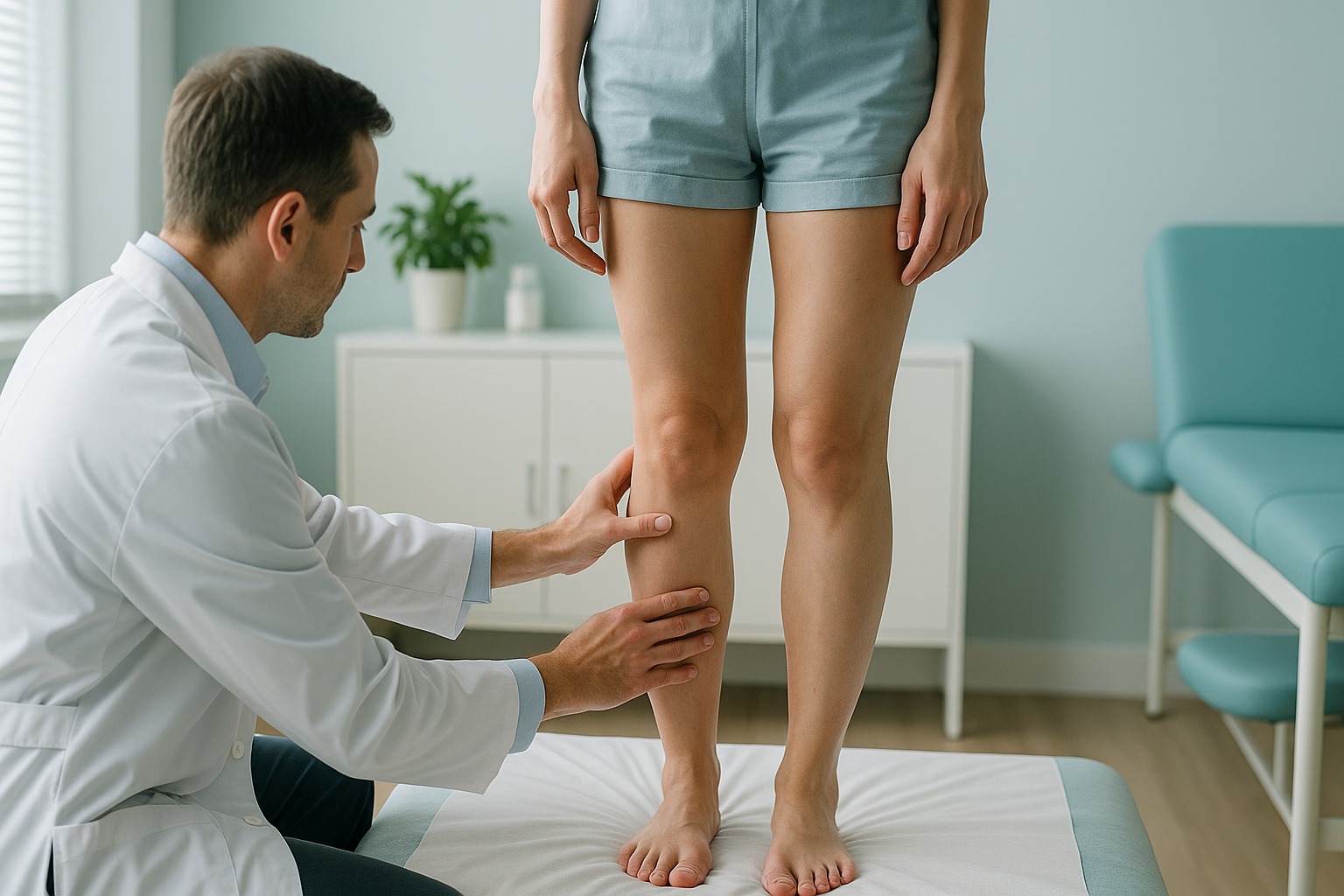
Knock Knee Surgery: What Are Your Options for Genu Valgum Correction?
In adults, knock knee surgery usually means a distal femoral osteotomy. In this operation, the thighbone is carefully reshaped to straighten the line of the leg. Surgery is usually considered when non-surgical treatment has not helped and knee pain or joint wear is getting worse. A standing whole-body scan before surgery helps your surgeon plan the correction accurately.
Key points
- Knock knees (genu valgum) cause the knees to angle inward. This shifts load to the outer part of the knee joint.
- The main operation for adults is a distal femoral osteotomy. Joint replacement may be considered if arthritis is advanced.
- Accurate weight-bearing imaging of the whole leg is essential for planning any correction.
- EOS standing imaging shows the true alignment under load. Scans taken lying down can miss this.
- ScanAlign provides the diagnostic imaging that helps your surgeon decide if surgery could help, and how.
What is genu valgum and why does it matter?
Genu valgum is the medical term for knock knees. The knees angle inward, so when you stand with your knees together, your ankles sit apart. A small inward angle is normal. It becomes a problem when the angle is large enough to change how weight passes through your knee joint.
When your leg alignment is off, the outer (lateral) compartment of the knee takes more load than it was designed for. Over time, this uneven load can wear down cartilage, cause pain and lead to early arthritis. It can also affect your hip, ankle and lower back, because the whole chain from foot to pelvis has to compensate.
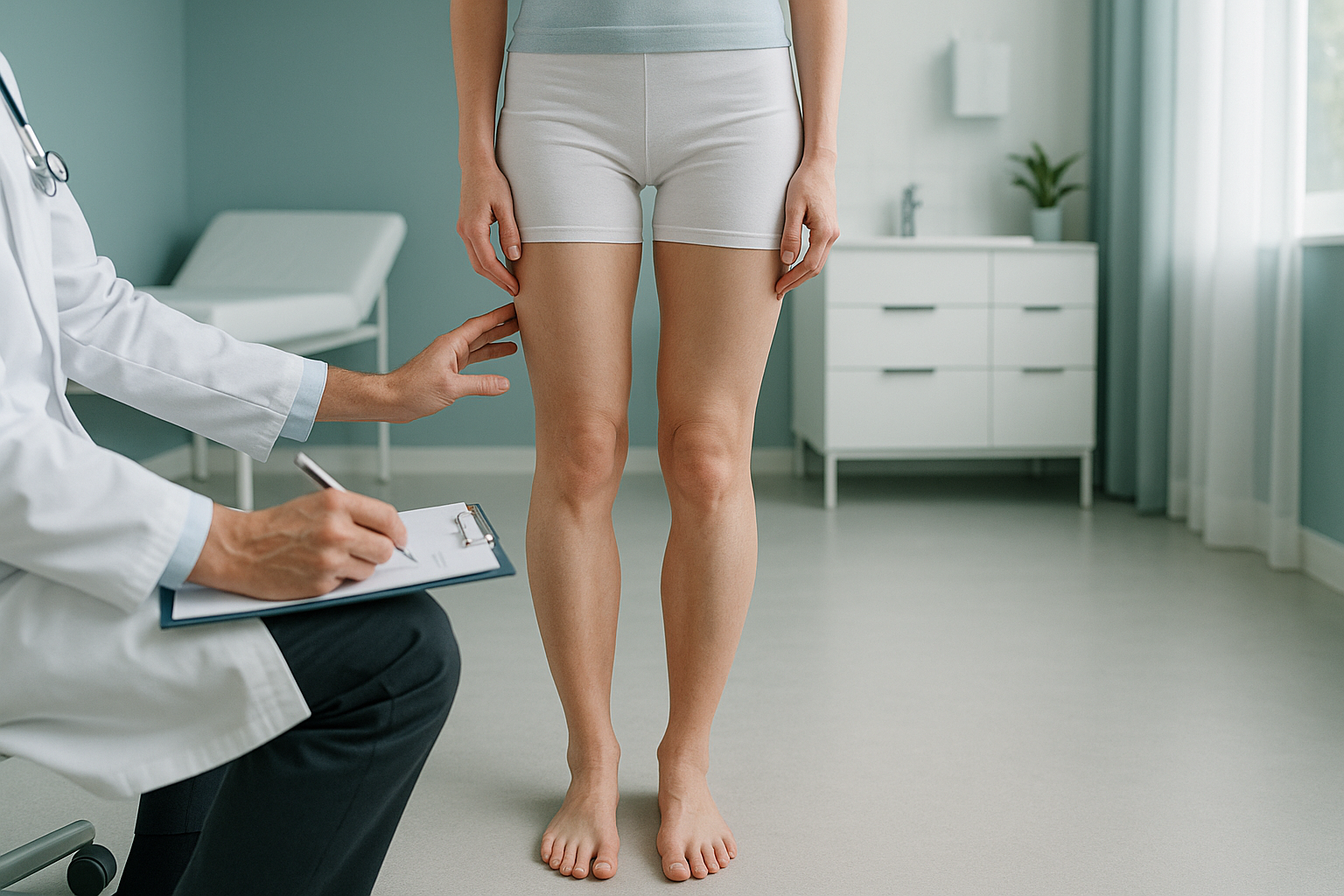
How do you know if your knock knees need surgery?
Not everyone with knock knees needs an operation. Surgery is usually considered when symptoms are significant and have not improved with physiotherapy, strengthening exercises or a brace. The signs below may suggest the alignment has become a real problem.
Pain on the outside of the knee that gets worse with walking or standing for long periods.
The inward angle is visibly getting worse over months or years.
Scans show thinning cartilage or early arthritis in the outer part of the knee.
The alignment stops you from exercising or doing daily tasks comfortably.
What causes knock knees in adults?
Knock knees in adults can develop for several reasons. Sometimes the alignment has been there since childhood and was never fully corrected. In other cases, it develops later because of an injury or changes in the joint.
A knock knee pattern from childhood that continued into adult life.
A fracture near the knee that healed with the bone at an angle.
Loss of cartilage on the outer side of the knee shifts the alignment inward.
Conditions such as rickets or metabolic bone disease that affect the shape of bones.
What are the main surgical options for knock knee correction?
The right operation depends on the cause, how severe the misalignment is, your age and whether arthritis has already developed. Your orthopaedic surgeon will choose the best approach based on thorough imaging and a clinical assessment. These are the most common options.
Distal femoral osteotomy
This is the most common corrective operation for knock knees in adults who still have healthy cartilage. The surgeon makes a precise cut in the lower part of the thighbone and repositions it to straighten the leg. A plate and screws hold the bone in its new position while it heals. The aim is to move weight-bearing back to the centre of the knee. This protects the worn compartment and slows down joint damage.
High tibial osteotomy
This involves reshaping the top of the shinbone. It is less common for knock knees than for bow legs. It may be considered when the misalignment starts in the tibia rather than the femur.
Partial or total knee replacement
If arthritis is already advanced and the cartilage is badly worn, an osteotomy may not be enough. In these cases, a surgeon might recommend replacing part or all of the knee joint. Accurate alignment imaging matters just as much here, because the new joint needs to be placed so that it restores proper leg alignment.
When MRI is the better tool: EOS standing imaging shows bones, joints and whole-leg alignment clearly. For soft tissue problems such as ligament tears, meniscus damage or cartilage detail, MRI is usually the better choice. Your surgeon may recommend both types of imaging for a complete picture.
Why does standing imaging matter before knock knee surgery?
Standing imaging matters because your leg alignment changes when you stand up and put weight through your joints. When you lie down for a standard X-ray or CT scan, your muscles relax and your joints settle into a different position. The true alignment, the one your surgeon needs to correct, only shows when you are standing and bearing weight.
This is where the body's chain of compensation becomes important. A knock knee does not affect the knee alone. The hip tilts, the ankle rolls, the pelvis shifts and the spine adjusts. An EOS scan captures the full picture, from your ankles to your spine, in a single standing image. This gives your surgeon measurements of the whole chain, not just one joint.
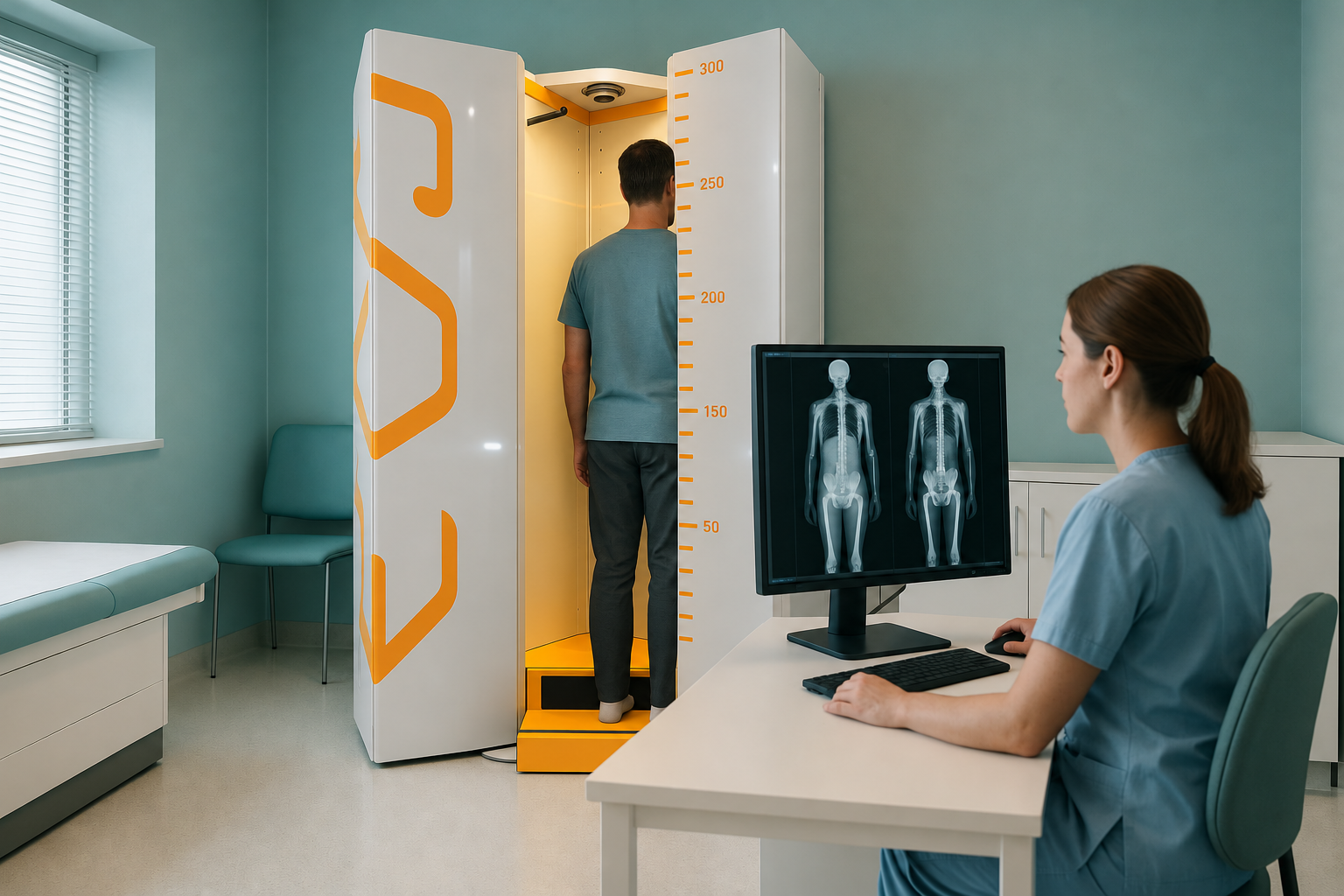
An EOS scan also uses about 90% less radiation than a standard X-ray, around ten times less. That makes it especially suitable when several images or follow-up scans are needed.
Thinking about surgery for knock knees? A standing alignment scan at our London clinic can give your surgeon the measurements they need to plan the correction accurately.
Book a free video consultationWhat non-surgical approaches are tried before surgery?
Most surgeons will want to see that conservative treatment has been given a fair try before they recommend an operation. This may include targeted strengthening of the muscles around the hip and knee, physiotherapy programmes, custom orthotics or insoles, and sometimes a brace. Changing your activities and managing your weight can also reduce the load on the affected part of the knee.
If these approaches are not enough and symptoms continue or get worse, that is usually when surgical correction comes up. A detailed alignment assessment at that stage helps decide which operation is most suitable. It also gives your surgeon the baseline measurements for planning.
Before you start any treatment, or change the one you are on, it is worth getting a detailed diagnosis first. Knowing whether the cause sits in the pelvis, the legs or the spine changes what will actually help.
Frequently asked questions about knock knee surgery
For adults with significant pain, worsening misalignment, or early arthritis caused by the valgus angle, surgery can be very effective. The decision depends on your symptoms, how large the misalignment is, and whether conservative treatment has helped. Detailed imaging and a thorough assessment by an orthopaedic surgeon are the best way to find out if it is the right choice for you.
The most common operation is a distal femoral osteotomy. The lower thighbone is precisely cut and repositioned to straighten the leg. It is usually recommended when the cartilage is still fairly healthy and the aim is to prevent further joint damage.
Recovery varies with the operation and the person. Most people use crutches for several weeks and start physiotherapy soon after surgery. Full recovery, including a return to sport, can take several months. Your surgeon will give you a personal timeline based on your situation.
The cost of surgery varies widely with the operation, the surgeon and the hospital. ScanAlign provides the diagnostic imaging that supports surgical planning, not the surgery itself. The price of the scan for patients travelling from abroad is confirmed during the free video consultation, and you can find more on our FAQs and cost information page.
No. ScanAlign is a self-referral clinic. You can book directly without a referral from your doctor. We offer a free video consultation to discuss whether a scan is suitable for your situation before you commit.
An EOS scan takes images while you stand. It captures your whole body from head to foot in a single pass. It uses about 90% less radiation than a standard X-ray, around ten times less. Because you are standing, it shows your true alignment under load, which normal X-rays taken lying down cannot do. Learn more on our EOS scan overview page.
Yes. The body works as a connected chain, so an inward knee angle can change how your hip sits, how your pelvis tilts and how your spine curves. Pain can appear in the hip or lower back even though the root cause is the knee alignment. A whole-body standing scan helps identify these links.
Yes. The EOS system uses about 90% less radiation than a standard X-ray, around ten times less. It is one of the lowest-dose imaging systems available. More safety details are on our FAQs page.
An EOS scan gives the precise alignment measurements your surgeon needs to decide whether surgery is suitable and which operation would be best. ScanAlign is a diagnostic imaging clinic. We provide the imaging information, and your orthopaedic team makes the treatment decisions.
Generally yes, because EOS uses X-ray technology rather than magnets. Metal implants are not usually a problem. If you have any concerns, mention them during your free video consultation and we can advise you before your appointment.
Sources
- Brinkman, J.M. et al. "Osteotomies around the knee: patient selection, stability of fixation and bone healing in high tibial osteotomies and distal femoral osteotomies." The Journal of Bone and Joint Surgery (British Volume), 2008.
- Illés, T. and Somoskeöy, S. "The EOS imaging system and its uses in daily orthopaedic practice." International Orthopaedics, 2012.
- NHS. "Knee replacement: when it is needed." NHS.uk, 2022.
Written by Abbas Dhami (Specialist Diagnostic Radiographer)
Thinking about knock knee correction?
A standing whole-body alignment scan at 19 Harley Street, London gives your surgeon the precise measurements needed to plan the right operation. Start with a free, no-obligation video consultation from home.
Book a free video consultationThis page is general information and not a diagnosis.
ScanAlign is the trading name of CoreMed Solutions Ltd and operates under The Harley Street Hospital's CQC licence.