

Why Do My Knees Cave In When I Squat?
When you squat, your knees may cave inward. This pattern is called dynamic knee valgus. It happens because of weak hip muscles, limited ankle mobility, or the way your bones are shaped. It puts extra stress on your knees and can cause pain. A standing whole-body scan helps show whether bone alignment, muscle imbalance, or both are driving the problem.
Key points
- Knees caving inward under load is called dynamic knee valgus. It is very common.
- The most frequent causes are weak glute medius muscles, tight ankles and foot pronation.
- Bone shape, including hip anteversion and retroversion, can make valgus worse.
- Scans taken lying down miss alignment problems that only appear when you are standing and bearing weight.
- A standing EOS scan shows your full leg alignment, from hip to ankle, in one image.
What is dynamic knee valgus?
Dynamic knee valgus is when your knees collapse inward as you move. You see it most clearly in a squat, a lunge, or when landing from a jump. It is different from structural knock knees, which is a fixed bone position. Dynamic valgus happens only when you load the joint. Depending on the cause, it may look like a small wobble or a dramatic inward cave.
This movement pattern adds stress to the inner side of the knee, the kneecap, and the ligaments that keep the joint stable. Over time, repeated valgus loading can contribute to knee pain, patellofemoral problems and even injury.
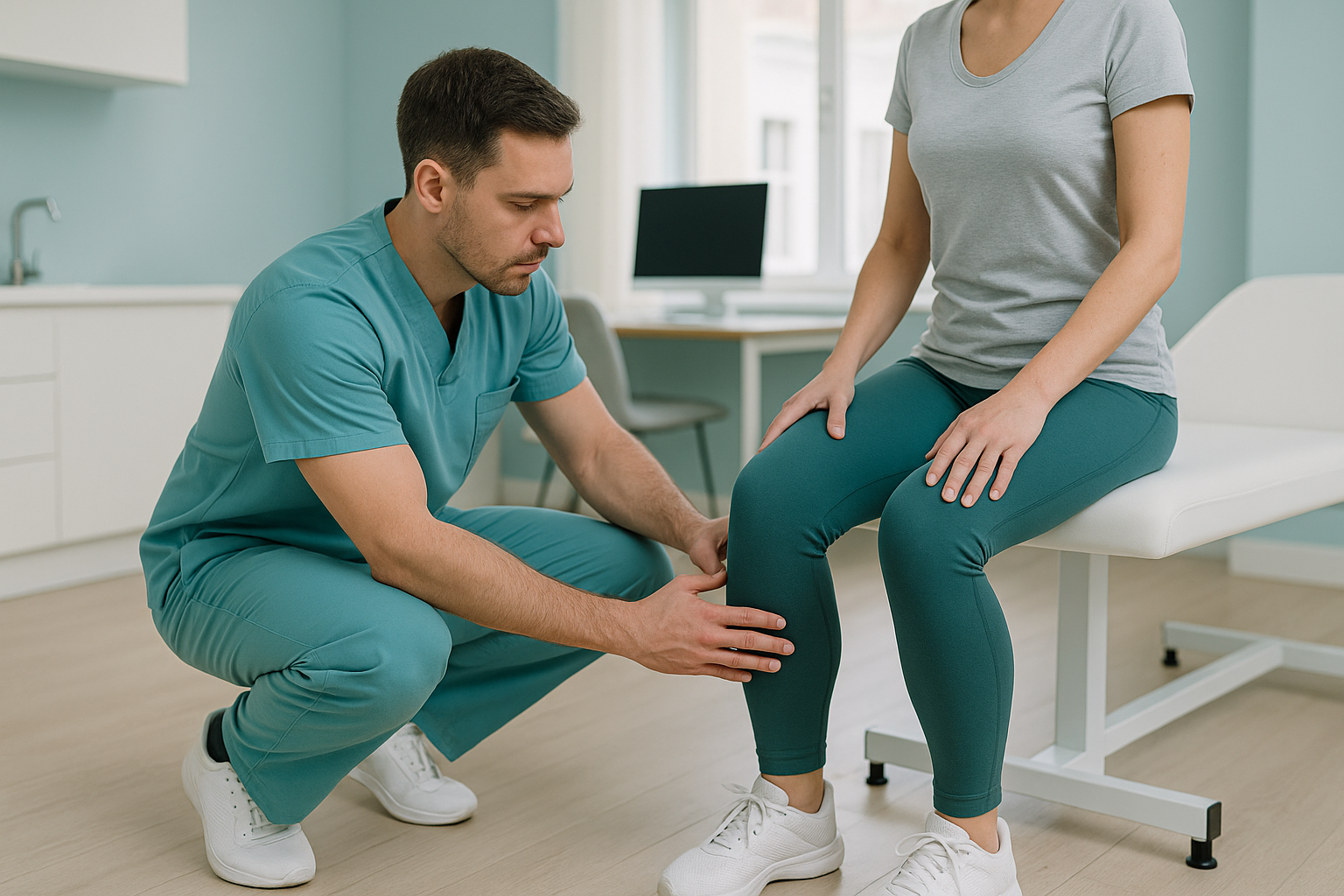
How do I know if my knees are caving in?
You may notice it yourself in a mirror, or someone else may point it out. These are the most common signs.
When you watch yourself squat, one or both knees drift towards the middle instead of tracking over your toes.
Aching around or behind the kneecap during or after squats with weight, lunges or climbing stairs.
The inner edges of your shoes wear down faster than the outer edges. This is a sign of foot pronation linked to valgus.
Your knees track well for the first few reps, but cave inward as the set goes on and your muscles tire.
What causes knees to cave in during a squat?
Several things can make your knees collapse inward, and most people have more than one. The causes fall into two groups: soft tissue (muscles and tendons) and structure (the shape of your bones).
The glute medius controls hip external rotation. When it is weak, the thigh rolls inward and the knee follows.
If your ankle cannot bend far enough, your body makes up for it by letting the knee drop inward so you can go lower.
Flat or overpronating feet tilt the shin inward. This pushes the knee into valgus from the ground up.
The natural twist of the thigh bone varies from person to person. More anteversion can make the knee more likely to cave in.
Stance width and cueing also matter. A very narrow squat stance, or simply not knowing where your knees should track, makes valgus more likely. As the weight or tiredness increases, even people with good technique can lose control.
Why does the whole leg matter, not just the knee?
Your body is a connected chain from your feet to your head. A problem at one level makes another level compensate. Knee valgus rarely starts at the knee itself. It is usually driven from above (the hip) or below (the ankle and foot).
This is why a scan of the knee alone often misses the real issue. It might show that the joint looks normal, while the reason for your pain stays hidden. That reason might be a rotation pattern in the hip or poor alignment through the whole leg.
Imaging done lying down relaxes the muscles and removes gravity. A knee that collapses inward only when standing and loaded will look perfectly fine on a scan taken while you lie flat on your back. Standing imaging captures what actually happens under your own body weight.
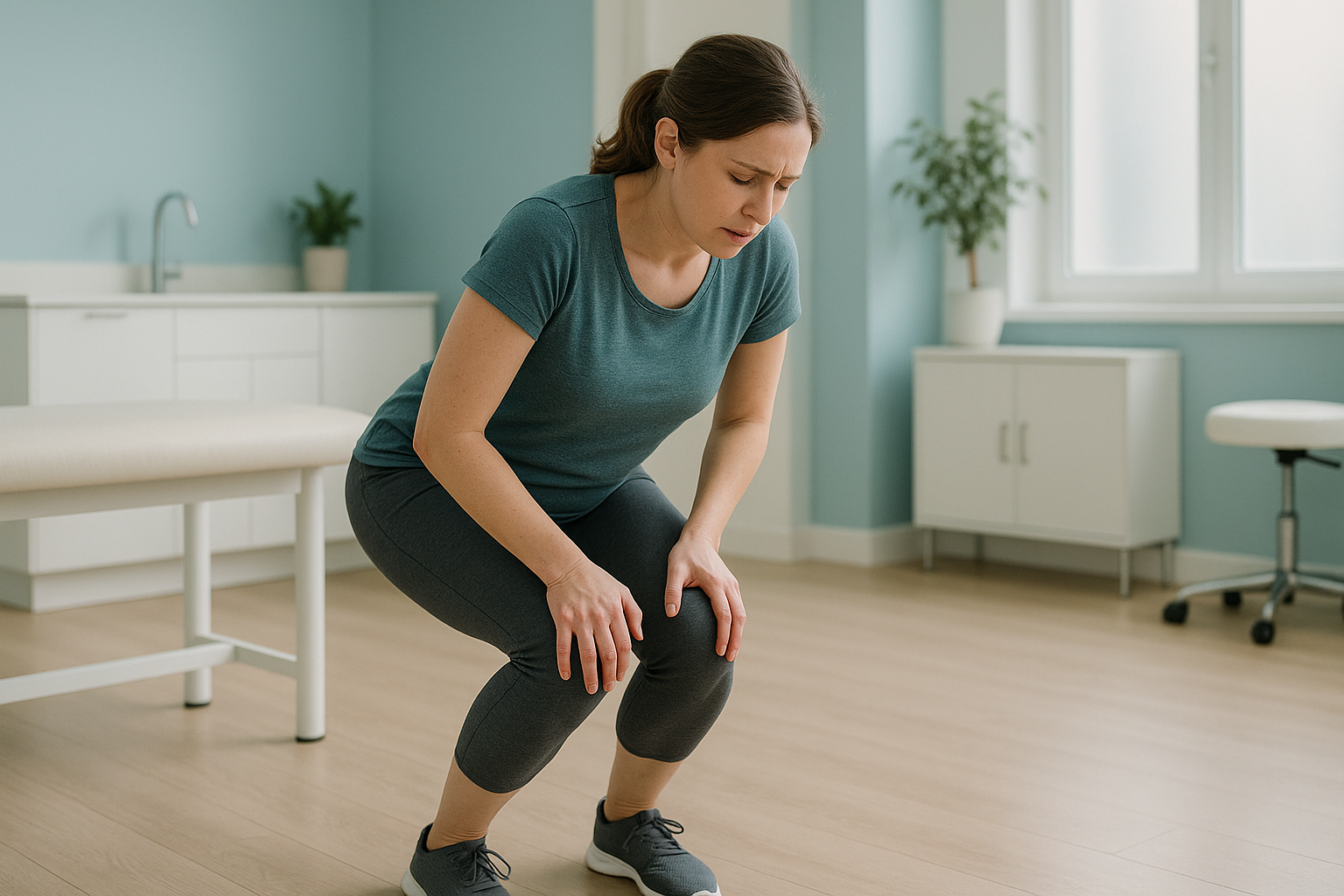
How does a standing EOS scan help with knee valgus?
An EOS scan captures your full leg alignment, from the hip joint down through the knee and ankle, in a single standing image. Because you are upright and bearing weight, it shows the alignment your body actually uses. It does not show the relaxed position you have when lying down.
The scan uses about 90% less radiation than a standard X-ray, around ten times less. It takes seconds and needs no special preparation.
With ScanAlign standing EOS imaging, a specialist radiographer looks at how your hip rotation, knee angle and ankle position relate to each other in one view. This can show whether the valgus pattern is driven by bone shape, by soft-tissue factors, or by both together.
Want to understand what is driving your knee valgus? A free video consultation can help you decide whether a standing scan in London is the right next step.
Book a free video consultationWhen MRI is the better tool: EOS shows bones, joints and alignment. If your clinician suspects a soft-tissue injury, such as a meniscus tear, cartilage damage or ligament strain, MRI is usually the better choice. The two scans answer different questions and can work well together.
What helps stop knees collapsing inward?
Dealing with knee valgus usually means working on the areas that cause it, not the knee itself. Physiotherapists and strength coaches often recommend the following.
- Glute medius strengthening. Exercises such as banded side-walks, clamshells and single-leg work build the hip muscles that control inward rotation of the thigh.
- Ankle mobility drills. Better dorsiflexion lets you squat deeper without the knee compensating.
- Cueing and technique. Thinking "knees out" during a squat, or using a light resistance band around the knees as a reminder, helps retrain the movement pattern.
- Adjusting stance width. A slightly wider stance with toes turned out can reduce the demand on ankle mobility. It can make it easier to keep the knees tracking well.
- Foot support. If foot pronation plays a part, suitable footwear or insoles may help control the chain reaction from the ground up.
These methods work well when the cause is in the muscles. But if a structural issue is contributing, such as the shape of your thigh bone or shin bone, exercises alone may not fully resolve it. That is where imaging becomes important, so you and your clinician know exactly what you are dealing with before deciding on a plan. You can book a leg alignment scan to get a clear picture of your structure.
Before you start treatment, or change the one you are on, it is worth getting a detailed diagnosis. Knowing whether the cause sits in the pelvis, the legs or the spine changes what will actually help.
Frequently asked questions
Pain during squats often comes from the kneecap being pulled out of its ideal track. When the knee caves inward (dynamic valgus), it increases pressure on the inner joint and the underside of the kneecap. Weak hip muscles, limited ankle flexibility and bone alignment can all contribute.
Not exactly. Knock knees (genu valgum) is a structural alignment where the knees sit inward even when you stand still. Dynamic knee valgus only appears during loaded movement such as squatting or jumping. Some people have both. You can read more about the structural side on our knock knees page.
Yes. The glute medius controls hip external rotation. When it is weak, the thigh rotates inward under load and pulls the knee with it. This is one of the most common and well-documented causes of dynamic valgus and related knee pain.
A band is a useful cueing tool. It reminds you to push your knees outward and activates the glute medius. But it addresses the symptom, not the root cause. If bone shape or a significant muscle imbalance is involved, you may need a fuller assessment to guide your approach.
It can. The deeper you squat, the more you rely on ankle dorsiflexion and hip control. If either is limited, the knee is more likely to cave. Adjusting stance width or raising your heels can help you train through a comfortable range while you work on the underlying causes.
Yes. Flat or overpronating feet tilt the shin inward, which pushes the knee into valgus from the ground up. This is why a whole-leg assessment, from the hip to the foot, matters. Fixing just one level may not be enough if the chain reaction starts at the foot.
No. ScanAlign is a self-referral clinic. You can book directly, without a letter from your doctor or a consultant. The process starts with a free video consultation to make sure the scan is right for you.
EOS uses about 90% less radiation than a standard X-ray, around ten times less. It is one of the lowest-dose skeletal imaging methods available.
The price for patients travelling from abroad is confirmed during the free video consultation, and you can find more answers on our FAQs page.
It can be. The natural twist of the thigh bone (femoral version) varies from person to person. Greater anteversion angles the thigh inward, which makes valgus more likely whatever your muscle strength. A standing EOS scan can assess this. Our page on hip anteversion and retroversion covers this in more detail.
Find out what is behind your knee valgus
A free video consultation with a specialist radiographer can help you understand whether travelling to London for a standing alignment scan is the right next step for you.
Book a free video consultationWritten by Abbas Dhami (Specialist Diagnostic Radiographer)
Sources
- Powers CM. The influence of abnormal hip mechanics on knee injury: a biomechanical perspective. Journal of Orthopaedic & Sports Physical Therapy. 2010;40(2):42-51.
- Hewett TE, Myer GD, Ford KR et al. Biomechanical measures of neuromuscular control and valgus loading of the knee predict anterior cruciate ligament injury risk in female athletes. American Journal of Sports Medicine. 2005;33(4):492-501.
- NHS. Knee pain and what to do about it. nhs.uk. Available at: https://www.nhs.uk/conditions/knee-pain/
This page is general information and not a diagnosis.
ScanAlign is the trading name of CoreMed Solutions Ltd and operates under The Harley Street Hospital's CQC licence.