
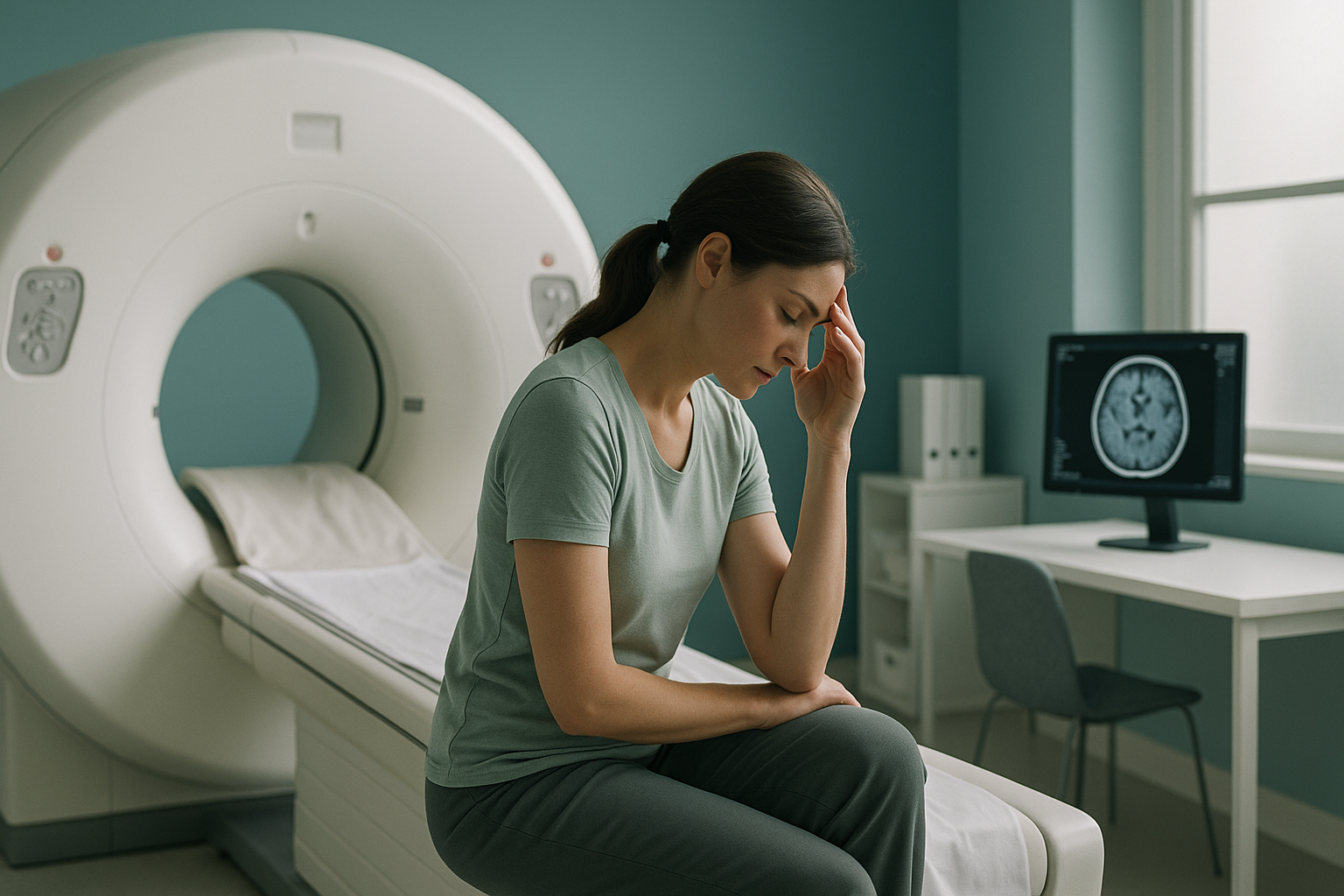
Is It Worth Paying Privately for a Scan?
It depends on your situation. If a long wait is delaying a diagnosis you need to move forward, paying privately can save months and give you answers sooner. But if your doctor has told you the problem is likely to settle, waiting is usually the sensible choice. The honest answer is that it is worth it for some people, not all.
Key takeaways
- A private scan uses the same imaging technology as the NHS in the UK, just accessed sooner and on your own terms.
- It is worth it when waiting is making your problem worse, or stopping treatment from starting.
- It is not worth it when your symptoms are new, mild, or your doctor expects them to resolve.
- A private report can be shared with your consultant, so you do not lose your place on any waiting list.
- Some problems only show up on weight-bearing, standing imaging, which most NHS departments in the UK do not offer.
This page is not a sales pitch. We run a private imaging clinic, so we have an obvious interest. That is exactly why we want to be straight with you. Below, we explain when paying privately really helps, when it does not, and what actually changes once you have a scan result in hand.
When is paying privately for a scan worth it?
A private scan is worth the cost when the wait itself is causing harm. That harm might be physical, such as a joint getting worse while you wait on a list. Or it might be practical, such as not being able to work, exercise or sleep properly because nobody has confirmed what is going on.
In all these situations, the cost of a private scan is small compared with months of pain, lost earnings, or the worry of not knowing. You get a formal report, usually from a consultant radiologist, that you can hand straight to your own medical team or any private specialist.
When should you just wait?
If your symptoms are recent, mild, or your doctor expects them to settle with rest and time, there is usually no rush to scan. Imaging a problem too early can sometimes show incidental findings, things that look abnormal on a scan but are not actually causing your symptoms. That can lead to unnecessary worry or even unnecessary treatment.
- Your pain started less than six weeks ago and is slowly improving
- Your doctor has given you a clear working diagnosis and a plan
- You are already on a care pathway that is moving at a reasonable pace
- You want a scan mainly for reassurance, not because treatment depends on it
- Symptoms have lasted months and nobody has scanned you yet
- Treatment cannot start until a scan confirms the diagnosis
- You have been referred but the waiting list is very long
- Earlier lying-down imaging did not explain your weight-bearing pain
We would rather you saved your money than paid for a scan you do not need. If you are unsure, talk to your doctor first. Or you can check who our scan is suitable for before you commit.
What actually changes once you have a diagnosis?
A scan on its own does not fix anything. But a clear, formal report changes the conversation you have with every clinician from that point on. Instead of describing symptoms, you arrive with evidence.
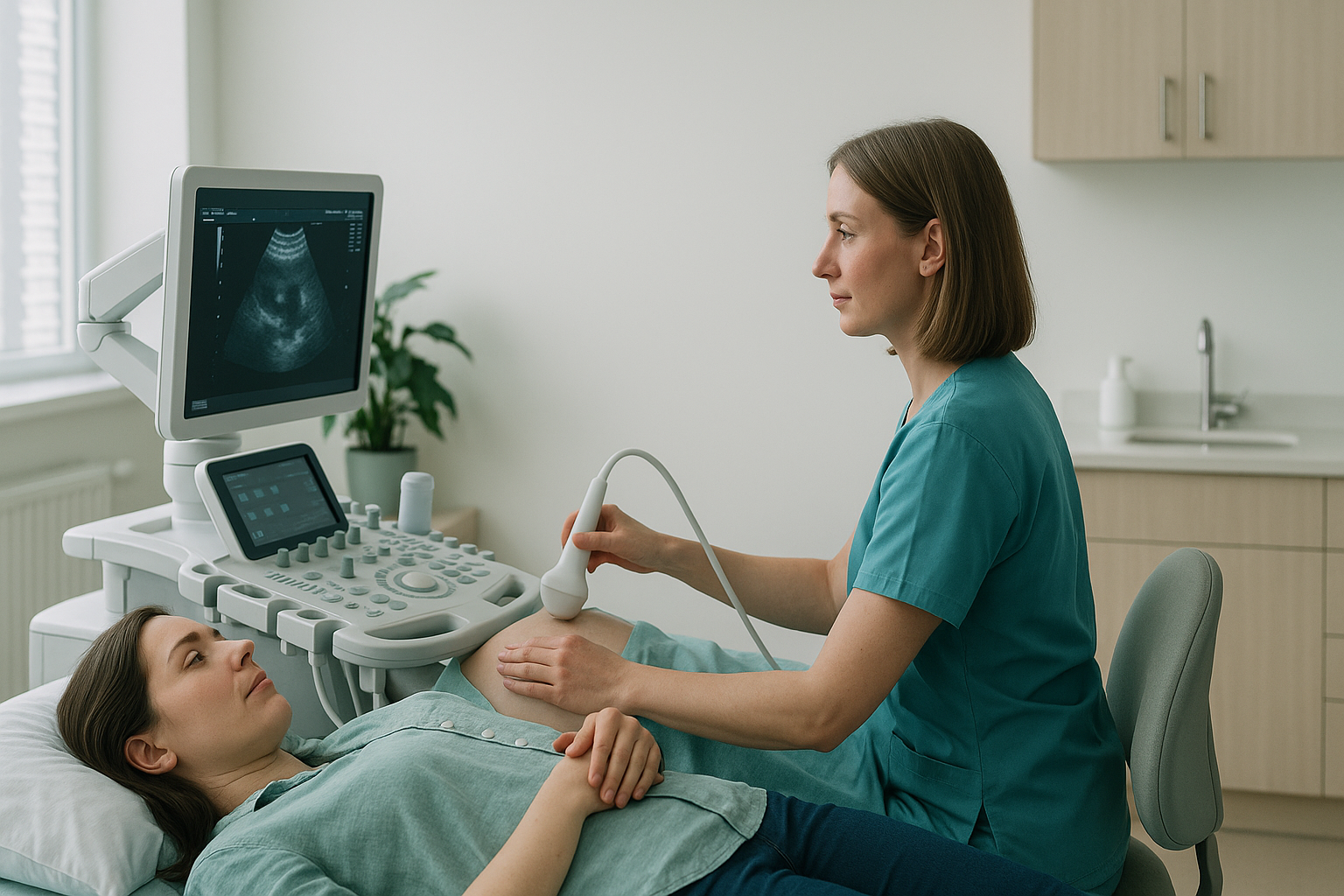
Here is what that means in practice:
- Your doctor can refer you more precisely. A report that names the problem helps your doctor choose the right specialist and strengthens the referral letter.
- A surgeon can plan sooner. Many surgeons will accept a private scan report and skip a repeat scan, bringing your operation forward.
- Physiotherapy becomes targeted. A physiotherapist working with imaging evidence can design a programme around the real issue, not a best guess.
- You stop wondering. For many people, the uncertainty is worse than the diagnosis. Knowing is a relief, even when the news is not perfect.
Your private report belongs to you. You can share it with any clinician, public or private. It does not remove you from any waiting list.
Why do some problems only show up on a standing scan?
In the UK, most NHS imaging is done lying down. That relaxes your muscles and removes the effect of gravity on your skeleton. For many conditions, that is fine. But if your pain is worse when you stand, walk or carry weight, a lying-down scan can look normal even when something is clearly wrong.
Standing, weight-bearing imaging captures your body as it actually works. Your spine curves load, your pelvis tilts, your knees bear your full weight. Alignment problems, leg-length differences and compensating shifts become visible because gravity is doing its work.
Lying-down imaging is excellent for soft tissue, discs and internal detail. But it takes gravity out of the picture. A spine that curves or a pelvis that tilts under load can look perfectly straight when you are flat on a table.
Your body works as a connected chain, from your feet through your knees, hips, pelvis and spine. A tilt or shift in one area often causes pain somewhere else entirely. Standing whole-body imaging captures this full picture in a single exposure. That is what ScanAlign, private standing imaging in London, is designed for.
A note on MRI. EOS standing imaging shows bones, joints and alignment. For soft-tissue problems such as disc herniations, ligament tears or nerve compression, MRI is usually the better tool. If your clinician suspects a soft-tissue cause, MRI may be the scan you need. We are always honest about that.
How does booking a private scan at ScanAlign work?
You do not need a referral from your doctor. You can self-refer. Here is what happens from start to finish.
A short call with our radiographer to understand your problem, check the scan is right for you, and answer your questions. No charge, no commitment.
You stand in the EOS system for less than a minute. It uses about 90% less radiation than a standard X-ray, around ten times less. No injection, no contrast, no claustrophobia.
A consultant radiologist reviews your images and writes a formal report. The report is yours to keep and share with any clinician.
You take the report to your doctor, surgeon, physiotherapist or any specialist. We do not offer treatment, so there is no upselling. The diagnosis is yours.
For patients travelling from abroad, the price is confirmed during the free video consultation. You can read more about the EOS scan or book your consultation.
Not sure if a private scan is right for you? Our free video consultation is designed for exactly that question. No pressure, no obligation. If waiting is the better option, we will tell you.
Book a free video consultationWhen should you skip the scan and seek urgent help?
If you have sudden severe pain together with numbness, weakness in your legs, or any loss of bladder or bowel control, do not wait for any scan. These symptoms may indicate a medical emergency. Contact your doctor urgently or go to your nearest emergency department.
Outside an emergency, it is worth getting a detailed diagnosis before you start treatment, or change the one you are on. Knowing whether the cause sits in your pelvis, your legs or your spine changes what will actually help.
Frequently asked questions
It can be. A private scan does not remove you from the list. It may actually speed things up because your consultant receives imaging results sooner and can make decisions without waiting for a scan slot.
In most cases, yes. A formal report from a registered clinic is a clinical document. In the UK, many NHS surgeons and specialists use private imaging routinely to avoid repeating scans. It is always worth checking with your consultant first.
In the UK, NHS scans are free at the point of use, so there is always a cost difference. Private scan prices vary with the type of imaging and the provider. For patients travelling from abroad, the ScanAlign price is confirmed during the free video consultation, and you can read more on our frequently asked questions page.
Not at ScanAlign. You can self-refer. We hold a free video consultation beforehand to make sure the scan is clinically appropriate for you.
If your clinician suspects a disc problem, nerve compression or soft-tissue injury, a private MRI can give you answers faster than waiting. However, if your back pain is related to posture or alignment, a standing weight-bearing scan may be more useful because MRI is done lying down.
An EOS scan takes full-body images while you stand, using about 90% less radiation than a standard X-ray, around ten times less. It captures your whole skeleton in one exposure, showing alignment under gravity. A conventional X-ray usually images one area at a time, often lying down.
Yes. EOS uses about 90% less radiation than a standard X-ray, around ten times less. It is one of the lowest-dose imaging systems available.
Absolutely. Many people do exactly this. You pay for the scan to get answers faster, then continue treatment with your usual clinicians. Your report belongs to you and can be shared with any clinician.
Incidental findings sometimes appear on any scan. If something unexpected is found, it will be included in your report and we will advise you to discuss it with your doctor, who can arrange any further tests.
The first step is a free video consultation, which we aim to arrange promptly. After that, your scan appointment at 19 Harley Street, London is booked at a time that works for you. We do not quote specific waiting times, but the process is designed to be much faster than a typical NHS pathway in the UK.
Still unsure? Talk to us first.
Our free video consultation is a no-pressure conversation. If a private scan is not the right move for you, we will say so.
Book a free video consultationWritten by Abbas Dhami (Specialist Diagnostic Radiographer)
Sources
- NHS England. Diagnostics: Recovery and Renewal. Report of the Independent Review of Diagnostic Services for NHS England, October 2020.
- Deschênes S, Charron G, Beaudoin G, et al. Diagnostic imaging of spinal deformities: reducing patients' radiation dose with a new slot-scanning X-ray imager. Spine. 2010;35(9):989-994.
- The Royal College of Radiologists. Standards for the communication of radiological reports and fail-safe alert notification. RCR, 2016.
This page is general information and not a diagnosis.
ScanAlign is the trading name of CoreMed Solutions Ltd and operates under The Harley Street Hospital's CQC licence.