
How Long Should Back Pain Last Before You Get It Checked?
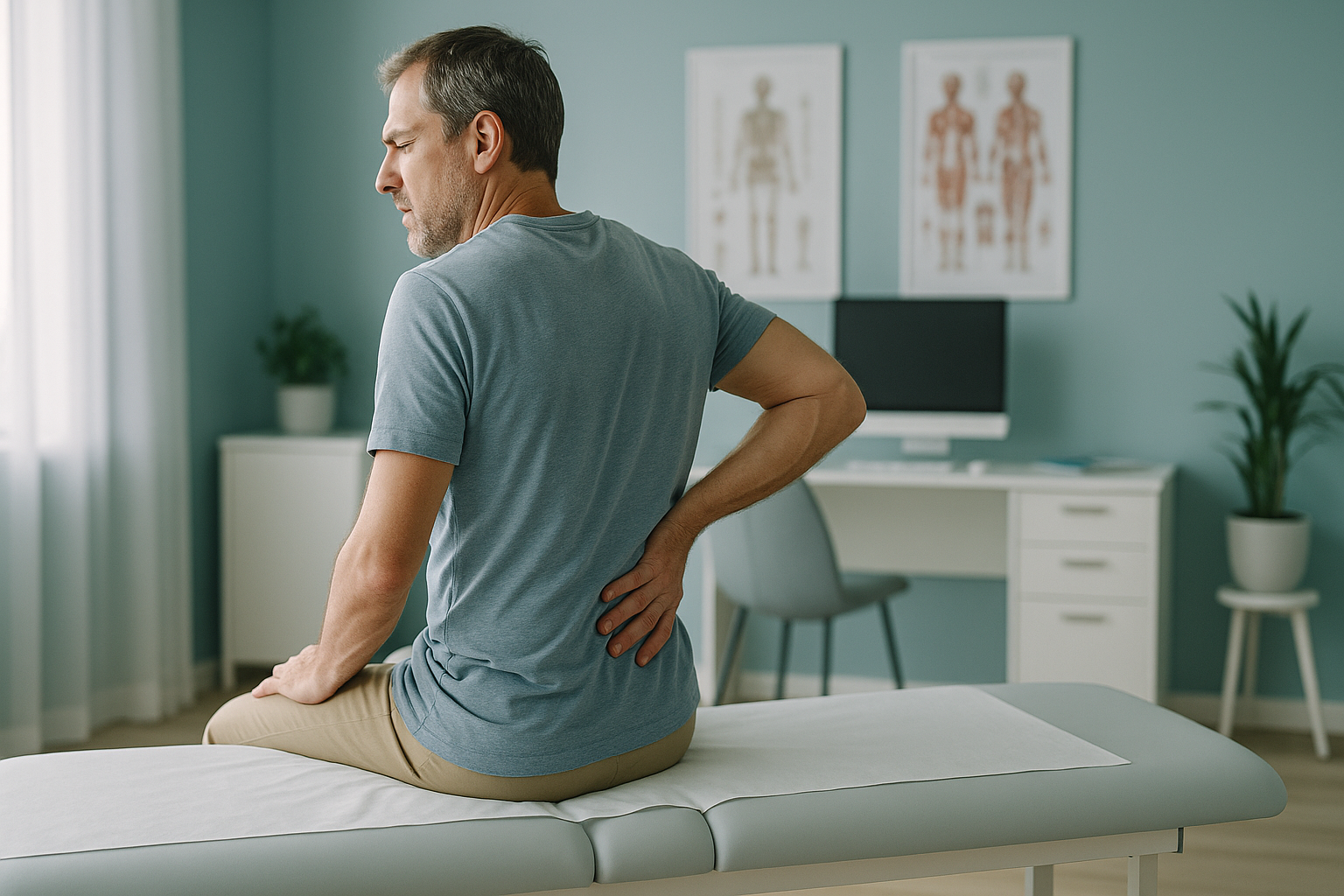
Most lower back pain gets clearly better within six weeks. If your pain has not eased by then, or if it keeps coming back, it is worth getting it checked. Back pain that lasts more than twelve weeks is called chronic. A clear picture of your alignment can help guide the next step.
Key points
- Most back pain settles within six weeks with normal activity.
- Pain that lasts more than twelve weeks is considered chronic.
- Six weeks with no improvement is a sensible point to look into it further.
- Standing imaging shows alignment problems that lying-down scans can miss.
- Sudden weakness, numbness or loss of bladder or bowel control needs urgent medical attention, not a scan.
What is the difference between acute and chronic back pain?
Acute back pain is any episode that has lasted less than six weeks. Subacute pain is between six and twelve weeks. Chronic back pain is pain that has lasted twelve weeks or longer. These labels are not just medical jargon. They reflect how the body heals and when natural recovery tends to level off.

In the acute phase, most people get better steadily. Staying gently active is usually better than bed rest. The body's tissues are healing, and movement helps that process.
If your pain is still as bad at six weeks, or has only improved slightly, that is the recognised point to reassess. It does not mean something terrible is wrong. It means the usual healing window has passed, and it makes sense to look more carefully at what is going on.
How do you know when back pain needs to be checked?
Pain alone is not the only signal. The pattern matters just as much. These are the situations that suggest it is time to look deeper.
Your pain has not reduced in a real way, even though you have stayed active and tried the usual self-care steps.
Each episode may settle, but it returns every few weeks or months. Pain that keeps returning often points to an underlying alignment or structural issue.
Pain that started in your lower back now reaches into a hip, buttock or leg. This can suggest compensation through the body's connected chain.
You are avoiding things you used to manage easily, such as walking, sitting at work, or sleeping through the night.
If any of this sounds familiar, knowing when to see a specialist can help you decide on a clear next step.
Why does a standing scan show more than a lying-down one?
A standing scan captures your skeleton under your own body weight, exactly as it works in real life. When you lie down for a standard X-ray, CT scan or MRI, gravity is removed. Your muscles relax, your spine flattens out, and alignment shifts that cause you trouble every day can simply disappear from the image.
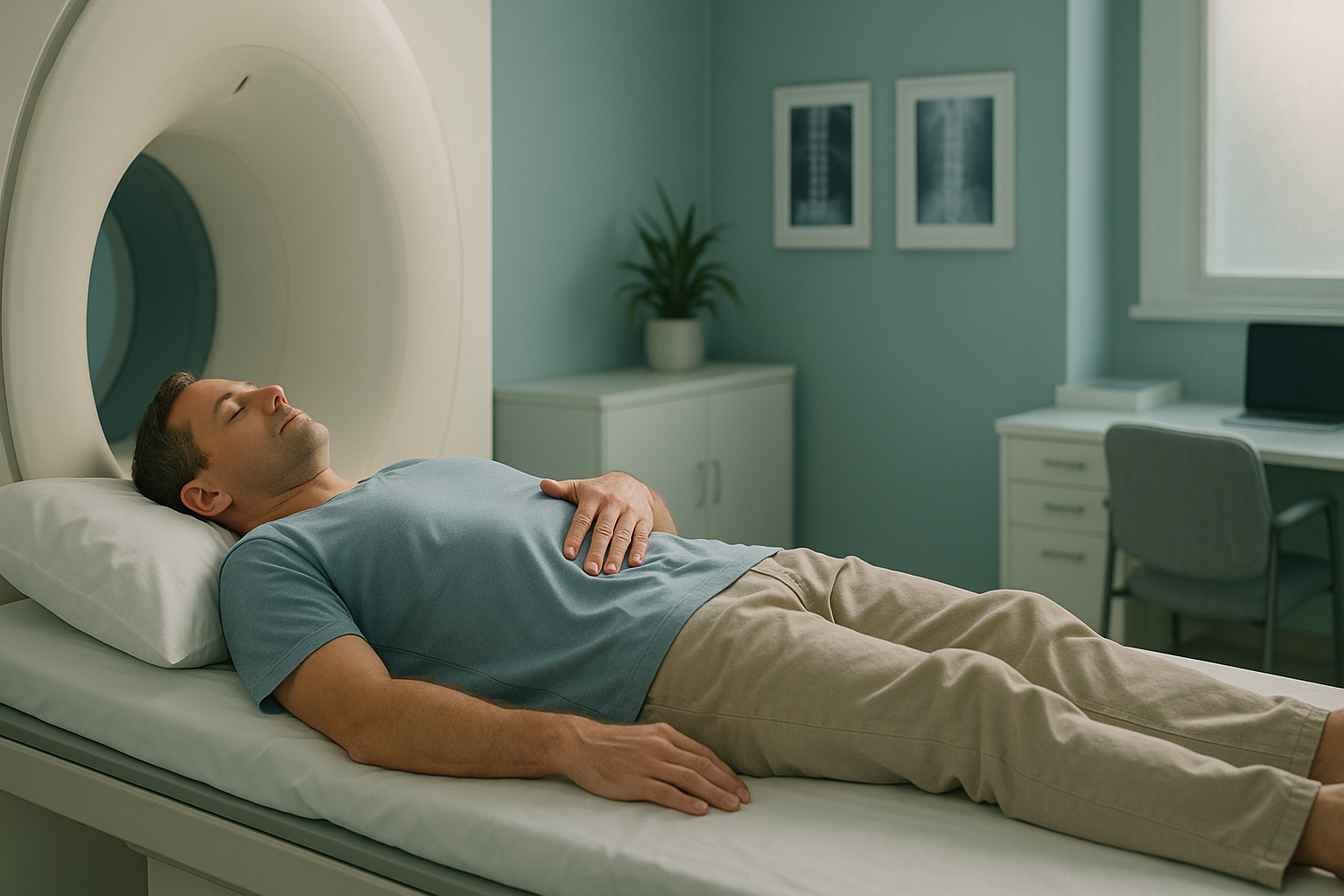
Your body is a connected chain, from your feet up through your knees, hips, pelvis and spine to your head. A problem at one level, such as a subtle pelvic tilt or a slight difference in leg length, makes other areas compensate. Pain often shows up far from its real cause. A whole-body standing image shows the full picture in a single capture, so nothing is missed.
An EOS scan at ScanAlign uses about 90% less radiation than a standard X-ray, around ten times less. You simply stand still for a few seconds while the system images your full skeleton from head to toe.
When MRI is the better choice: EOS shows bones, joints and alignment clearly. For soft-tissue problems such as disc bulges, nerve compression or ligament tears, MRI is usually the better tool. Your consultant can advise which scan you need, or whether you need both.
When should you get urgent help for back pain?
Most back pain is not dangerous. But a small number of symptoms need immediate medical attention, not a scan booking. If you have any of the following, contact your doctor or go to the nearest emergency department straight away.
- Numbness or tingling in your groin or between your legs (saddle area).
- Loss of bladder or bowel control.
- Sudden weakness in one or both legs.
- Severe pain after a fall or injury, especially if you have osteoporosis.
- Back pain with unexplained weight loss, fever, or feeling generally unwell.
These warning signs are uncommon, but they need urgent assessment to rule out serious conditions such as cauda equina syndrome.
What helps when back pain is not getting better?
The most important step is getting a clear picture of what is happening in the structure of your body. Without that, treatment is guesswork. Here is the general approach most guidelines suggest.
Gentle, regular movement is consistently shown to help more than rest.
At six weeks, a structured assessment helps identify what is driving the pain.
Standing, weight-bearing imaging can show alignment issues that standard scans miss.
For more detail on what a structured assessment involves, visit our back pain clinic page.
Before you start a treatment, or change the one you are on, it is worth getting a detailed diagnosis. Knowing whether the cause sits in your pelvis, your legs or your spine changes what will actually help.
Back pain that has lasted months deserves a clear answer. A free video consultation lets you check whether an assessment is right for you before you plan a trip to London, with no obligation.
Book a free video consultationFrequently asked questions
Most episodes of acute back pain get much better within six weeks. Some leftover stiffness can take a little longer. If you are still in a lot of pain after six weeks, it is time to look into it further rather than simply waiting.
The widely accepted definition of chronic back pain is pain that lasts twelve weeks or longer. At that point, the body's usual healing window has passed. The pain is unlikely to go away on its own without a clearer understanding of the cause.
It is common, but it is not something you should simply accept. Back pain lasting months often points to an underlying structural or alignment issue that has not been found. Looking into it properly gives you a starting point for the right treatment.
Several things can slow recovery. A subtle pelvic tilt, a difference in leg length, or a postural imbalance can keep loading the same structures. These issues are often invisible on lying-down scans because gravity is removed. A standing assessment can uncover what standard imaging misses.
It depends on what the professional treating you suspects. MRI is excellent for soft-tissue problems such as disc bulges or nerve compression. A standing EOS scan is better for assessing bone alignment, joint spacing and posture under load. Some people benefit from both.
An EOS scan captures your full skeleton while you are standing. It uses about 90% less radiation than a standard X-ray, around ten times less. Because you are bearing your own weight, the image shows your real alignment, the way your body actually works day to day.
No. ScanAlign is a private self-pay clinic. You can refer yourself. The process starts with a free video consultation, where a specialist radiographer reviews your situation and confirms whether a scan is appropriate for you.
The price for patients travelling from abroad is confirmed during the free video consultation.
Yes. The EOS system delivers about 90% less radiation than a standard X-ray, around ten times less. It is one of the lowest-dose imaging options available for full-body skeletal assessment.
Yes. Your body is a connected chain. A problem in your foot, knee or hip can change how forces travel up through your pelvis and spine. The back pain you feel may actually be compensation for an issue further down the chain. A whole-body standing image helps identify these connections.
Still waiting for your back pain to go away?
A free video consultation takes a few minutes. It helps you understand whether a standing alignment assessment could give you the answers you have been missing.
Book a free video consultationWritten by Abbas Dhami (Specialist Diagnostic Radiographer)
Sources
- National Institute for Health and Care Excellence (NICE). Low back pain and sciatica in over 16s: assessment and management (NG59). 2016, updated 2020.
- Maher C, Underwood M, Buchbinder R. Non-specific low back pain. The Lancet. 2017;389(10070):736-747.
- Illés T, Somoskeöy S. The EOS imaging system and its uses in daily orthopaedic practice. International Orthopaedics. 2012;36(7):1405-1411.
This page is general information and not a diagnosis.
ScanAlign is the trading name of CoreMed Solutions Ltd and operates under The Harley Street Hospital's CQC licence.