
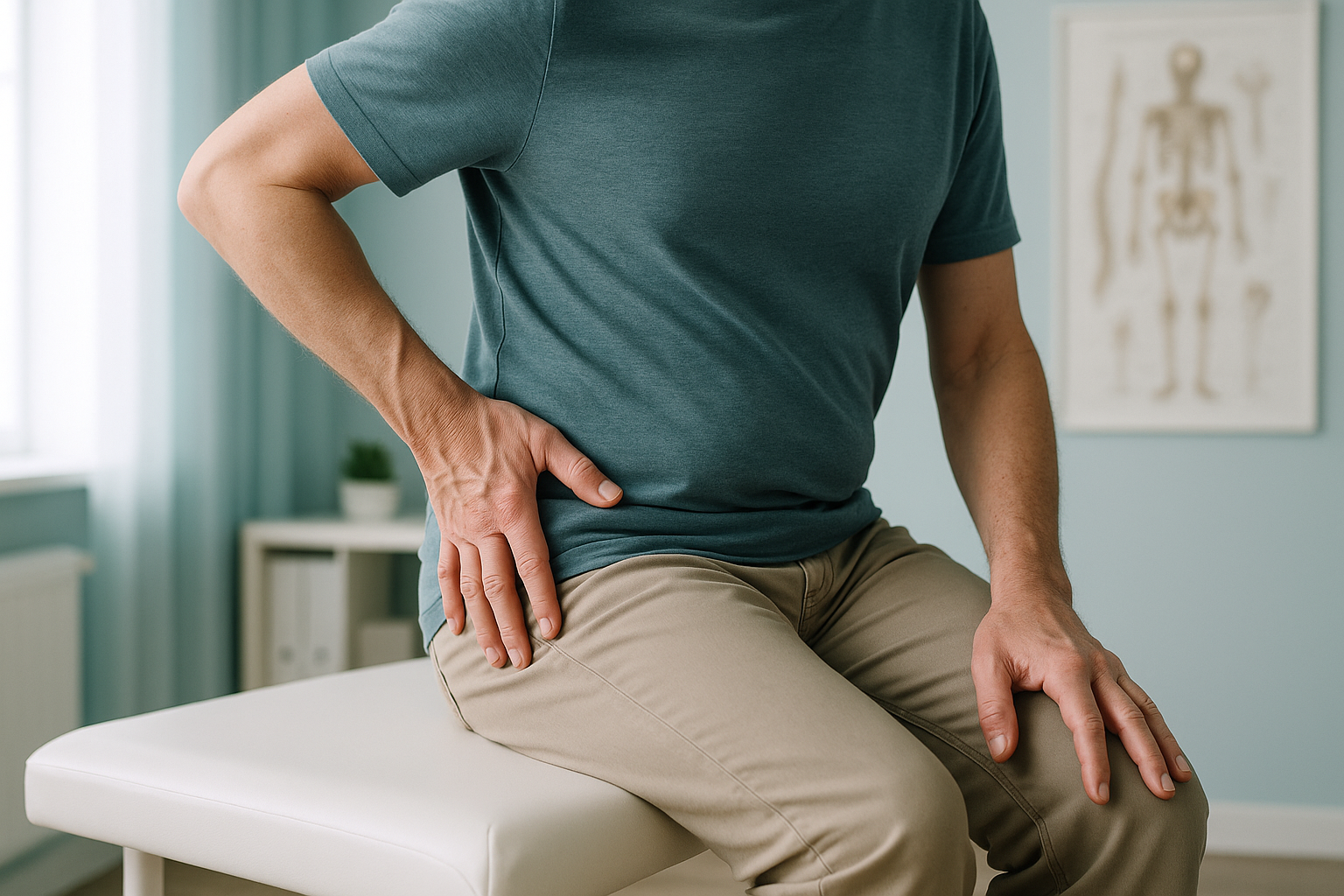
Why Does Only One Hip Hurt? Understanding Hip Pain on One Side
Pain in only one hip is common. It usually means something in the way your body is aligned or loaded is uneven. A small difference in leg length, a tilted pelvis, or years of favouring one side can put more stress on one hip. Standing whole-body imaging can show uneven alignment that lying-down scans often miss.
Key points
- Hip pain on one side usually points to something uneven in alignment, loading or the way you walk.
- The cause is not always in the hip itself. It can start in the pelvis, the legs or the spine.
- Lying-down scans relax the muscles and can hide the very imbalance causing your pain.
- A standing EOS scan shows both hips and the whole skeleton on one image, while your body carries its real weight.
- Accurate alignment data helps clinicians target the real source, not just the sore spot.
If you have hip pain on one side when walking, or a dull ache in just your left or right hip, you have probably wondered why the other hip feels fine. It is a fair question. Most people think the sore hip must be the damaged one. But the body works as a connected chain. Hip pain on one side often tells a bigger story about alignment and how the body makes up for it.
What does hip pain on one side feel like?
It can show up in different ways, depending on which parts are under strain. You may notice one or more of these.
A nagging soreness on one side that gets worse after sitting or walking.
One hip feels tight or locked when you first get out of bed, but the other moves freely.
Climbing stairs, stepping down from a footpath, or standing on one leg hurts on one side only.
You notice yourself leaning away from the sore hip, or taking shorter steps on that side.
Important: if you have sudden severe hip pain with numbness, weakness in your leg, or any loss of bladder or bowel control, get urgent medical help. Contact your doctor or go to the nearest emergency department straight away.
What causes hip pain on one side only?
Several things can put more load on one hip than the other. Often it is a mix of causes, not just one.
Even a small difference means the hip on the longer side takes more force with every step. Read more about leg length discrepancy.
A lateral pelvic tilt or a rotated pelvis spreads load unevenly between the two hip joints.
Favouring one leg when standing, carrying bags on the same shoulder, or a repetitive sport can overwork one hip over time.
Osteoarthritis can develop faster in the hip that has taken extra load for years, while the other hip stays fairly healthy.
Why does one hip hurt when the problem is somewhere else?
Your skeleton works as a connected chain. It runs from your feet, up through your pelvis and spine, to your head. When one link in that chain is out of place, the body makes up for it. It shifts weight, tilts the pelvis, or changes the way you walk to protect one area. The extra load then ends up somewhere else.
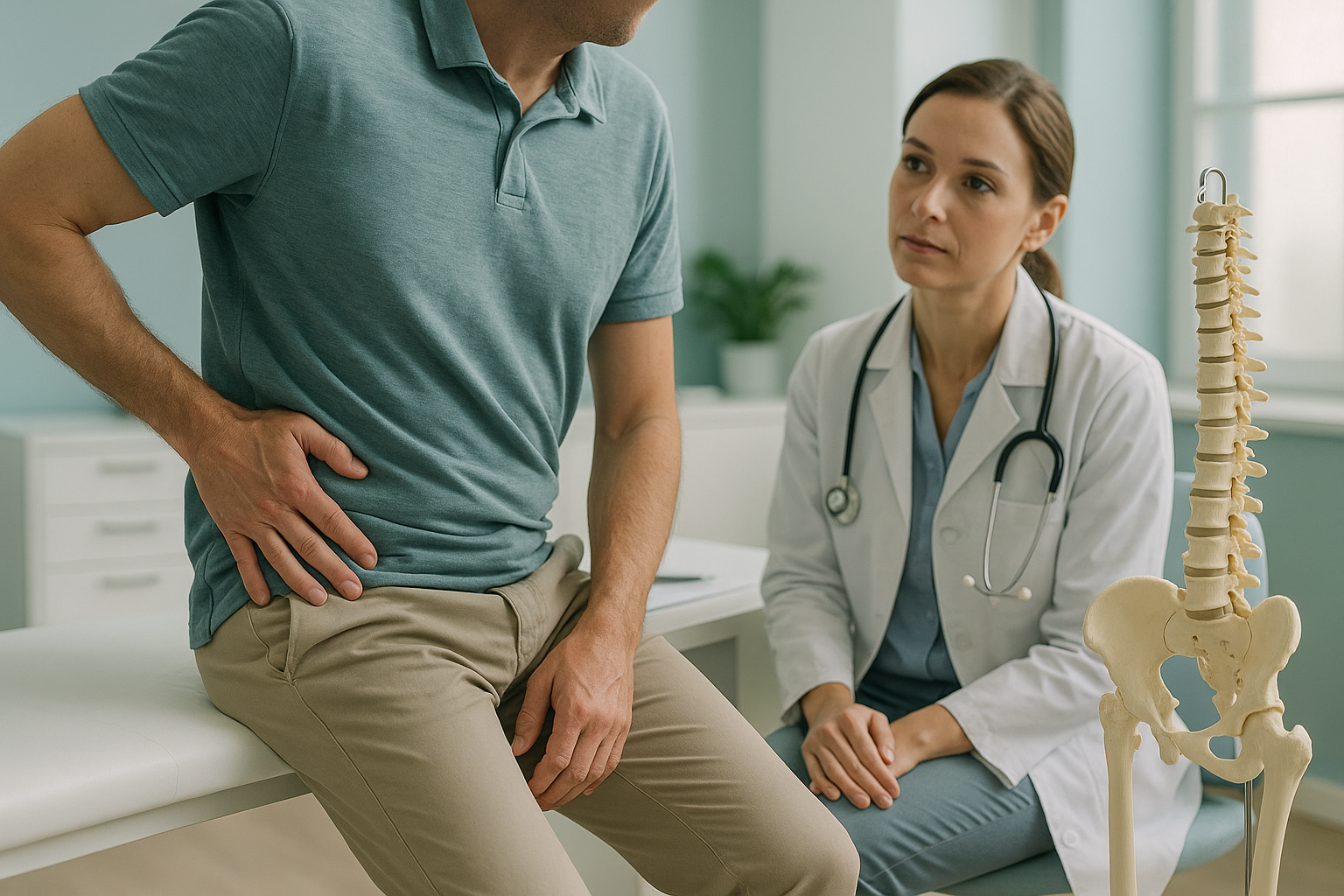
This is why treating only the painful hip can give short-term relief but not a lasting solution. If the root cause is a subtle lateral pelvic tilt or a leg length discrepancy further down the chain, the same hip will keep taking the extra strain.
How does a standing scan show what lying-down scans miss?
Standard X-rays, CT scans and MRI scans are usually taken while you lie flat. In that position, gravity is taken away, the muscles relax, and the pelvis settles into a neutral shape. Any tilt, rotation or uneven loading that happens when you stand and walk disappears from the image.
What it shows: Both hips, the pelvis, the full length of both legs, and your spine, all on one image, taken while you stand and carry your weight normally.
This shows pelvic obliquity, true leg length differences, and how each hip joint is loaded under gravity. The EOS system uses about 90% less radiation than a standard X-ray, around ten times less.
What it shows: A detailed picture of the bones or soft tissue in one area, with gravity taken away.
Excellent for finding fractures, tumours or local joint damage. But it cannot show the alignment imbalances that only appear under load. So the reason one hip hurts more than the other may not be visible.
At ScanAlign, full-body standing imaging shows both hips on the same full-body image. Your clinician can see exactly how the pelvis sits, whether one leg is longer, and how your spine makes up for it, all from a single scan. Learn more about hip pain and alignment on EOS imaging.
When MRI is the better test: EOS shows bones, joints and alignment. If your clinician suspects soft-tissue damage, a labral tear or nerve involvement, MRI is usually the right choice. The two scans answer different questions and often work well together.
What helps with hip pain on one side?
The best route depends on finding out why one hip is overloaded. General approaches that clinicians often consider include:
- Accurate diagnosis first. A standing whole-body image gives your physiotherapist, osteopath or surgeon alignment data they can measure. Without it, treatment can end up addressing symptoms rather than causes.
- Targeted strengthening. Once the imbalance is understood, exercises can be prescribed to support the weaker side and reduce the load on the painful hip.
- Walking and footwear review. If a leg length difference is playing a part, small corrections at the foot or shoe can make a real difference to how force travels through your hip.
- Pelvic alignment work. Hands-on therapy, or specific movement programmes aimed at bringing the pelvis back into balance, can take pressure off the overloaded hip.
ScanAlign is a diagnostic imaging clinic. We provide the detailed alignment data. Treatment decisions are made by you and your chosen clinician, guided by that data.
Before you start a treatment, or change the one you are on, it is worth getting a detailed diagnosis. Knowing whether the cause sits in the pelvis, the legs or the spine changes what will actually help.
Want to find out what is behind the pain in one hip? A free video consultation can help you decide whether a standing scan in London is the right next step for you.
Book a free video consultationFrequently asked questions about hip pain on one side
Pain in the left hip alone usually means the left side is taking more mechanical load. This can be caused by a pelvic tilt, a slight difference in leg length, or a habit such as always standing on the left leg. It does not necessarily mean the left hip joint itself is damaged.
Yes. Even a small difference changes how force is spread across the pelvis and hip joints. The hip on the side of the longer leg often absorbs more shock with each step. This can lead to gradual wear and pain on that side.
It can be. Osteoarthritis often develops unevenly, especially if one hip has been overloaded for years. But many other causes, including alignment problems and muscle imbalance, can produce similar symptoms. Imaging helps tell the difference.
Walking puts your full body weight through each hip in turn. If one hip is taking more load because of an alignment imbalance, the repeated impact of walking increases the strain. A standing scan captures this loading pattern.
Yes. A rotated pelvis changes the angle of both hip sockets. One hip ends up in a different position from the other. This changes how it moves and how much force it absorbs. You can read more about a rotated pelvis and its effects.
No. ScanAlign accepts self-referrals. You can book a full-body standing scan directly. A free video consultation is the first step, where a specialist radiographer reviews your concerns.
An EOS scan uses about 90% less radiation than a standard X-ray, around ten times less. It is one of the lowest-dose skeletal imaging systems available.
Yes. The EOS system captures the whole skeleton, from head to foot, in a single standing image. Both hips, the pelvis, the legs and the spine are all visible on one scan. This makes it easy to compare one side with the other.
The price for patients travelling from abroad is confirmed during the free video consultation. You can find more answers on our FAQs page. The free video consultation is also a good place to discuss what your scan would include.
A standing scan gives detailed alignment and joint data. A surgeon uses this together with a clinical examination to decide whether a hip replacement is appropriate. The scan does not diagnose or recommend treatment on its own. But it gives your surgeon information that lying-down imaging cannot.
Find out why one hip hurts
A free video consultation with a specialist radiographer is the first step, before you plan any travel to London. No referral needed, no obligation.
Book a free video consultationWritten by Abbas Dhami (Specialist Diagnostic Radiographer)
Sources
- NHS. "Hip pain in adults." nhs.uk. Accessed 2024.
- Illés T, Somoskeöy S. "The EOS imaging system and its uses in daily orthopaedic practice." International Orthopaedics, 2012;36(7):1405-1411.
- Khamis S, Yizhar Z. "Effect of feet hyperpronation on pelvic alignment in a standing position." Gait & Posture, 2007;25(1):127-134.
This page is general information and not a diagnosis.
ScanAlign is the trading name of CoreMed Solutions Ltd and operates under The Harley Street Hospital's CQC licence.