
Do You Need a Heel Lift, and How Thick Should It Be?
A heel lift is a wedge you put inside your shoe to correct a leg length difference. Whether you need one, and how thick it should be, depends on an accurate measurement of both legs while you stand and carry your weight. The wrong thickness can make symptoms worse. So precise imaging matters before any lift is prescribed.
Key points
- A heel lift makes up for a shorter leg. It helps level the pelvis and reduce strain up the spine.
- Thickness should be based on a measured difference, not guesswork.
- Lifts are usually added gradually, not all at once.
- Standing, weight-bearing imaging gives a more reliable measurement than scans done lying down.
- Prescribing the right lift is a clinical decision for your physiotherapist or podiatrist.
What is a heel lift and how does it work?
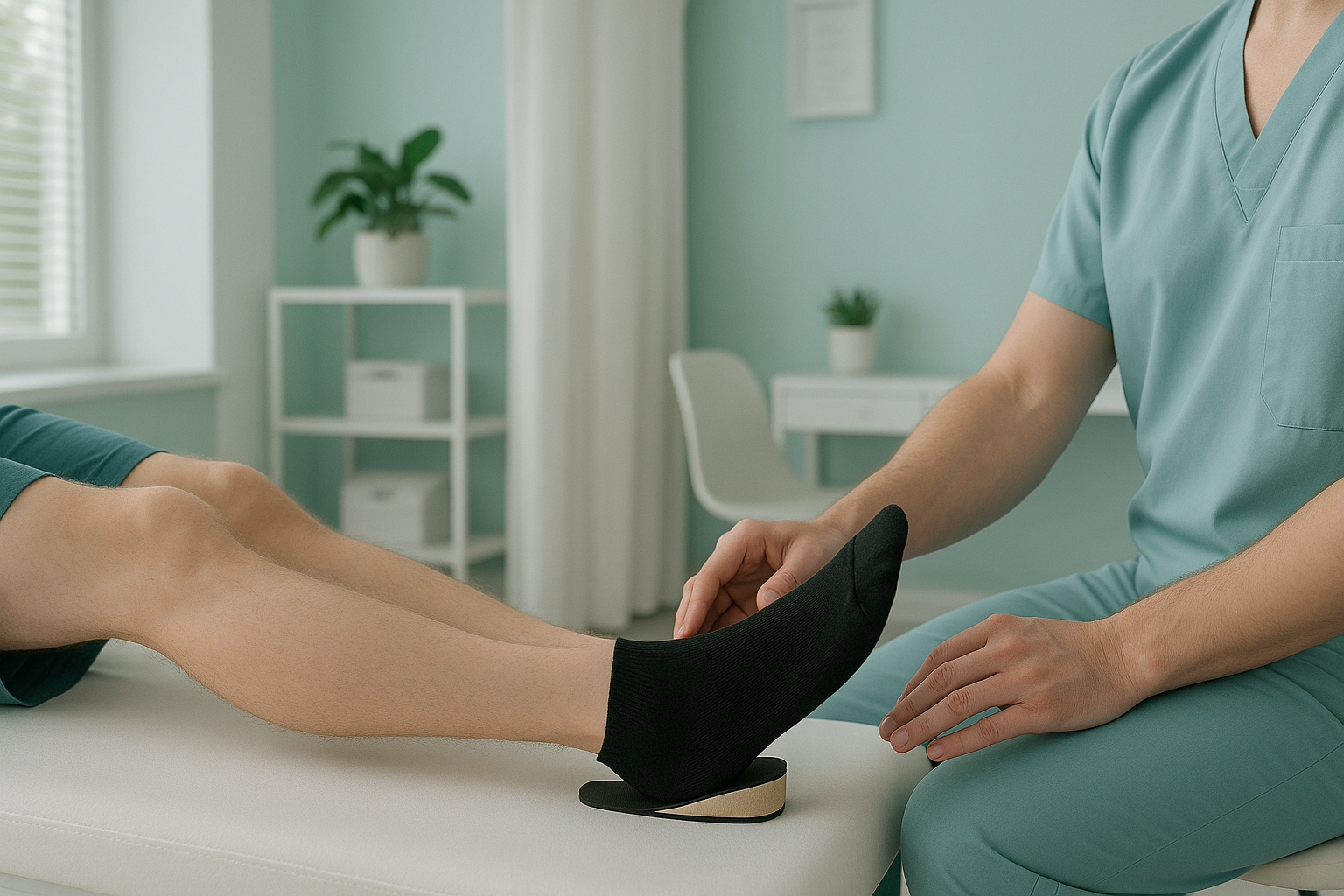
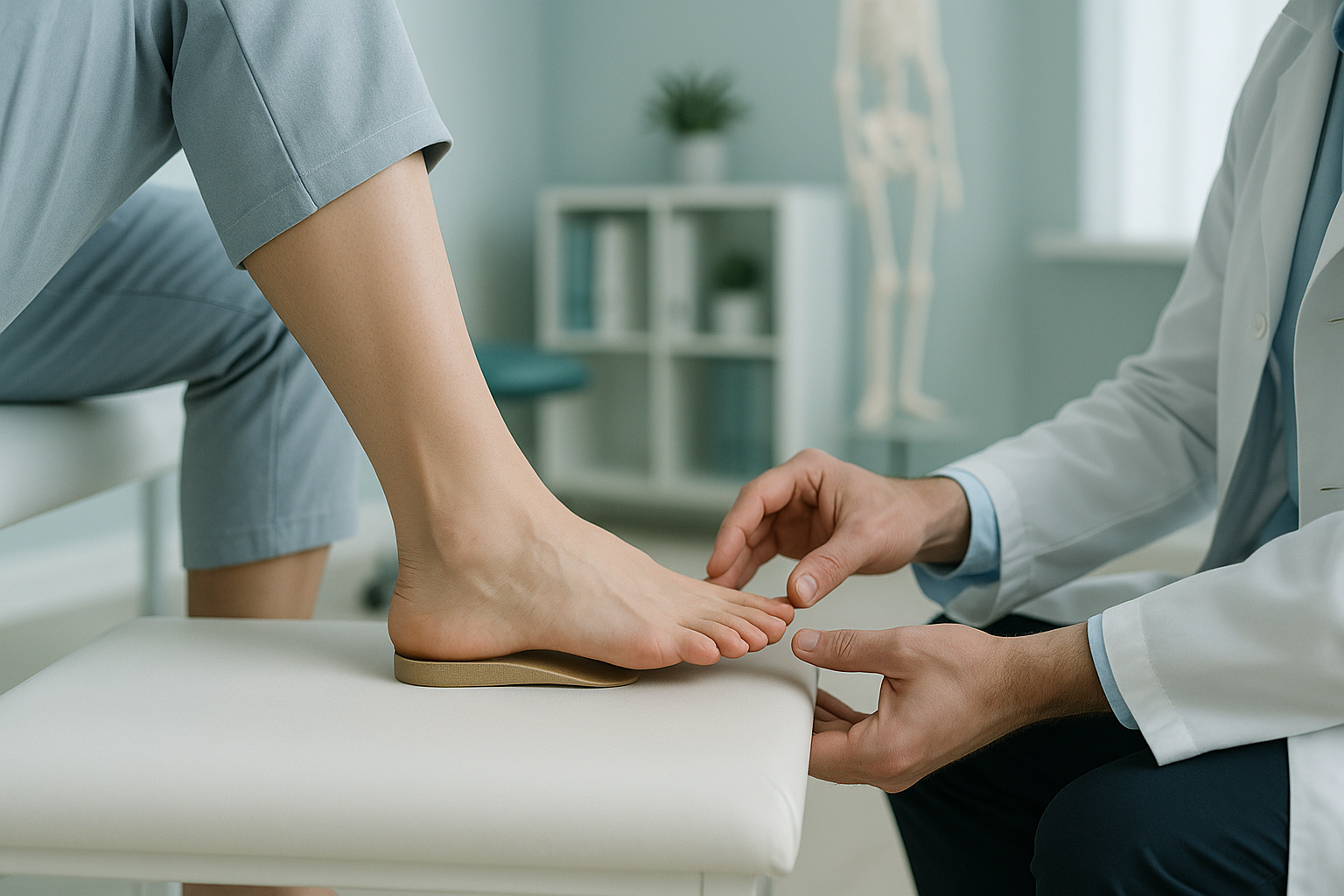
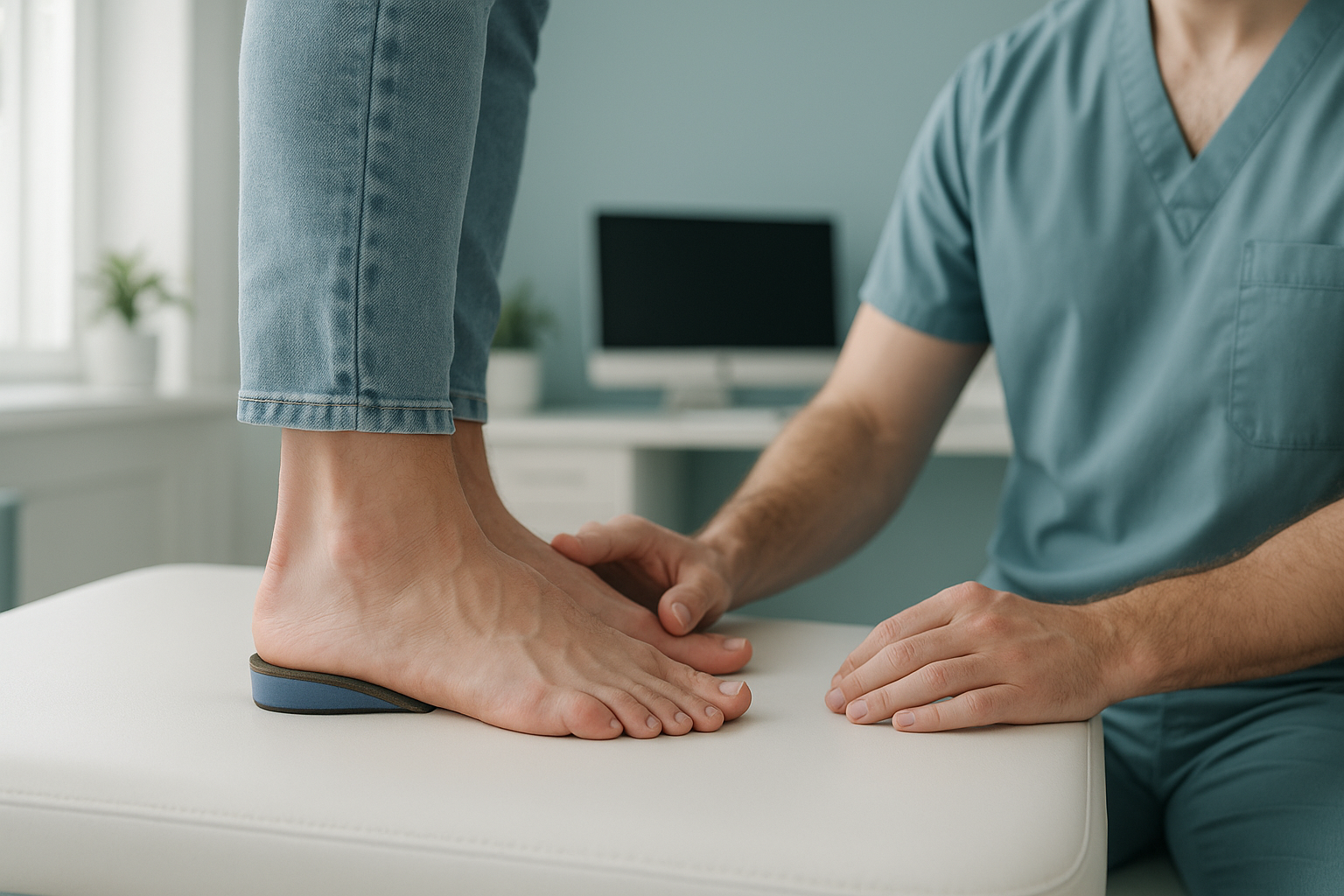
A heel lift is a firm wedge that sits under your heel inside the shoe. It is usually made of cork, rubber or high-density foam. It raises the shorter leg so your pelvis sits more level when you stand and walk. Some people call it a shoe lift or a heel lift insole.
When one leg is truly shorter than the other, your body makes up for it. The pelvis tilts towards the short side, and the spine curves to keep you balanced. Over time this can cause pain in the lower back, hip or knee, often on the side opposite the short leg. A correctly sized heel lift takes the strain off that chain of compensation.
It is worth knowing that not every leg length difference needs a lift. Small differences are common and often cause no trouble at all. A lift is usually considered only when the difference is large enough to cause a noticeable lateral pelvic tilt or ongoing symptoms.
What are the signs a heel lift might help you?
A heel lift might help if you have a confirmed leg length difference and one or more of the patterns below. These are signs, not a diagnosis. The decision to use a lift should always come from your clinician.
Your belt or waistband sits clearly higher on one side.
A persistent ache in the lower back, often on the side of the longer leg, that does not settle with standard treatment.
Discomfort in a hip or knee that keeps coming back, which your clinician suspects is linked to uneven loading.
One shoe wears down faster than the other, which suggests an uneven walking pattern.
What are the different types of heel lift?
There are two main options. The right choice depends on how big a correction you need and the type of shoes you wear.
In-shoe heel lift insole. A wedge placed inside your shoe, under the existing insole or built into a custom orthotic. It suits smaller corrections. It is discreet and easy to move from one shoe to another. It works well alongside orthotics and overpronation corrections if needed.
External shoe raise. A cobbler or orthotist adds material to the sole of the shoe. It is used for larger corrections that would not fit comfortably inside the shoe. It is less discreet but more stable for bigger differences.
How thick should a heel lift be?
The thickness of a heel lift should be based on a precise measurement of your leg length difference, not a rough guess. Your physiotherapist or podiatrist will decide the right amount. A few important principles guide that decision.
Build up gradually
If you have had a leg length difference for years, your muscles, ligaments and joints have adapted to it. Adding the full correction all at once can feel uncomfortable and may even create new problems. Most clinicians start with a partial correction and increase it over weeks. This gives your body time to adjust.
Full correction is not always the goal
Some people can only tolerate a partial correction, and that is fine. The aim is to reduce symptoms and improve function, not to chase a perfect number on a scan. A trial of a few weeks helps your clinician decide whether to increase the lift, reduce it or keep it at its current thickness.
Accurate measurement matters
Even a small error in measuring the leg length difference can make the lift too thick or too thin. A lift that is too thick tilts the pelvis the wrong way. One that is too thin may not help at all. This is why an accurate, standing measurement before any lift is prescribed makes a real difference to the outcome.
Want to know your exact leg length difference before you see your clinician? A standing EOS scan measures both legs under your full body weight.
Book a free video consultationWhy does standing imaging give a better measurement for heel lifts?
Standing imaging gives a better measurement because it captures your skeleton under real, everyday load. When you lie down for a standard X-ray, CT or MRI, gravity is taken away and your muscles relax. Joints decompress slightly, and the pelvis can shift. The result can be a measurement that does not match how your body actually behaves on your feet.
ScanAlign standing EOS imaging takes a full-length image of both legs, the pelvis and the spine while you stand. This means the measurement reflects the difference your body actually deals with every time you walk. It also uses about 90% less radiation than a standard X-ray, around ten times less, so it is a low-dose option.
Your clinician can then use the standing measurement to prescribe a heel lift with confidence, knowing the figure reflects real loading. If the scan also shows a pelvic tilt or a curve in the spine, that helps them decide whether a lift alone is enough or whether other treatment is needed.
When MRI is the better tool. EOS shows bones, joints and alignment. If your clinician suspects a soft-tissue problem, such as a disc problem or a compressed nerve, MRI is usually the better choice. The two types of imaging answer different questions and can work well together.
Who is a heel lift right for, and when is it not the answer?
A heel lift is a simple treatment, but it is not suitable for everyone. Here is a general guide. Your clinician will make the final decision.
- Confirmed structural (true) leg length difference
- Lateral pelvic tilt linked to a shorter leg
- Persistent back, hip or knee pain on one side, with a measured difference
- Change in leg length after surgery (for example, after hip replacement)
- Functional (apparent) leg length difference caused by muscle tightness or pelvic rotation
- Pain that has no link to a measured difference
- Guesswork without proper measurement
Before you start treatment, or change the one you are on, it is worth getting a detailed diagnosis. Knowing whether the cause sits in the pelvis, the legs or the spine changes what will actually help.
Frequently asked questions about heel lifts
No. You can refer yourself. You can book a leg length measurement directly and take the results to your own clinician.
You can, but it is risky. Ready-made lifts come in set thicknesses that may not match your actual difference. The wrong lift can tilt your pelvis the other way and create new problems.
It varies. Most people need a few weeks to adjust, especially if the lift is added gradually. Some feel better straight away, while others notice changes over a month or more.
It can, if the back pain is related to a genuine leg length difference and the pelvic tilt it causes. A lift is not a general remedy for back pain. It works by addressing a specific structural cause.
Yes. EOS uses about 90% less radiation than a standard X-ray, around ten times less. It is one of the lowest-dose skeletal imaging options available.
A structural (true) difference means one bone really is shorter. A functional (apparent) difference means the bones are the same length, but the legs look unequal because of muscle tightness, pelvic rotation or joint position. A standing scan helps tell the two apart.
Not necessarily. Many clinicians start with a partial correction and increase it gradually. Full correction is sometimes the goal, but comfort and symptom relief matter more than matching a number exactly.
Yes. A heel lift can be built into a custom orthotic or placed underneath one. Your podiatrist can combine both corrections in one device if needed.
The price for patients travelling from abroad is confirmed during the free video consultation.
No. ScanAlign is a diagnostic imaging clinic. We provide the accurate measurement your clinician needs to prescribe the right lift. The prescription itself comes from your physiotherapist, podiatrist or orthopaedic specialist.
Get an accurate leg length measurement first
A standing EOS scan measures both legs under your real body weight. It gives your clinician the precise figure they need to prescribe the right heel lift.
Book a free video consultationSources
- Knutson GA. Anatomic and functional leg-length inequality: a review and recommendation for clinical decision-making. Chiropractic & Osteopathy. 2005;13:11.
- Defrin R, Ben Benyamin S, Aldubi RD, Pick CG. Conservative correction of leg-length discrepancies of 10 mm or less for the relief of chronic low back pain. Archives of Physical Medicine and Rehabilitation. 2005;86(11):2075-2080.
- NHS. Back pain: causes. nhs.uk/conditions/back-pain.
Written by Abbas Dhami (Specialist Diagnostic Radiographer)
This page is general information and not a diagnosis.
ScanAlign is the trading name of CoreMed Solutions Ltd and operates under The Harley Street Hospital's CQC licence.