
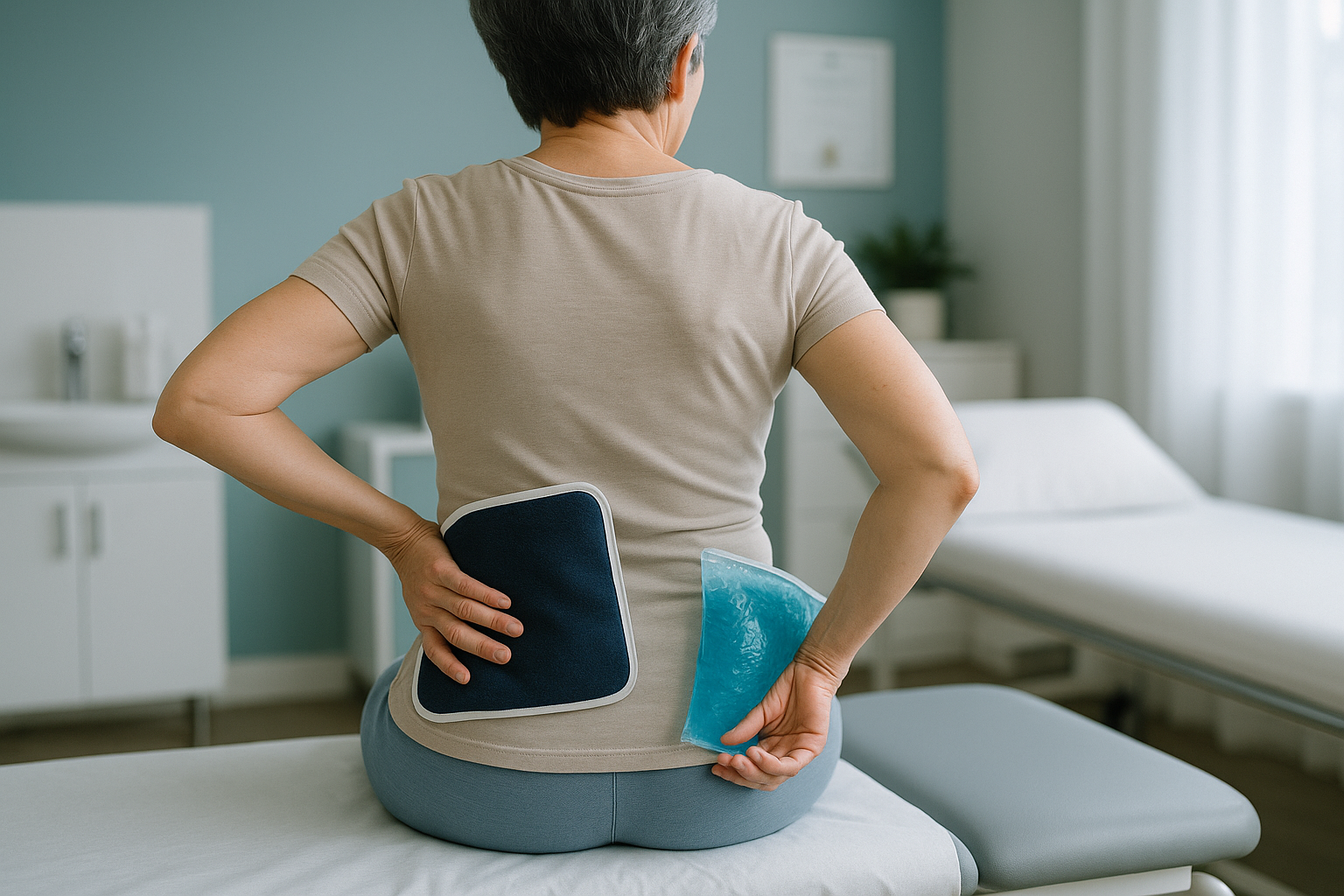
Heat or Ice: Which Should You Use and When?
Use ice for a fresh injury that is swollen, hot or throbbing. Use heat for ongoing stiffness, tight muscles or chronic back pain. Ice narrows blood vessels to limit swelling. Heat opens them to relax tissue. If you are not sure, comfort is the safest guide. Choose whichever feels better, and stop if it makes things worse.
Key points
- Ice suits acute injuries (the first 48 to 72 hours), sprains and sudden swelling.
- Heat suits chronic stiffness, muscle spasm and long-standing back pain.
- Use either one for no more than 20 minutes at a time, with a cloth between the pack and your skin.
- Comfort is a reliable guide. If one option makes you feel worse, stop and try the other.
- If pain lasts for weeks, self-care alone may not be enough. Understanding alignment can help find the cause.
This is one of the most common questions people ask when something hurts. Should you reach for the ice pack or the hot water bottle? The answer depends on the type of pain, how long you have had it and what is causing it.
Should I put ice on a sprain or a new injury?
Yes. Ice is generally the better choice in the first 48 to 72 hours after an acute injury, such as a sprain, a pulled muscle or a knock. This is the time when the area is most likely to be swollen, warm and inflamed.
Cold causes vasoconstriction, which means the blood vessels narrow. This slows blood flow to the area, reduces swelling and can dull sharp pain. Think of ice as your first response to anything that looks puffy, feels hot to the touch or throbs.
Common examples where ice helps include a twisted ankle, a jarred knee, a sudden flare-up after exercise and a bump that is starting to bruise.
When is heat better for muscle pain and back stiffness?
Heat is usually the better option for chronic stiffness, muscle tension and long-standing aches, especially in the back, neck and shoulders. If the pain has been there for weeks or months, heat is more likely to help than ice.
Warmth causes vasodilation. Blood vessels widen and bring more blood and oxygen to tight tissues. This helps relax muscle spasm, ease stiffness and make movement feel easier. That is why a warm bath or a heat pack across sore shoulders can bring noticeable relief.
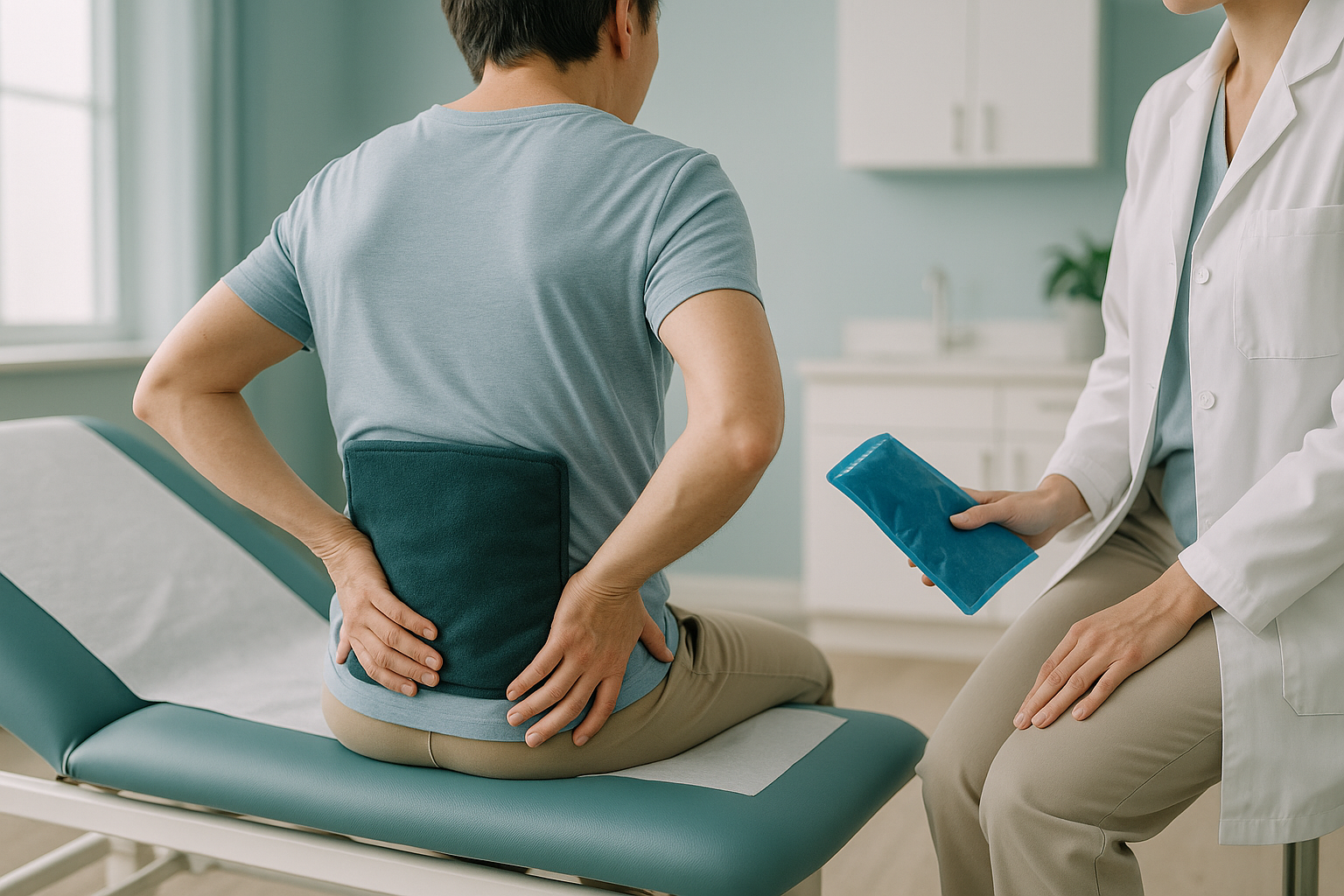
Heat for muscle pain works well when you feel stiff getting out of bed, when your lower back aches after sitting for a long time, or when muscle tension makes it hard to turn your head. It is also a useful warm-up before gentle stretching.
One important caution. Do not put heat on a new injury that is still swollen or inflamed. Warmth increases blood flow and can make fresh swelling worse.
How long should you use ice or heat on an injury?
Keep each session to about 15 to 20 minutes. Longer is not better. Leaving ice on too long can damage the skin or cause a cold burn. Leaving heat on too long can cause a mild burn or increase swelling.
The twenty minute rule
- Apply your ice pack or heat pack for 15 to 20 minutes.
- Remove it and let the skin return to its normal temperature. This usually takes at least 40 to 60 minutes.
- Repeat if needed, several times a day.
Protecting your skin
Always wrap a cold pack or heat pack in a thin towel or cloth. Never put ice directly on bare skin. Never fall asleep on a heat pad. Check your skin often for redness, and stop if the area looks irritated or feels numb.
People with diabetes, poor circulation or reduced feeling in the skin should take extra care, and may want to speak with their doctor before using either method.
What is the difference between a heat pack and a cold pack?
They work in opposite ways, which is why choosing the right one matters. Here is a simple comparison.
How it works: Vasoconstriction. It narrows blood vessels, reduces blood flow and limits swelling.
Best for: Acute injuries, sprains, fresh bruises, swelling after exercise, sharp pain with inflammation.
Avoid when: The area is already stiff and cold, or you have Raynaud's or poor circulation.
How it works: Vasodilation. It opens blood vessels, increases blood flow and relaxes tight tissue.
Best for: Chronic back pain, muscle spasm, stiff joints, tension headaches, warming up before movement.
Avoid when: There is fresh swelling, an open wound, or active inflammation from a new injury.
Some people find that switching between the two (known as contrast therapy) helps. There is limited evidence on this approach. But if it gives you relief and you follow the timing and skin-protection rules, it is generally safe to try.
What should you do when neither heat nor ice helps?
If pain lasts beyond a few weeks, heat and ice are unlikely to fix the underlying problem. They manage symptoms, not causes. Long-standing pain, especially in the back, hips or knees, often has a structural or alignment part that self-care alone cannot address.
Get urgent medical help if you develop numbness or weakness in your legs, loss of bladder or bowel control, or sudden severe symptoms. Contact your doctor straight away or go to the nearest emergency department.
Your body works as a connected chain from your feet to your head. A slight tilt in the pelvis, legs of uneven length or a shift in spinal alignment can overload one area and cause pain somewhere else entirely. That compensating area may ache for months, while the real cause goes unnoticed on a standard scan taken lying down.
Standing, weight-bearing imaging shows how your skeleton actually carries load. Lying-down scans relax your muscles and can hide alignment problems that only appear upright. If you have been managing pain with heat packs and cold packs for weeks without improvement, it may be worth looking at the bigger picture.
Before you start a treatment, or change the one you are on, it is worth getting a detailed diagnosis. Knowing whether the cause sits in the pelvis, the legs or the spine changes what will actually help.
If your pain is not settling with self-care, a whole-body standing assessment can help find what is driving it. You can book an assessment if it is not settling and talk it through first, free of charge.
Book a free video consultationWhen MRI is the better tool: EOS standing imaging shows bones, joints and whole-body alignment clearly. For soft-tissue problems like disc bulges, nerve compression or ligament tears, MRI is usually the better choice. The professional treating you can help you work out which type of imaging you need.
Frequently asked questions
It depends on whether the pain is new or long-standing. For a sudden flare-up with swelling, try ice for the first 48 to 72 hours. For chronic stiffness or ongoing muscle tightness, heat is usually more helpful.
Apply ice for 15 to 20 minutes at a time. Wait at least 40 to 60 minutes before applying it again. Always wrap the ice pack in a cloth to protect your skin.
Some people switch between ice and heat, using each for short periods. The evidence for this is limited, but it is generally safe as long as you follow the 20-minute rule and protect your skin between uses.
Yes. Direct contact can cause an ice burn or frostbite. Always use a thin towel or cloth between the pack and your skin, and check the area often for unusual redness or numbness.
Ice is the usual first choice for a sprain. It helps reduce swelling in the first 48 to 72 hours. Once the first swelling settles, gentle warmth may help ease the stiffness that remains.
Heat increases blood flow to the area through vasodilation. If the injury is still inflamed or swollen, extra blood flow can make the swelling and pain worse. Stick with ice in the acute stage.
Heat and ice manage symptoms, not causes. If your pain has lasted more than a few weeks, it may be worth looking into the underlying cause. A whole-body standing assessment at ScanAlign can show alignment issues that standard scans miss.
A warm bath can work just as well. It relaxes muscles over a wider area, and the buoyancy can take pressure off your joints. Keep the water comfortably warm, not hot, and limit your bath to about 20 minutes.
No. Falling asleep on a heat pad increases the risk of burns, especially at low settings you may not feel. Use it while awake for 15 to 20 minutes, then remove it before resting.
No. You can refer yourself. The first step is a free video consultation, where a specialist radiographer reviews your history and explains whether imaging is right for you.
Still managing pain with heat packs and ice packs?
If self-care is not enough, find out whether an alignment issue could be driving your symptoms.
Book a free video consultationSources
- NHS. "Sprains and strains." nhs.uk. Accessed 2025.
- Malanga GA, Yan N, Stark J. "Mechanisms and efficacy of heat and cold therapies for musculoskeletal injury." Postgraduate Medicine, 2015; 127(1): 57-65.
- Bleakley CM, McDonough SM, MacAuley DC. "The use of ice in the treatment of acute soft-tissue injury: a systematic review of randomised controlled trials." The American Journal of Sports Medicine, 2004; 32(1): 251-261.
Written by Abbas Dhami (Specialist Diagnostic Radiographer)
This page is general information and not a diagnosis.
ScanAlign is the trading name of CoreMed Solutions Ltd and operates under The Harley Street Hospital's CQC licence.