
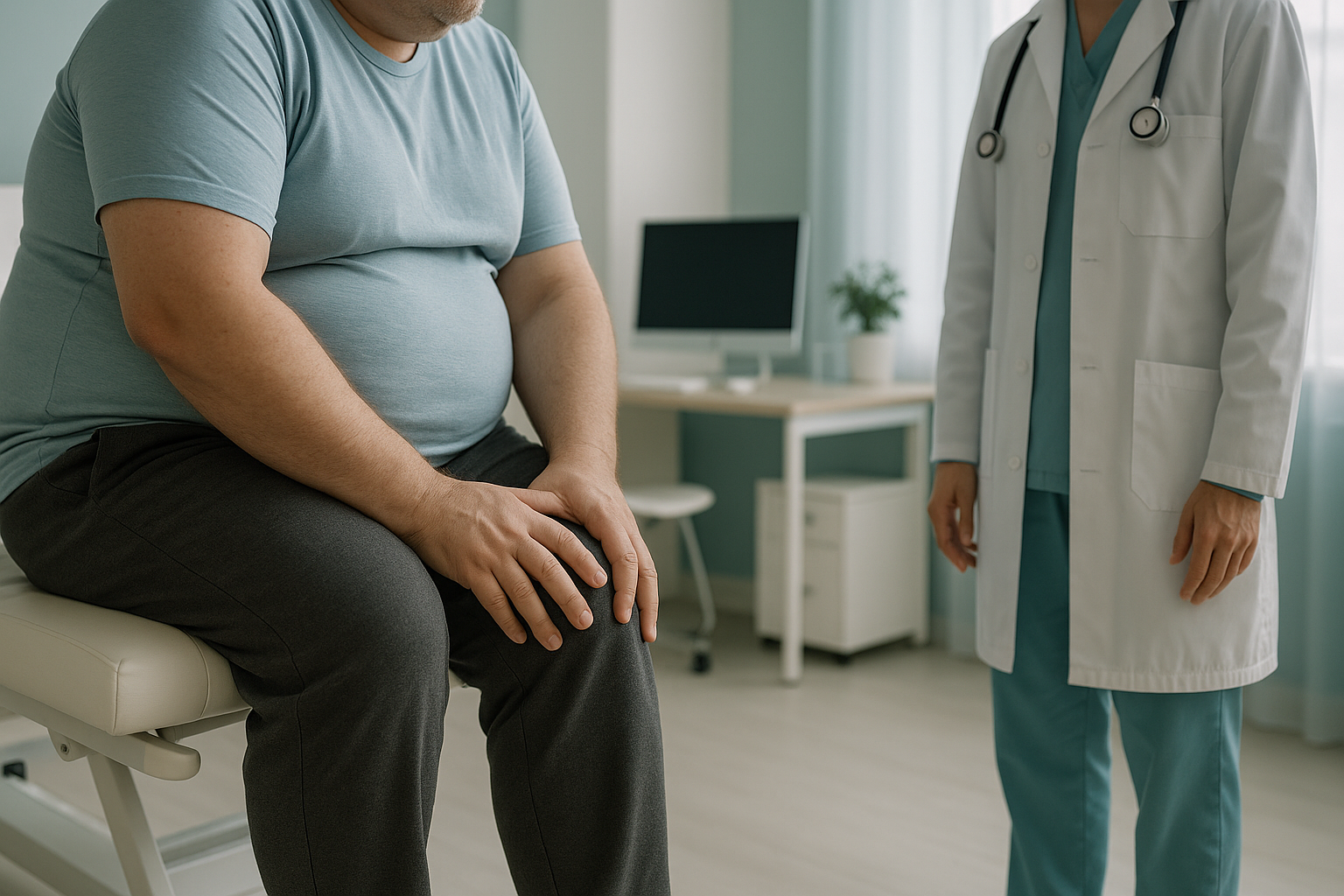
How Much Extra Load Does Body Weight Put Through Your Joints?
Your joints do not simply carry your body weight as it is. In everyday activities, the forces multiply. Walking puts roughly two to three times your body weight through each knee. Climbing stairs can raise that to four or five times. How this load is spread depends on the alignment of your whole body, not just one joint.
Key points
- Joint load is a multiple of your body weight, not an equal amount.
- Even a small change in body weight can mean a big change in the total force on your joints over time.
- Alignment decides where the load builds up, so two people of the same weight can load their joints very differently.
- Cartilage wear is driven by both load and inflammation, not load alone.
- A standing whole-body scan shows how load is spread in a way that lying-down scans cannot.
Why does body weight multiply through your joints?
Your body weight does not just press straight down. Every joint works like a lever, and the muscles pulling across that lever increase the force. When you stand still on both feet, each knee holds up roughly half your weight. As soon as you move, muscle contractions, momentum and gravity combine to multiply that figure several times.
This is basic biomechanics, not a fault in how the body works. Your muscles, bones and joints are built to handle these forces. Problems tend to start when the load is spread unevenly, goes on longer than the tissue can tolerate, or when cartilage and other structures are already weakened.
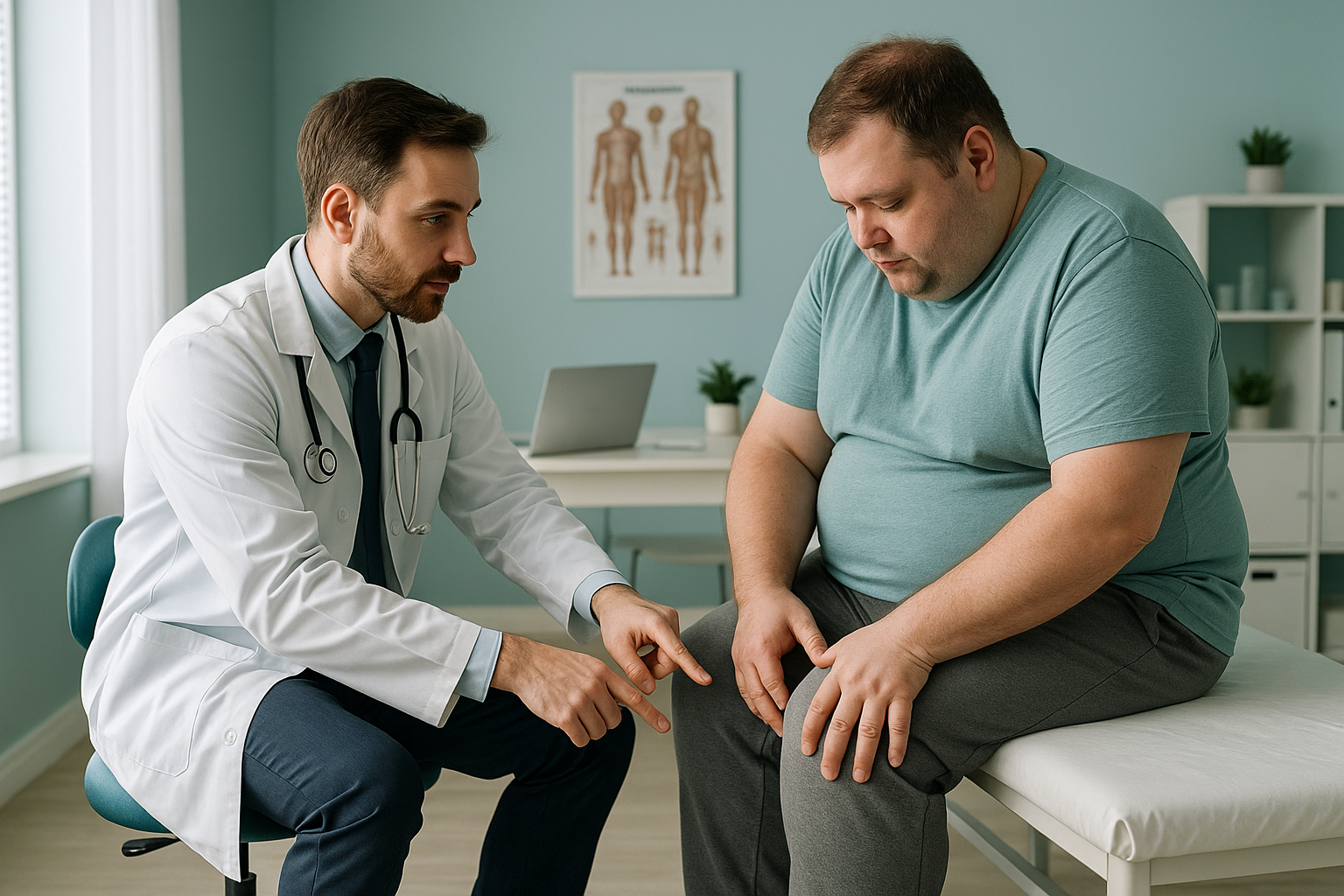
How much load goes through your knees, hips and spine in everyday activities?
The multiplier changes with each activity. Research consistently shows these rough ranges for the knee joint alone.
Similar multipliers apply to the hip. The lower back (lumbar spine) faces different forces, but the same rule holds: movement increases load, and the more the joint bends, the greater the force.
This is why weight and joint pain are so closely linked. Because the multiplier is always at work, even a modest change in body weight turns into a much larger change in total force over a full day of walking, standing and climbing.
How does alignment change where load builds up?
Alignment decides which part of the joint surface carries the most force. Two people of exactly the same weight can have very different stress on their joints. It depends on how their skeleton lines up from the feet to the spine.
If the leg is well aligned, load spreads fairly evenly across the joint surface. If there is a tilt, twist or shift in lower limb alignment, the force builds up on a smaller area of cartilage. That focused load speeds up wear, even when total body weight stays the same.
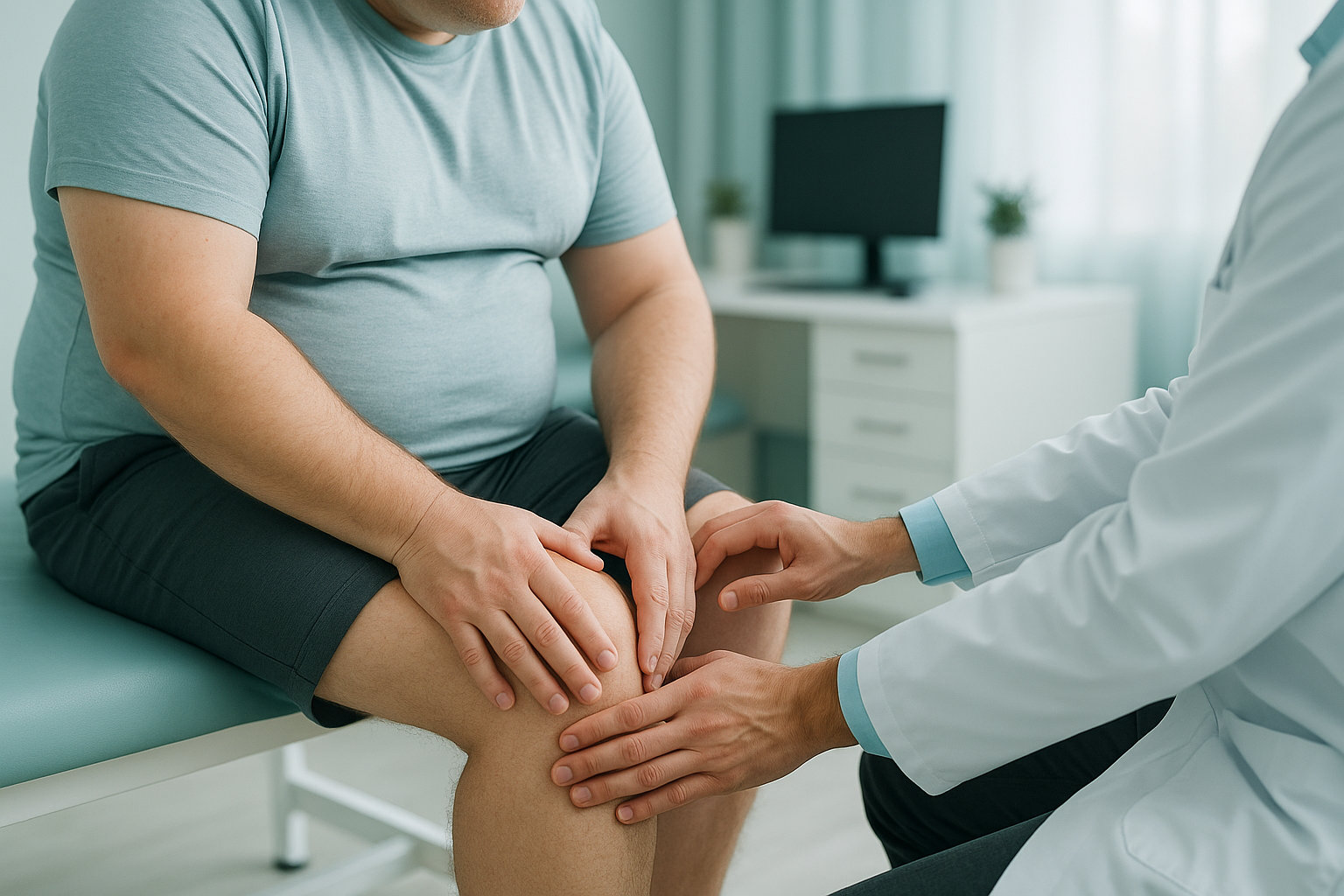
This is one reason why weight alone does not tell the whole story. Alignment, muscle strength and the way you move all shape how load is spread. Addressing alignment can change the pattern of stress on a joint, whether or not your body weight changes at all.
Does extra weight damage cartilage directly?
Mechanical load is one factor, but it is not the only one. Research into obesity and osteoarthritis shows that extra body fat also makes inflammatory chemicals called adipokines. These travel through the bloodstream and can weaken cartilage even in joints that carry no weight at all, such as the hands.
So the link between weight and joint pain works in two ways: the direct mechanical force, and inflammation throughout the body. Both matter. This is why some people with higher body weight get joint pain in places you might not expect, and why others at the same weight do not.
The main point is that load and inflammation are separate but linked. Knowing which factor plays the bigger part for you, and where your alignment sends the mechanical stress, is the starting point for any useful plan.
When MRI is the better tool. EOS imaging shows bones, joints and whole-body alignment under real standing load. For soft-tissue detail such as cartilage thickness, disc problems or nerve compression, MRI is usually the better choice. The two scans answer different questions and often work well together.
How does a standing scan show joint load that lying-down scans miss?
Standard X-rays, CT and MRI scans are usually done lying down. When you lie flat, gravity is taken away and the muscles relax. Any tilt, shift or uneven load disappears from the image. The result can look unremarkable even when your joints are under significant uneven stress in daily life.
A standing whole-body EOS scan captures your skeleton while it carries your real weight, from your ankles to your skull, in a single image. It shows how your alignment spreads load through every joint at once. This information helps clinicians understand whether your pain is related to where force is building up, not just where damage has already appeared.
ScanAlign standing EOS imaging uses about 90% less radiation than a standard X-ray, around ten times less. The scan takes a few seconds and you simply stand still inside the machine.
If you have persistent joint pain and want to understand how your alignment affects the way load is spread, a standing scan can give you the full picture.
Book a free video consultationWhat can reduce harmful load on your joints?
Several factors affect how much stress reaches your joints. None of them need extreme measures.
- Muscle strength. Stronger muscles around a joint absorb more force before it reaches the cartilage. Targeted strengthening is one of the most effective ways to protect joints.
- Alignment correction. If a structural tilt or rotation is sending load to one side of a joint, finding it is the first step. Orthotics, physiotherapy or surgical planning can all address alignment.
- Choice of activity. Choosing activities that keep you moving without too much peak load, such as swimming or cycling, lets you stay active while managing stress on your joints.
- Gradual weight change. Because the multiplier effect increases the force of every kilogram, even a small, gradual drop in body weight brings a much larger drop in joint force over thousands of daily steps.
What matters most is understanding the specific pattern of load in your body. A whole-body standing assessment shows this pattern and gives your clinician a clear basis for advice. You can book a standing alignment scan to get started.
Before you start a treatment, or change the one you are on, it is worth getting a detailed diagnosis first. Knowing whether the cause sits in your pelvis, your legs or your spine changes what will actually help.
Frequently asked questions about weight and joint load
Research consistently shows that walking on flat ground puts roughly two to three times your body weight through each knee with every step. The exact figure varies with speed, footwear and your own alignment.
Because of the multiplier effect, even a modest drop in body weight removes several times that amount of force from the knee over a day of normal activity. Many people report a meaningful improvement, though alignment and muscle strength also play a role.
A standard lying-down X-ray takes gravity and muscle tension out of the picture. Alignment problems and uneven load only become visible when the body is carrying its weight. A standing whole-body scan can show what a conventional image misses.
Hip joint reaction forces follow a similar multiplier pattern but are not the same. Walking usually puts around two to three times body weight through the hip, and the forces increase with stairs and deep bending, just as they do at the knee.
The lower back (lumbar spine) carries compressive forces that increase significantly with bending forward and lifting. Extra body weight raises the baseline load, and poor spinal alignment can focus that load on specific disc levels or facet joints.
Both matter, and they affect each other. Good alignment spreads load evenly, while poor alignment focuses it. Two people of the same weight can have very different patterns of joint stress, depending on how their skeleton lines up. Understanding your own alignment is the first step.
An EOS scan captures your full skeleton from head to feet while you stand. It shows joint angles, limb alignment and spinal balance under real gravity. This lets clinicians see where load is building up and whether any tilt or rotation is directing force unevenly.
Yes. EOS uses about 90% less radiation than a standard X-ray, around ten times less. The scan takes a few seconds and you simply stand still. It is one of the lowest-dose skeletal imaging methods available.
No. ScanAlign accepts self-referrals. You can book a free video consultation directly to talk about your symptoms and find out whether a standing scan is right for you.
For patients travelling from abroad, the price is confirmed during the free video consultation.
Understand how your body spreads load
A free video consultation with our specialist radiographer can help you decide whether a standing whole-body scan in London is the right next step.
Book a free video consultationSources
- D'Lima DD, Fregly BJ, Colwell CW. In vivo knee forces during recreation and exercise after knee arthroplasty. Clinical Orthopaedics and Related Research, 2008;466(11):2605-2611.
- Messier SP et al. Effects of intensive diet and exercise on knee joint loads, inflammation, and clinical outcomes among overweight and obese adults with knee osteoarthritis. JAMA, 2013;310(12):1263-1273.
- Arthritis Research UK (now Versus Arthritis). Osteoarthritis: causes, symptoms, treatments. versusarthritis.org.
Written by Abbas Dhami (Specialist Diagnostic Radiographer)
This page is general information and not a diagnosis.
ScanAlign is the trading name of CoreMed Solutions Ltd and operates under The Harley Street Hospital's CQC licence.